Blind Receiving: How to Handle Shipments Without ASNs
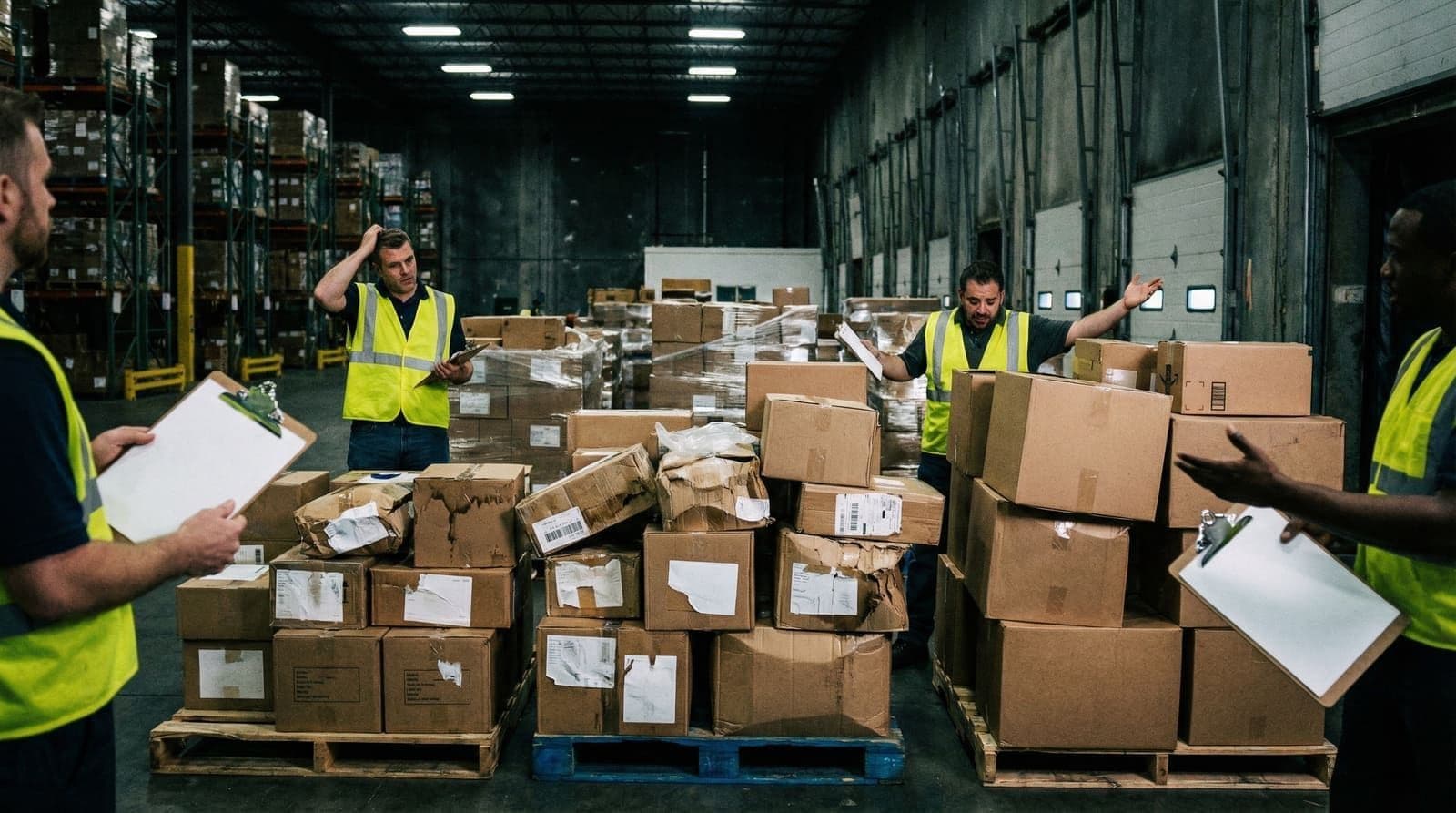
The truck backs into dock door 7. Your team opens it up and finds 40 pallets with no paperwork, no advance shipping notice, and labels that don't match anything in your system. Welcome to blind receiving — one of the most time-consuming scenarios in warehouse operations.
Every warehouse deals with blind receipts. The question is whether you have a system to handle them efficiently, or whether each one becomes a multi-hour investigation that backs up your entire dock.
What Makes Blind Receiving So Expensive
A standard receipt with a good ASN might take 3-5 minutes per pallet to process. A blind receipt? Often 15-20 minutes per pallet — and that's when things go smoothly.
Here's where the time goes:
- Identification: Someone has to figure out what actually arrived. That means examining every label, looking up product codes, and often opening cartons to verify contents.
- Documentation: With no ASN to reference, operators must manually create the receipt from scratch — entering quantities, SKUs, lot numbers, and dimensions by hand.
- Verification: Without expected quantities, how do you know if something's missing? You don't, until your inventory counts don't match weeks later.
- Vendor communication: Someone has to track down the PO, contact the supplier, and reconcile the discrepancy. This often falls to your most experienced (and expensive) staff.
A warehouse receiving 10 blind shipments per week might burn 50+ extra labor hours monthly just on the identification and documentation overhead. That's before counting the downstream errors.
Why Blind Receipts Happen
Understanding the causes helps you address them upstream:
Small vendors and suppliers: Smaller suppliers often lack EDI capabilities or simply don't prioritize ASN compliance. They ship when the order's ready, documentation optional.
Cross-dock and consolidation: Shipments that pass through multiple hands often lose their documentation along the way. The original ASN exists, but it's attached to a different trailer.
Returns and reverse logistics: Returned goods rarely arrive with clean documentation. Customer returns, RMAs, and warranty items often show up with nothing but a handwritten note.
Rush orders and expedited freight: When speed matters most, documentation is often the first casualty. The goods get loaded; the paperwork catches up later (or never).
International shipments: Customs paperwork doesn't always translate to warehouse-ready documentation. Container manifests may list contents differently than your WMS expects.
Four Strategies for Faster Blind Receiving
1. Capture Everything at the Dock
When documentation is missing, the physical shipment becomes your only source of truth. Capture every data point you can from the goods themselves:
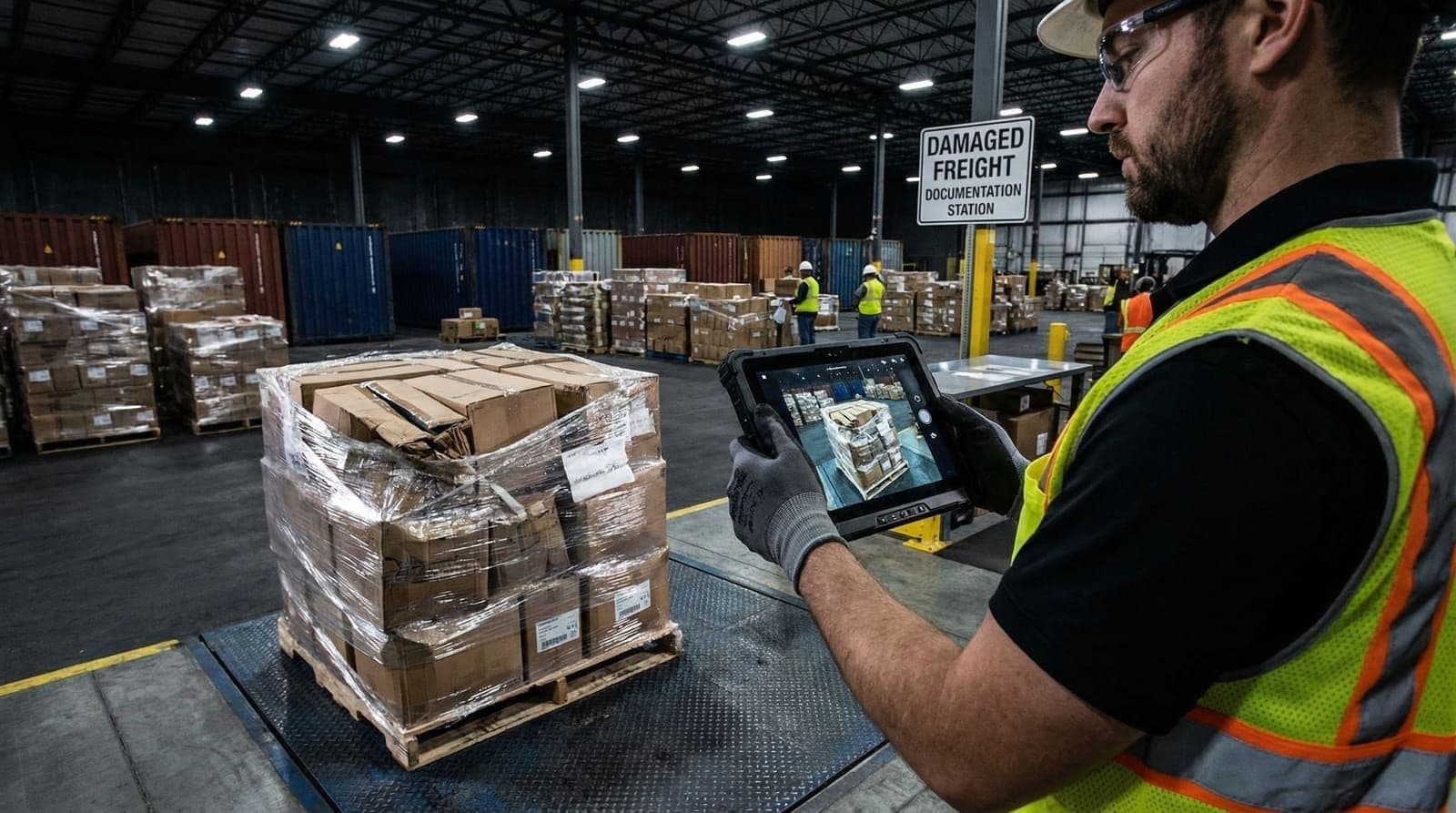
- Photograph every label, stamp, and marking
- Record all barcodes, even if they don't scan to known items
- Measure and weigh everything — dimensions often identify products faster than labels
- Document the carrier, trailer number, and seal (if any)
This information becomes invaluable when you're reconstructing what happened. Automated capture systems like Sizelabs Wilkins Parcel Dimensioner can collect all of this in seconds, creating a complete record without manual data entry.
2. Build a Blind Receipt Workflow
Don't treat blind receipts as exceptions that interrupt normal operations. Create a dedicated workflow:
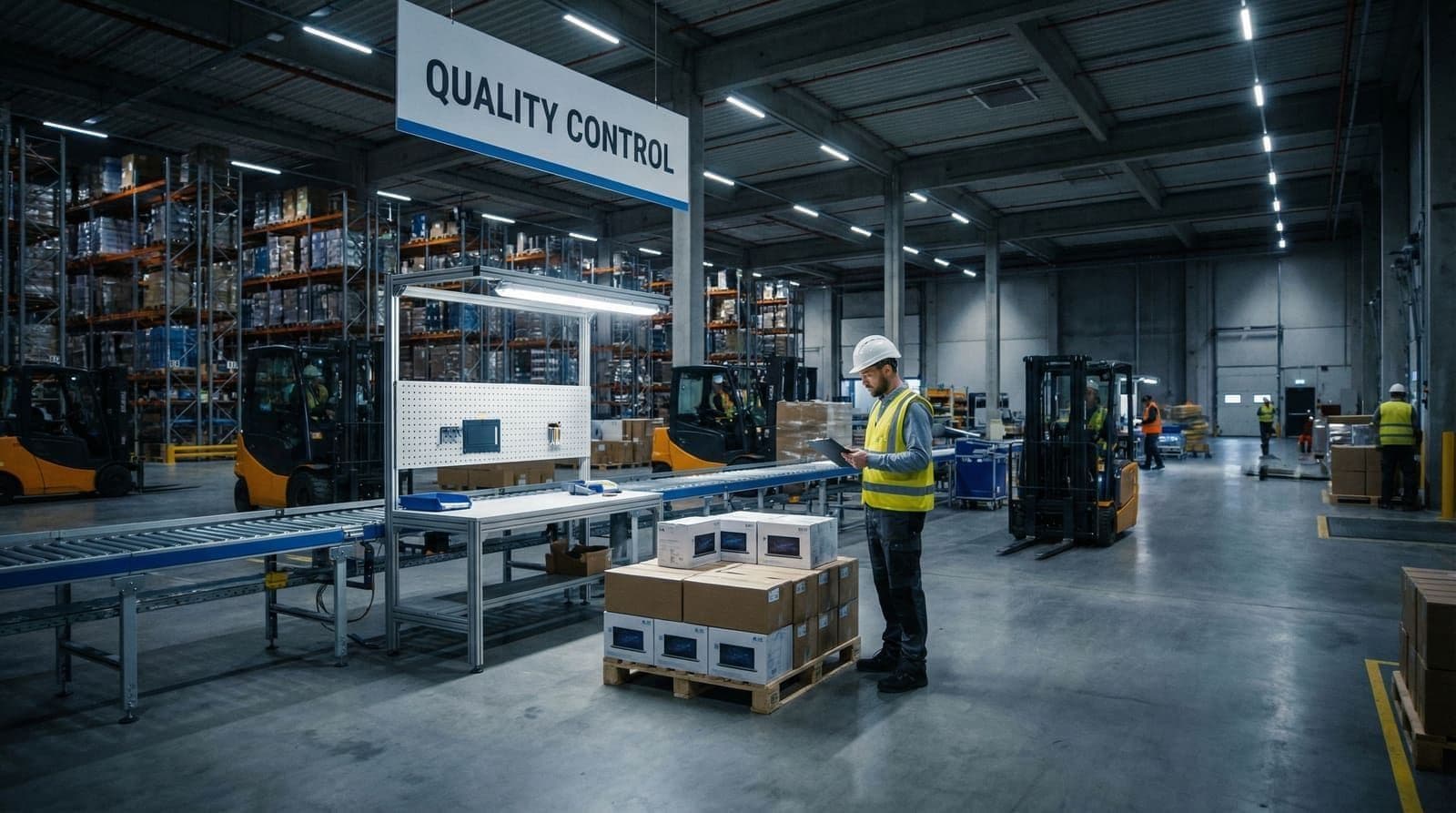
- Staging area: Designate a specific zone for unidentified goods. This keeps them from blocking your dock while also ensuring they don't get lost in your facility.
- Time limits: Set a maximum time for goods to remain in blind staging — 4 hours, end of shift, whatever works for your operation. If identification isn't complete by then, escalate.
- Ownership: Assign blind receipt resolution to specific roles. When everyone's responsible, no one is.
A defined process turns chaos into a manageable queue.
3. Leverage Your Data History
Most "unknown" shipments aren't truly unknown — they're just not linked to the right record yet. Before manual investigation, run automated checks:
- Open PO matching: Search for purchase orders expecting similar quantities, products, or vendors
- Historical patterns: Has this vendor shipped similar quantities before? Does the weight match a typical order?
- Carrier records: What else was this carrier scheduled to deliver today?
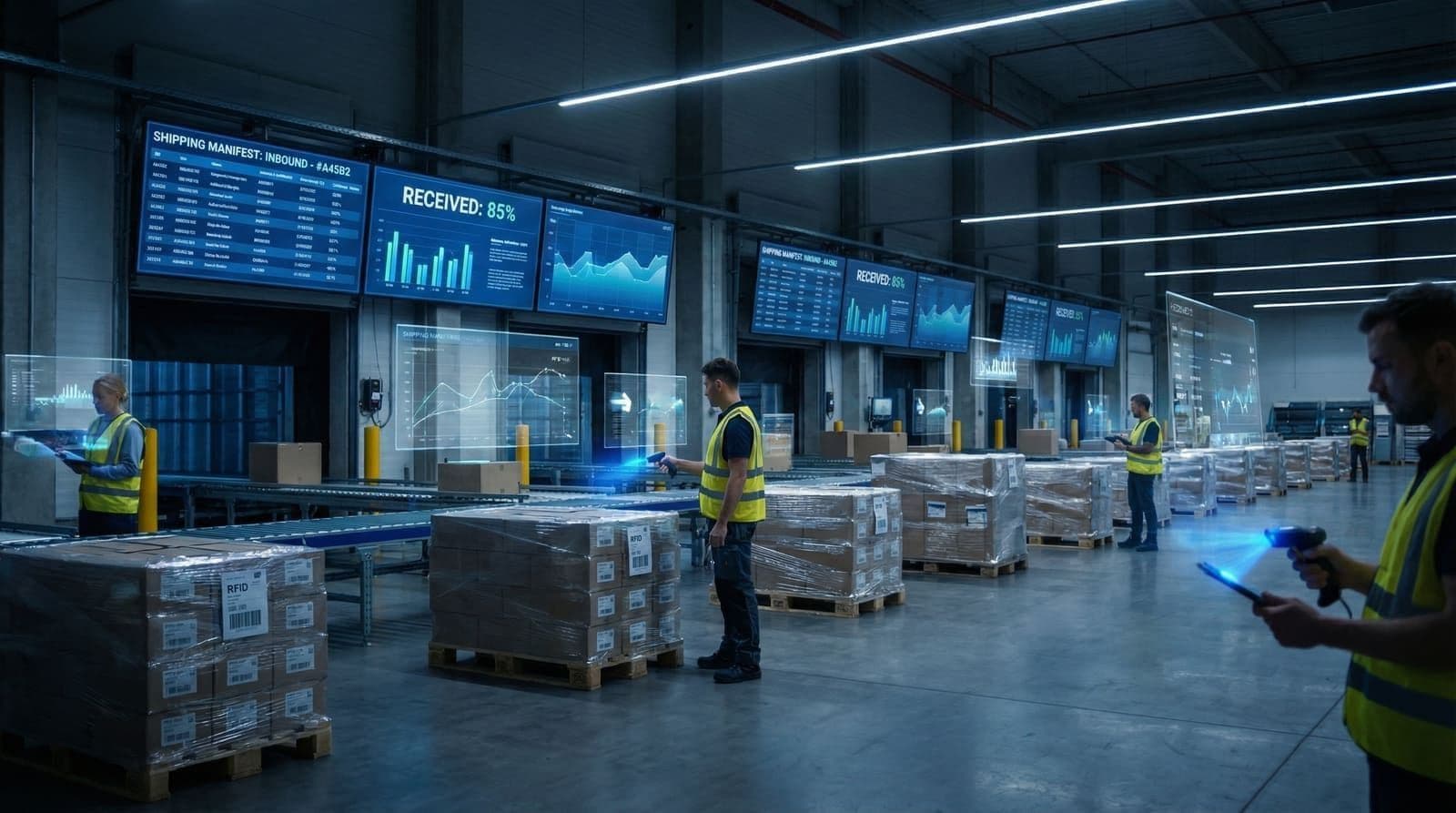
Modern receiving systems with AI-guided workflows can perform these lookups automatically, often identifying the correct PO before a human even reviews the shipment.
4. Close the Loop with Vendors
Every blind receipt represents a process failure somewhere in your supply chain. Track them by vendor and address the pattern:
- Share your ASN requirements and the cost of non-compliance
- Offer EDI integration support for vendors who lack it
- Consider receiving surcharges for shipments without proper documentation
- Build ASN compliance into vendor scorecards
Reducing blind receipts at the source is always cheaper than processing them efficiently.
The Automation Advantage
Traditional approaches to blind receiving are labor-intensive because they rely on human identification and manual data entry. When you can't look up the ASN, someone has to type everything.
Automated receiving flips this equation. Systems that capture data directly from packages — dimensions, weight, barcodes, label text — can process a blind shipment almost as fast as a documented one. The physical goods contain the information; automation just extracts it without requiring an ASN to exist first.
For warehouses that deal with significant blind receipt volume — particularly 3PL providers and freight forwarders — this changes the economics entirely. Instead of dreading undocumented shipments, you process them through the same efficient workflow as everything else.
Measuring Your Blind Receipt Impact
If you're not tracking blind receipts separately, start now. Key metrics to capture:
- Blind receipt percentage: What share of your total receipts arrive without usable ASNs?
- Processing time differential: How much longer do blind receipts take versus standard ones?
- Resolution time: From arrival to fully documented and put away, what's the average for blind receipts?
- Error rate: Are blind receipts more likely to have inventory discrepancies discovered later?
These numbers tell you exactly how much undocumented shipments cost your operation — and help you build the business case for solving the problem, whether through vendor management, process improvements, or automation.
Sizelabs processes shipments based on what's physically there — not just what the ASN says should be there. If blind receipts are slowing down your dock, see how automation handles them.