How to Prevent Carrier Billing Disputes with Accurate Warehouse Dimensioning

Last month, a 3PL in Chicago discovered they'd paid $47,000 in carrier reclassification fees over the previous quarter. The cause? Manual dimension entry errors at receiving that cascaded through every subsequent shipment.
This isn't unusual. Freight billing disputes drain warehouse profitability quietly—a few hundred dollars here, a thousand there—until the quarterly audit reveals the damage.
Why Carrier Billing Disputes Keep Growing
Carriers have gotten aggressive about dimensional weight audits. FedEx and UPS now use automated scanning at every hub, comparing your declared dimensions against their measurements. When there's a discrepancy, you pay the difference plus a correction fee.
The math works against you:
- UPS and FedEx DIM divisor: 139 (cubic inches per pound)
- A 2-inch measurement error on a 24×18×12 box adds 864 cubic inches
- That's an extra 6.2 DIM pounds per package
Ship 500 of those monthly, and you're looking at 3,100 phantom pounds billed at your negotiated rate. At $0.50 per pound, that's $1,550 per month in overcharges—on a single SKU.
The Root Cause: Inaccurate Data at the Source
Most billing disputes trace back to one point: the receiving dock.
When dimensions get entered manually—or pulled from outdated product masters—errors compound. A warehouse associate eyeballing a box, a vendor shipping in different packaging, a new product variant with no stored dimensions. Each creates drift between your system and reality.
The problem multiplies in 3PL operations where multiple clients ship varied products. Without standardized dimension capture at inbound, you're essentially guessing on every outbound label.
Five Steps to Eliminate Billing Disputes
1. Capture Dimensions at Receiving
The only reliable dimension data is data captured at the moment goods enter your facility. Not from the vendor's specs. Not from last year's measurements. From the actual item in front of you.
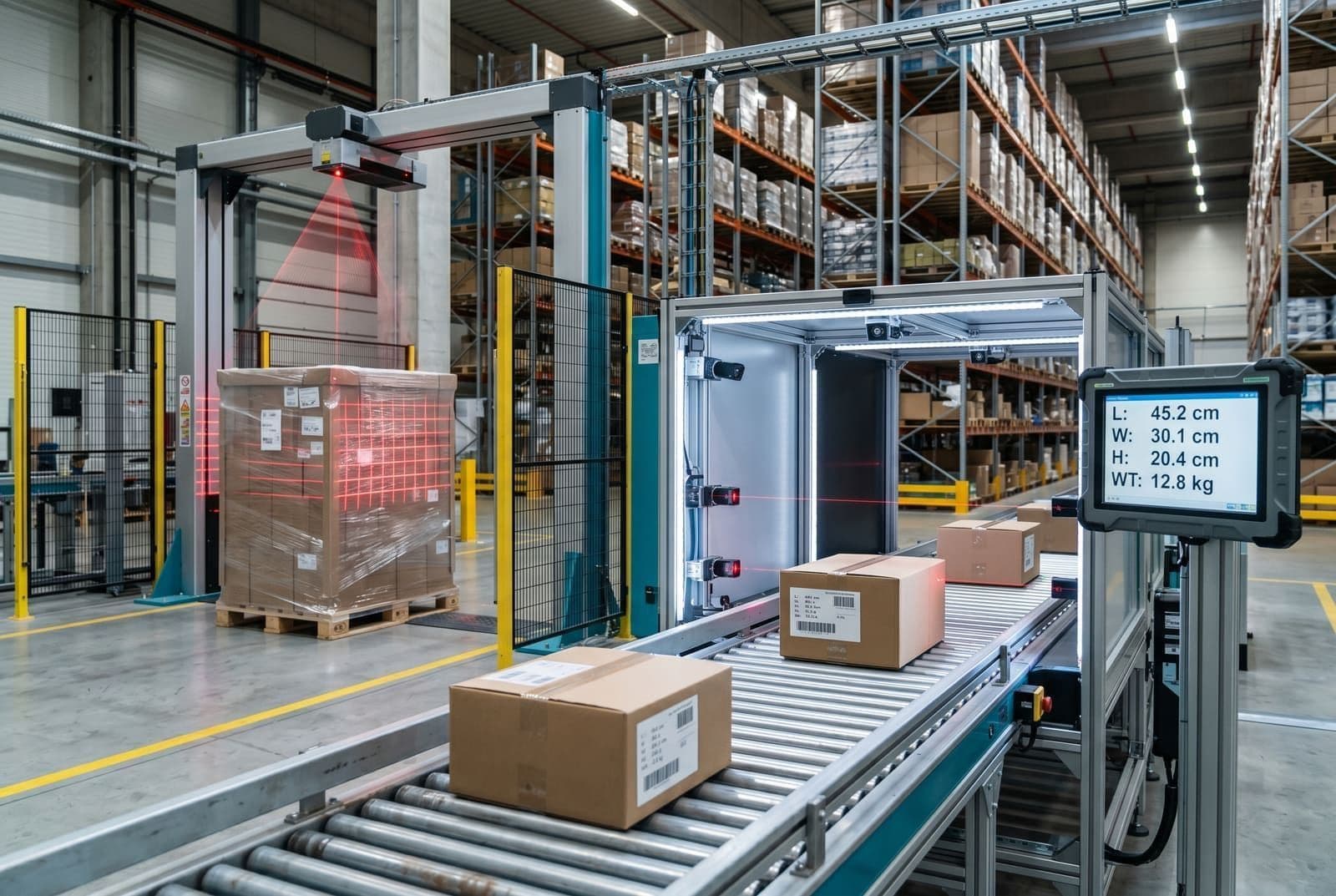
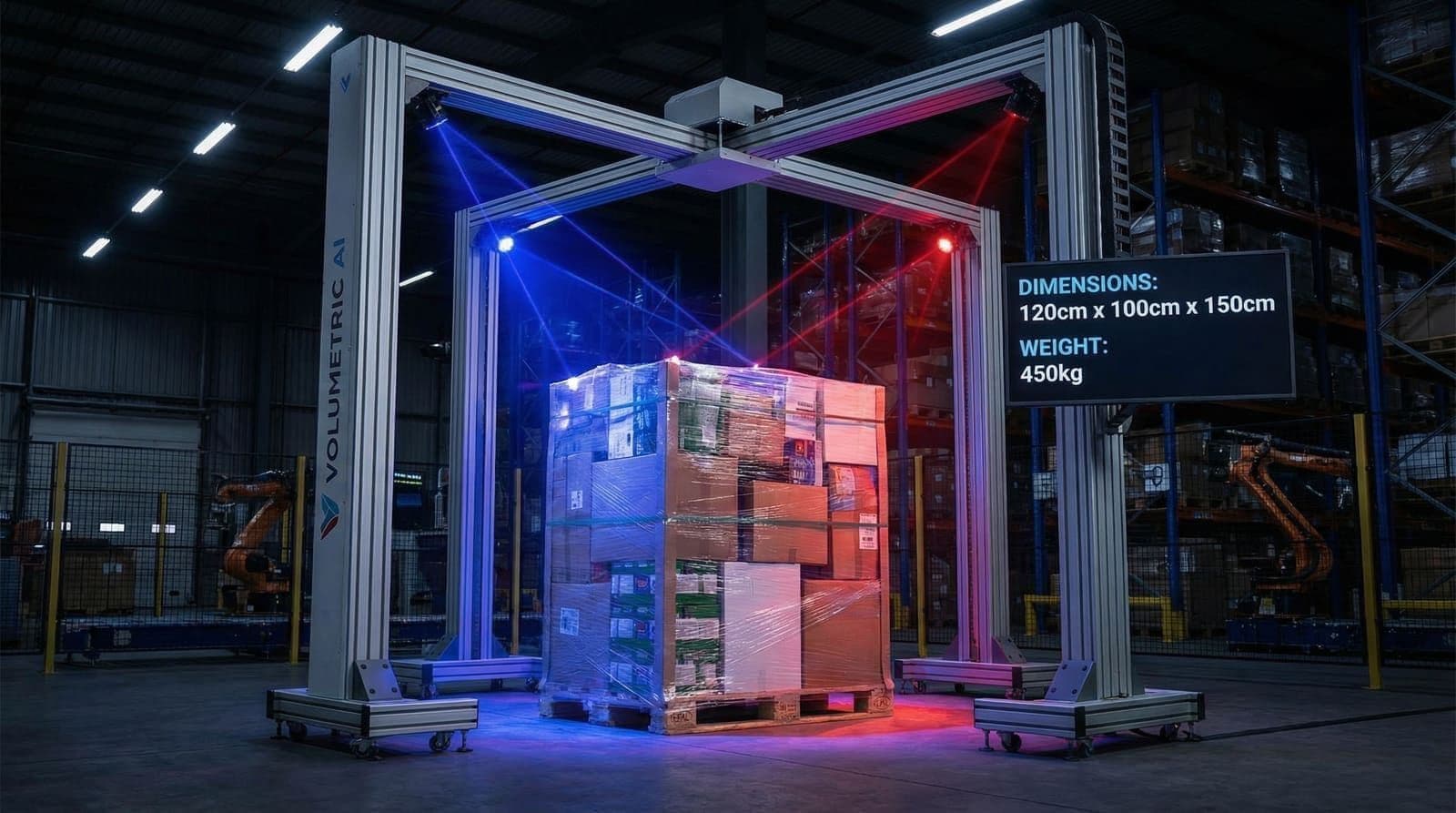
Automated dimensioning at receiving creates a single source of truth. Every pallet, every carton, every piece—measured once, stored permanently.
This isn't about distrust. Vendors make mistakes. Packaging changes. Products get consolidated differently. Receiving inspection that includes dimension verification catches these variations before they cause downstream problems.
2. Integrate with Your WMS
Dimension data sitting in a spreadsheet doesn't help anyone. The measurements need to flow directly into your warehouse management system, tied to SKU records and automatically applied to shipping calculations.
Modern parcel dimensioning systems push measurements via API the moment capture completes. No manual entry, no transcription errors, no lag between measurement and availability.
3. Audit Before You Ship
Here's where most operations fail: they dimension at receiving but never verify at shipping.
Set up a pre-ship audit process. Before labels print, cross-reference the outbound package against stored dimensions. If the measurements differ significantly—say, by more than 5%—flag it for review.
This catches:
- Kitting or bundling changes that alter box size
- Consolidation of multiple items into new packaging
- Product substitutions with different dimensions
- Packaging damage that changes shape
4. Build Your Dispute Defense System
When carriers do charge reclassification fees, you need evidence. That means:
Timestamped dimension records showing your measurements match reality. Carriers are more likely to reverse charges when you can prove your data comes from certified equipment, not manual estimates.
Photo documentation of package labeling and condition. Proper freight damage documentation practices apply equally to billing disputes.
Measurement audit trails showing when dimensions were captured and by what method. Automated systems log this automatically; manual processes need explicit protocols.
5. Analyze and Negotiate
Dispute data is negotiation leverage. When you can show carriers that 85% of their reclassification charges were reversed because your dimensions were correct, you're in a position to negotiate:
- Lower correction fees for the rare legitimate discrepancy
- Longer dispute windows to review charges before payment
- Audit tolerance bands that account for measurement variance
Pull dispute reports monthly. Identify patterns by carrier, product, or shipping lane. Use your ROI calculator to quantify the cost of inaccurate dimensioning and justify investment in better capture technology.
What Accurate Dimensioning Actually Saves
A mid-sized fulfillment center processing 50,000 parcels monthly with a 3% dimension error rate sees roughly 1,500 packages flagged for reclassification each month.
At an average correction of $4.50 per package, that's $6,750 monthly—$81,000 annually—in avoidable fees.
The labor cost matters too. Each disputed charge requires research, documentation, and carrier communication. Even at 10 minutes per dispute, 1,500 disputes consume 250 hours of staff time monthly.
Automated dimensioning at receiving doesn't just prevent disputes. It eliminates the entire dispute-resolution workflow that drains operational capacity.
The Carrier Perspective
Understanding carrier incentives helps you build better defenses.
Carriers profit from dimension discrepancies. Their scanning infrastructure is an investment that pays for itself through reclassification fees. They have no incentive to give you the benefit of the doubt.
But carriers also hate disputes. Each challenge costs them administrative overhead. If you establish a pattern of winning challenges with solid documentation, they'll scrutinize your shipments less aggressively.
The goal isn't to game the system. It's to ensure your declared dimensions match reality closely enough that carrier audits confirm your accuracy rather than catch your errors.
Starting the Transition
If you're currently running manual dimension processes, the transition to automated capture doesn't happen overnight. Start with high-value, high-volume SKUs where billing disputes hit hardest.
Identify the 20% of products causing 80% of your reclassification charges. Prioritize dimension capture for these items first, then expand coverage as you demonstrate ROI.
Track dispute rates before and after implementation. Most operations see dispute volumes drop 70-85% within the first quarter of automated dimensioning—with the remaining disputes typically being legitimate carrier corrections.
Accurate dimensions are table stakes for modern fulfillment operations. Sizelabs captures precise measurements at receiving speed, feeding verified data directly to your WMS. No manual entry, no estimation errors, no quarterly surprises on your carrier invoices. See how automated dimensioning works with your existing workflow—check out Wilkins Parcel Dimensioner or calculate your potential savings with our ROI calculator.