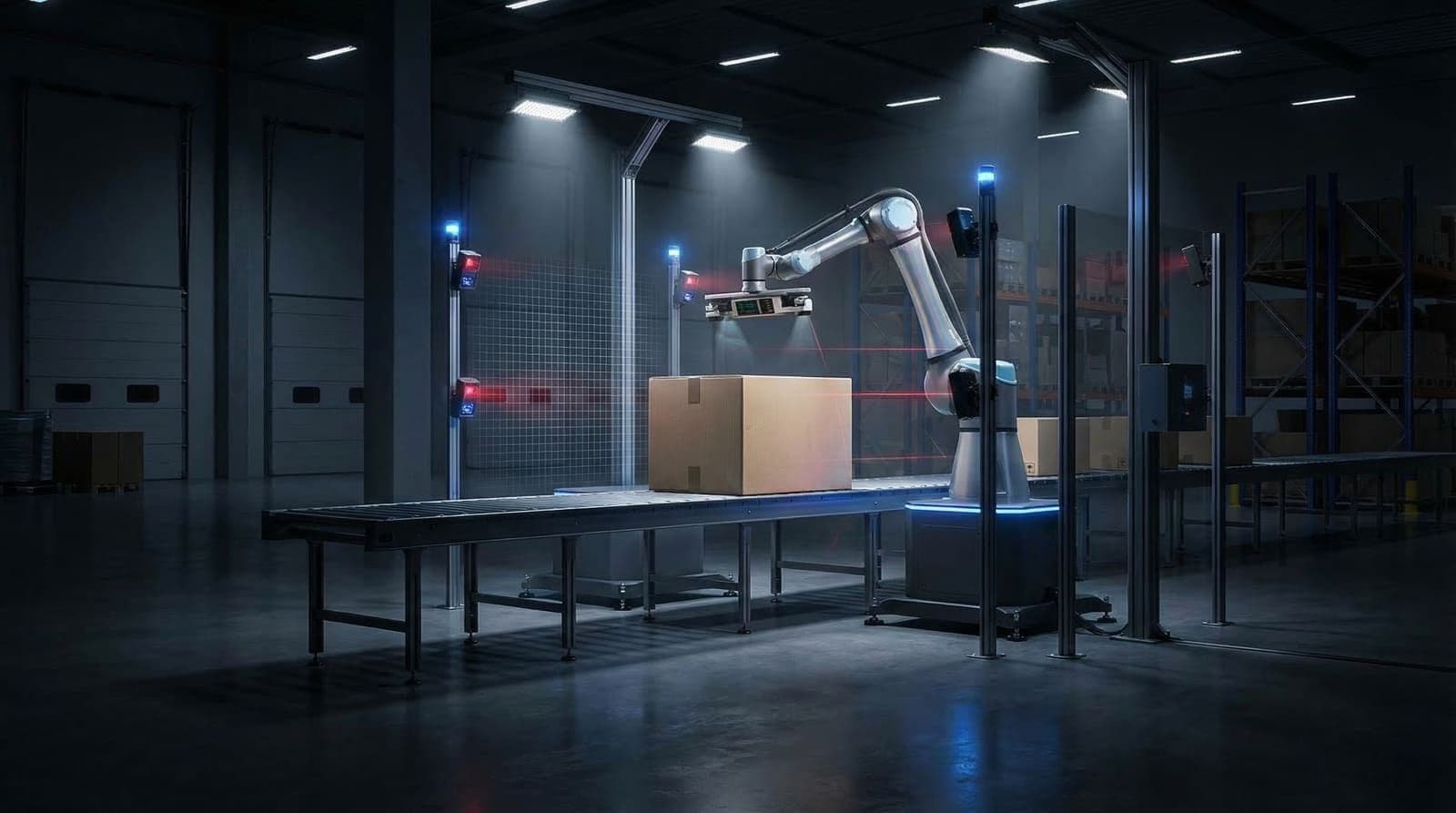
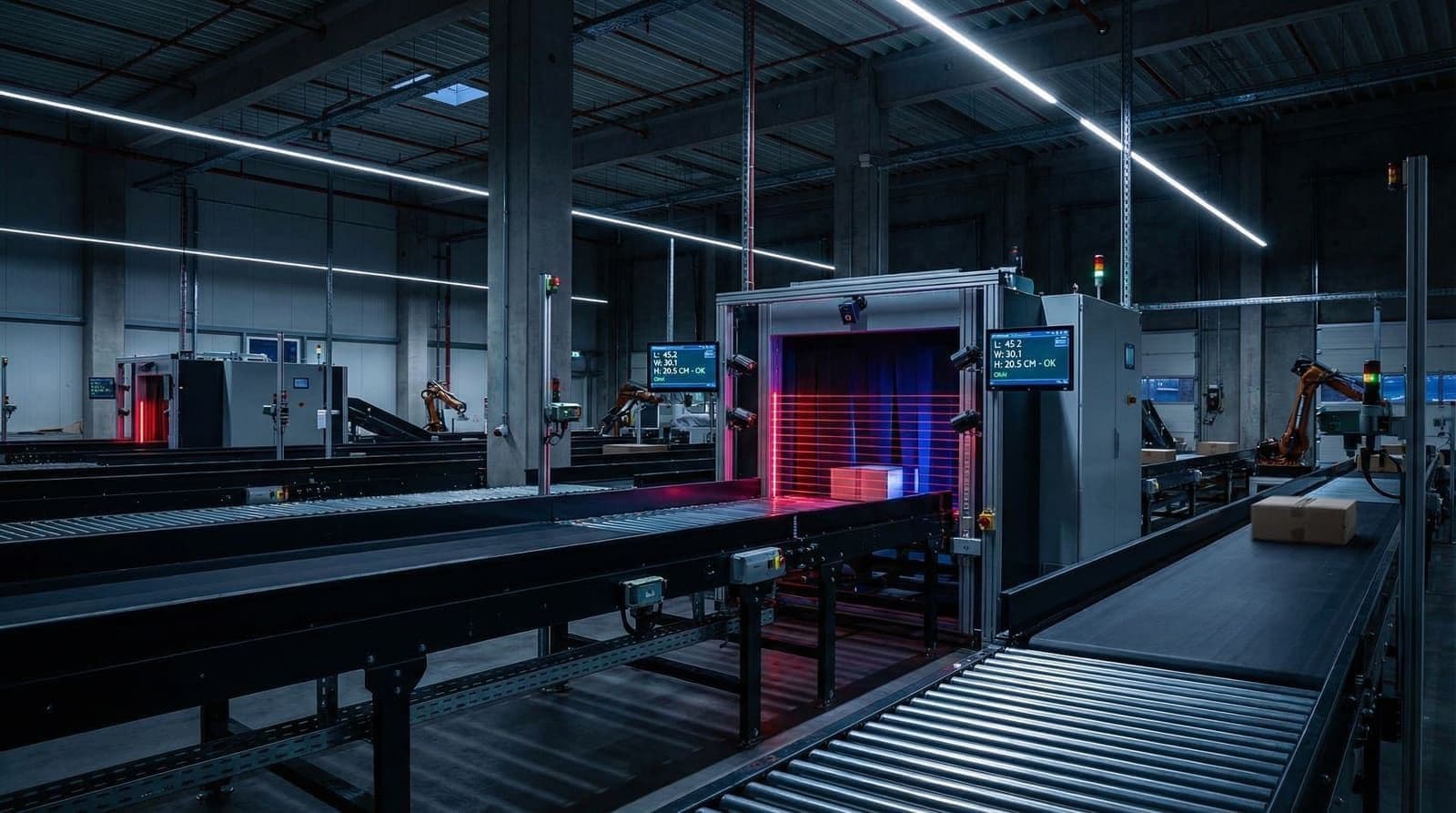
How to Choose the Right Package Sizer for Your Warehouse
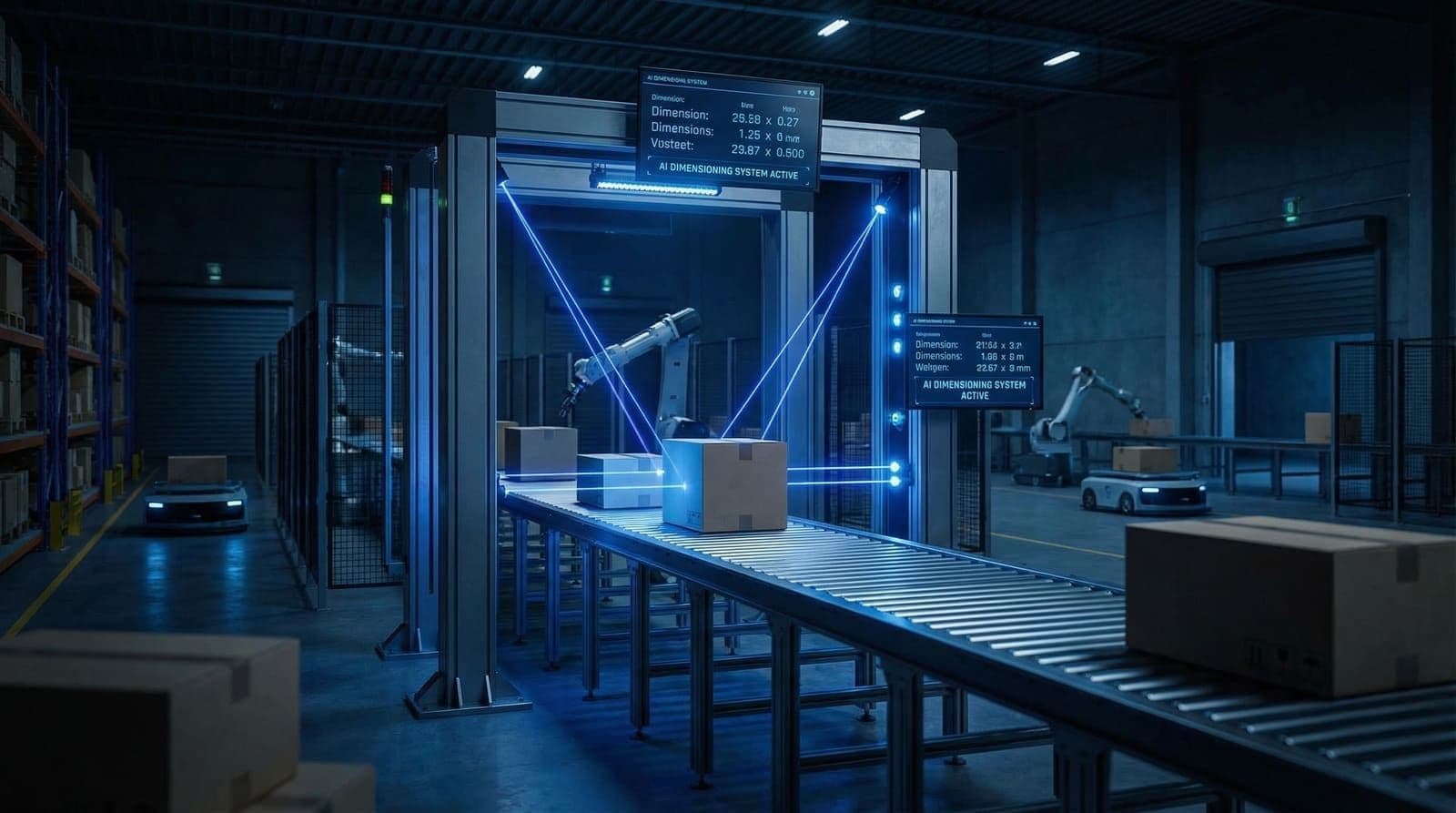
Every warehouse that ships parcels needs a way to capture package dimensions. The question is whether you're doing it manually or with an automated package sizer.
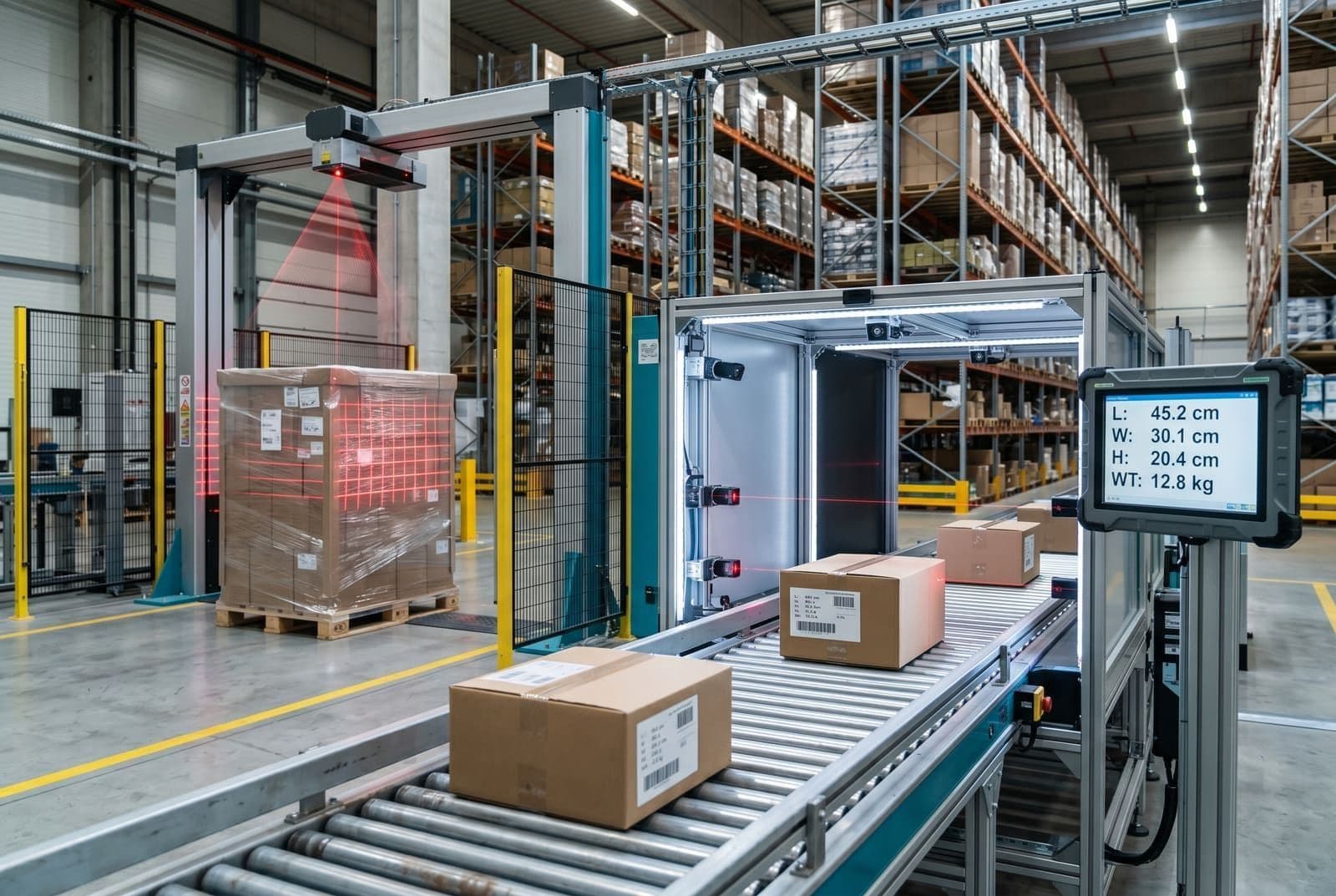
A package sizer (also called a parcel sizer or automated dimensioner) captures length, width, height, and weight automatically—eliminating manual measurement, data entry errors, and throughput bottlenecks. But not all parcel sizers are built the same. Choosing the right one means understanding your volume, accuracy needs, integration requirements, and expected ROI.
Here's how to evaluate package sizing systems for your operation.
What Is a Package Sizer?
A package sizer is an automated system that measures the dimensions and weight of parcels without manual intervention. Modern parcel sizers use one of three technologies:
- Laser-based systems → Scanning lasers measure package edges as items pass through a detection zone
- Camera-based (photogrammetry) → Cameras capture multiple angles and calculate dimensions using image processing
- AI-powered computer vision → Neural networks analyze visual data to detect package boundaries with sub-inch accuracy
Most modern package sizers also include integrated scales to capture weight simultaneously, giving you complete dimensional weight (DIM weight) data in a single step.
Why Invest in a Parcel Sizer?
Manual measurement creates three main problems:
Labor costs: A warehouse operator measuring packages with a tape measure and keying dimensions into a WMS spends 45-65 seconds per package (measurement + data entry). At 500 packages daily, that's 9 hours of labor—roughly $162/day at $18/hour fully loaded.
Error rates: Manual data entry introduces 1-3% error rates. Each mistake triggers carrier adjustments, billing disputes, and rework. A 2% error rate on 500 daily packages = 10 errors/day. If half trigger carrier adjustments averaging $10, that's $13,000 annually in avoidable fees.
Throughput constraints: Manual measurement becomes a bottleneck. When volume spikes, you either add labor (expensive) or let packages queue (delays). An automated package sizer processes items in under 2 seconds with certified accuracy—no bottleneck, no errors.
For most operations processing 200+ packages daily, a parcel sizer pays back within 6-12 months through labor savings and eliminated billing disputes.
Types of Package Sizers
Parcel sizers fall into two main categories based on how packages move through the system:
Static Package Sizers
Operators place packages on a platform. The system captures dimensions in 1-2 seconds, then the operator moves the package to the next station.
Best for:
- Operations under 1,500 packages/day
- Receiving stations where items arrive individually
- QA checkpoints where inspection happens anyway
- Warehouses without conveyor infrastructure
Pros: Lower cost ($4,000-$15,000), easy installation, no conveyor required
Cons: Requires manual placement, slower than dynamic systems
Dynamic/In-Motion Package Sizers
Packages measured while moving on a conveyor at speeds up to 1,200+ packages/hour. True conveyor weight capturing automation.
Best for:
- High-volume fulfillment (1,500+ packages/day)
- Sortation centers
- Operations with existing conveyor systems
- 3PLs managing multiple clients
Pros: Hands-free, highest throughput, integrates with conveyors
Cons: Higher cost ($15,000-$50,000), requires conveyor setup
For a detailed comparison of static vs dynamic dimensioning, see our guide on static vs dynamic dimensioning systems.
Key Specifications to Compare
When evaluating package sizers, compare these specs across vendors:
Dimensional range: What's the smallest and largest package it can measure? Most parcel sizers handle 1"×1"×1" to 36"×36"×36". For larger items, you'll need pallet-scale equipment.
Accuracy: What's the measurement tolerance? Carrier billing typically requires ±0.5" accuracy. NTEP-certified systems guarantee ±0.25" or better—defendable data when carriers challenge your declared dimensions.
Throughput: How many packages per hour? Static systems: 150-400/hour. Dynamic systems: 600-1,200+/hour. Match throughput to your peak volume needs.
Weight capacity: Integrated scale max weight. Most parcel sizers handle 0-150 lbs. If you ship heavier items, verify weight range.
Certification: Is it NTEP certified for legal-for-trade? Required if you use dimensional data for billing or invoicing.
Integration: Does it connect to your WMS/TMS? Check for pre-built connectors or REST API availability. Systems that don't integrate cleanly create manual data-sync problems.
Integration: The Hidden Cost
A package sizer that doesn't integrate with your WMS creates more work, not less. You're measuring automatically but still manually entering data—defeating the point.
Look for:
- Pre-built connectors for major WMS platforms (SAP, Oracle, ShipStation, etc.)
- REST API for custom integrations with proprietary systems
- Real-time data push so dimensional data flows automatically to shipping/billing systems
- Webhook support for event-driven workflows (e.g., trigger label printing after measurement)
Budget 10-20% of hardware cost for integration if you need custom development. Systems with strong API documentation and vendor support make this easier.
Accuracy vs Speed Trade-Offs
Faster isn't always better. Some parcel sizers sacrifice accuracy for speed:
- Laser scanners: Fast but struggle with irregular shapes or soft packages
- Basic cameras: Cheap but less accurate on dark/shiny surfaces
- AI vision systems: Slower capture (1-2 sec) but handle edge cases better
If you ship mostly uniform boxes, speed-focused systems work fine. If you handle polybags, irregular items, or freight with damage, prioritize accuracy over raw throughput.
Automated measurement beats manual in both categories—but not all automated systems perform equally.
ROI Calculation: Is It Worth It?
Run the numbers before you buy:
Annual labor cost (manual measurement):
- Packages/day × 50 seconds/package = labor hours daily
- Labor hours × $18/hour × 260 days = annual labor cost
Annual error cost:
- Packages/day × 2% error rate = errors/day
- Errors/day × 50% trigger adjustments × $10/adjustment × 260 days = annual adjustment fees
Total current cost = labor + errors + opportunity cost of throughput limits
Parcel sizer cost:
- Equipment: $4,000-$50,000 (depends on type)
- Integration: 10-20% of hardware cost
- Annual subscription/maintenance: $400-$1,000/month
If savings > costs within 12-18 months, the ROI is defensible. Most operations over 300 packages/day see payback within 6 months.
Use our ROI calculator to run scenario-specific numbers.
Vendor Evaluation Checklist
When comparing package sizer vendors, ask:
Technical:
- What's the dimensional accuracy (±inches)?
- Is it NTEP certified?
- What's the max throughput (packages/hour)?
- Does it handle irregular shapes/soft packages?
- Does it work with existing conveyors?
Integration:
- Which WMS systems have pre-built connectors?
- Is there a REST API for custom integrations?
- How is data delivered (real-time push, polling, file export)?
- Can it integrate with carrier APIs for automatic rate shopping?
Commercial:
- What's included in the monthly subscription?
- Is annual NTEP recertification included or extra?
- What's the one-time installation/training cost?
- What's the warranty/support SLA?
- Can I trial the system before committing?
Operational:
- What's the installation timeline?
- Does it require facility modifications (power, space, conveyor changes)?
- What's the training requirement for operators?
- How is maintenance handled (vendor visit vs user-serviceable)?
When Manual Measurement Still Makes Sense
Not every operation needs an automated package sizer. Manual measurement works fine when:
- Volume under 100 packages/day → Labor costs stay manageable
- Minimal package variety → If you ship the same 5 box sizes repeatedly, dimensional data can live at SKU level
- Carrier billing isn't DIM-based → Some contracts use flat rates (increasingly rare)
The inflection point typically sits around 150-300 packages daily. Below that, ROI stretches beyond 18 months. Above that, automated package sizing becomes cost-effective quickly.
Making the Decision
Choosing the right parcel sizer comes down to:
- Measure your baseline: Track current labor hours, error rates, and carrier adjustments for 2 weeks
- Define requirements: Volume, accuracy, integration needs, conveyor compatibility
- Compare options: Static vs dynamic, accuracy specs, throughput, vendor support
- Calculate ROI: Include all costs (labor, errors, opportunity cost) and realistic payback timeline
- Trial before buying: Most vendors offer on-site demos or trial periods
A package sizer that fits your operation pays for itself through labor savings, fewer billing disputes, and the ability to scale volume without adding headcount.
If you're ready to explore automated package sizing for your warehouse, Sizelabs Wilkins Parcel Dimensioner offers AI-powered parcel dimensioning with NTEP certification, WMS integration, and proven ROI for high-volume operations.