What to Look for in a Pallet Dimensioning System: A 2026 Buyer's Guide
If you're evaluating pallet dimensioning systems for your warehouse, you've probably noticed that every vendor claims to have the fastest, most accurate, most affordable solution. The reality is messier: what works for a high-volume 3PL won't necessarily fit a freight forwarder handling oversized loads, and a system perfect for LTL shipping might be overkill for internal inventory tracking.
This guide breaks down what actually matters when choosing a pallet dimensioning system—and what's just marketing noise.
Quick answer
Choose a pallet dimensioning system by matching the workflow first: certified billing, freight audit defense, receiving, trailer planning, or internal inventory control. For billing and carrier disputes, verify NTEP certification scope, integrated weight capture, measurement range, and image/audit evidence. For high-volume docks, throughput and WMS integration matter as much as accuracy because a system that slows forklifts or receiving teams will not survive daily operations.
Why Pallet Dimensioning Systems Matter More Than Ever
Carrier billing has gotten ruthless. FedEx Freight, UPS Freight, and LTL carriers now audit dimensional weight on nearly every shipment. Get the dimensions wrong, and you're eating billing adjustments, disputes, and in some cases, accessorial charges you didn't see coming.
Beyond carrier billing, accurate pallet dimensions drive:
- Better space utilization in trailers and containers
- More accurate quoting for freight forwarding operations
- Compliance with retail vendor requirements (Walmart, Amazon, Target all have strict specs)
- Faster receiving when paired with ASN data for inbound verification
The question isn't whether you need accurate pallet dimensions—it's how to capture them without slowing down your operation.
The Five Critical Factors in Any Pallet Dimensioning Decision
1. Accuracy and Legal-for-Trade Certification
Accuracy specifications vary wildly across vendors. You'll see claims of ±0.5 inches, ±1 inch, even ±2 inches depending on the system. But here's what most buyers miss: accuracy alone doesn't tell you if you can use those dimensions for billing.
If you're using pallet dimensions to bill customers or defend against carrier audits, you need NTEP certification. NTEP (National Type Evaluation Program) certification means the system has been independently tested and approved for commercial transactions in the United States. Without it, your dimensions are just estimates—legally unenforceable.
What to verify:
- Is the system NTEP-certified for the dimension ranges you handle?
- Does certification cover the full pallet size range (standard 48×40 through oversized freight)?
- Is the weight scale integrated and also NTEP-certified?
2. Throughput and Workflow Integration
Pallet dimensioning systems fall into two categories:
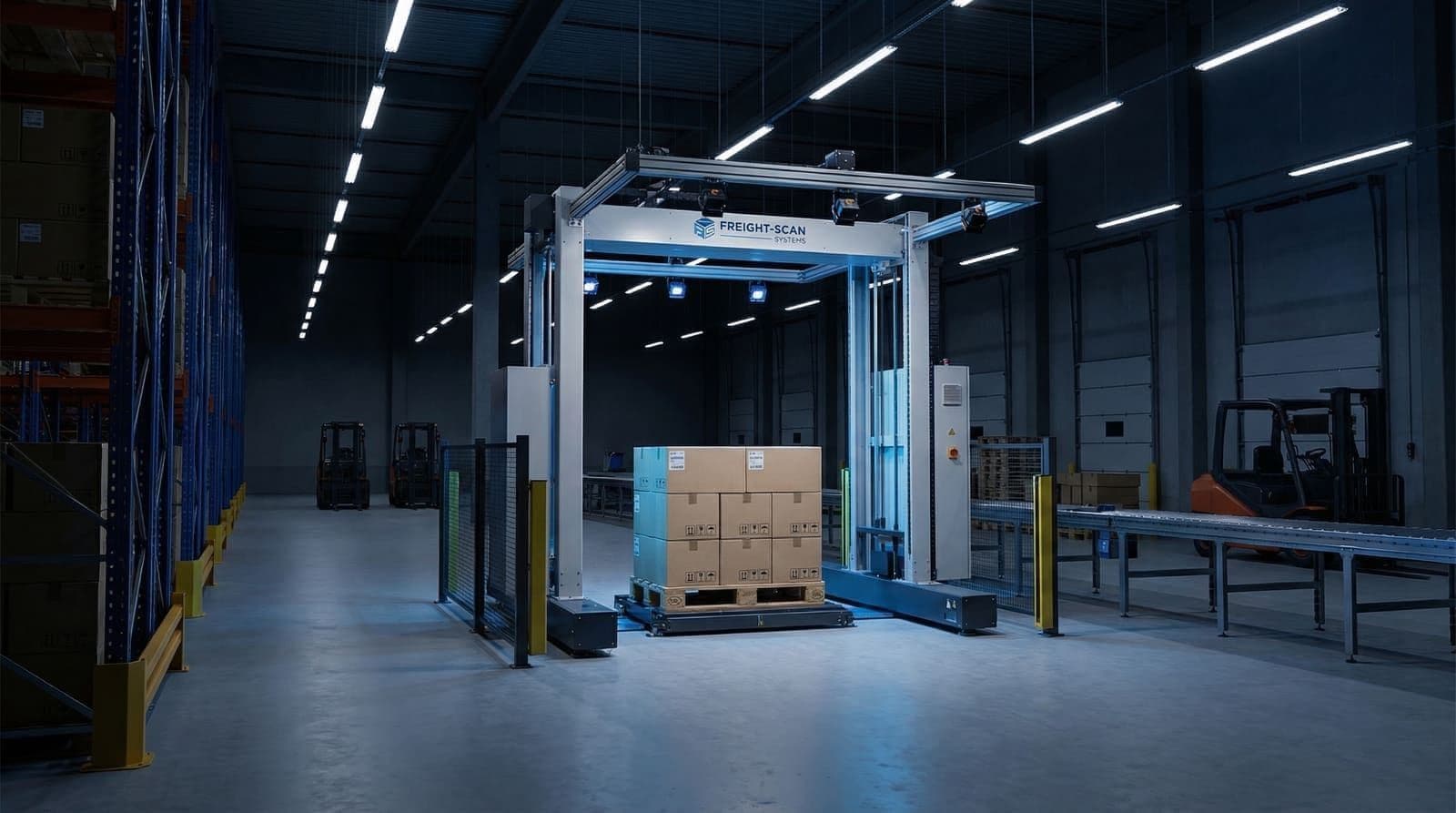
Static systems require an operator to position the pallet, capture dimensions, then move it. Typical throughput: 20-40 pallets per hour with a dedicated operator.
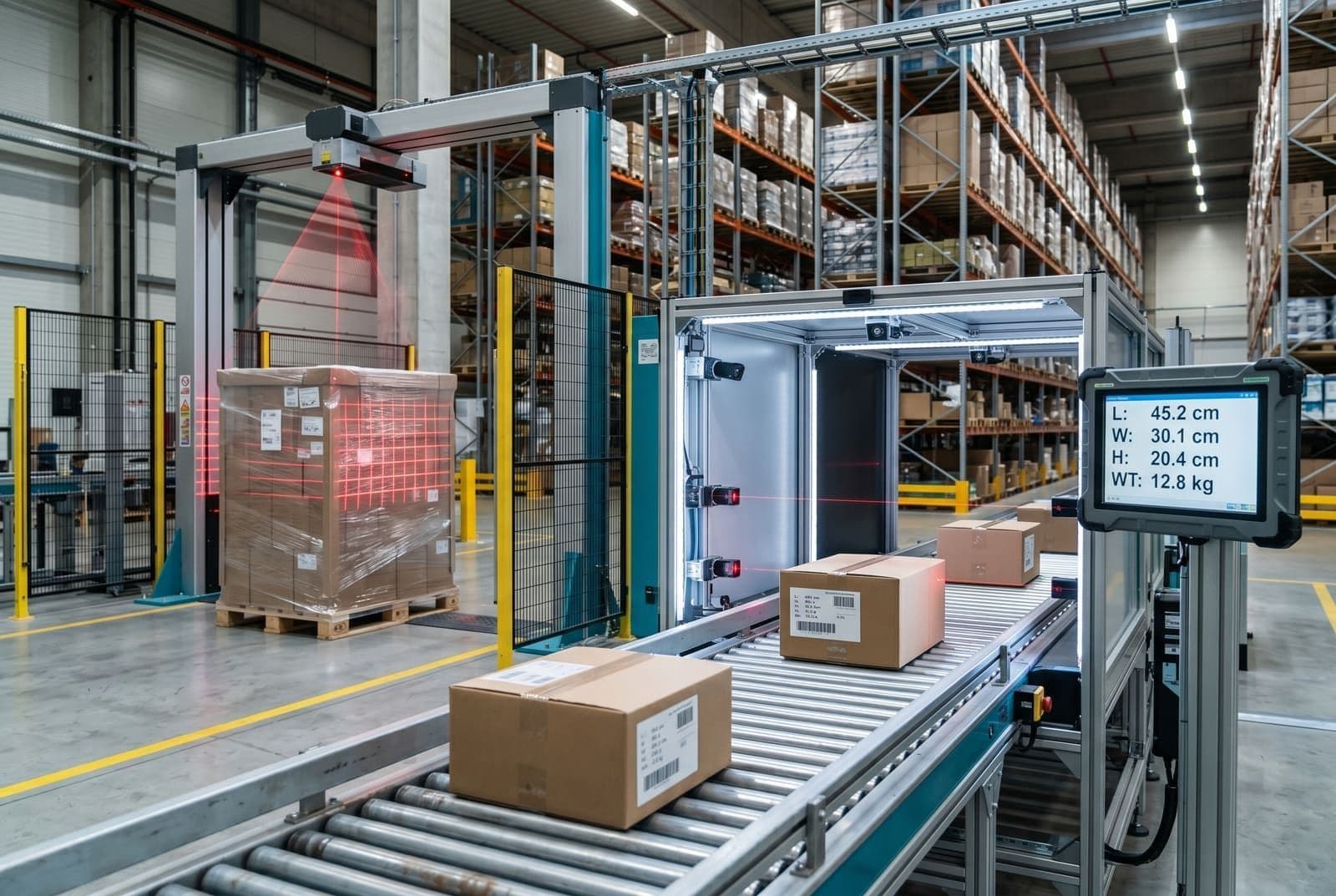
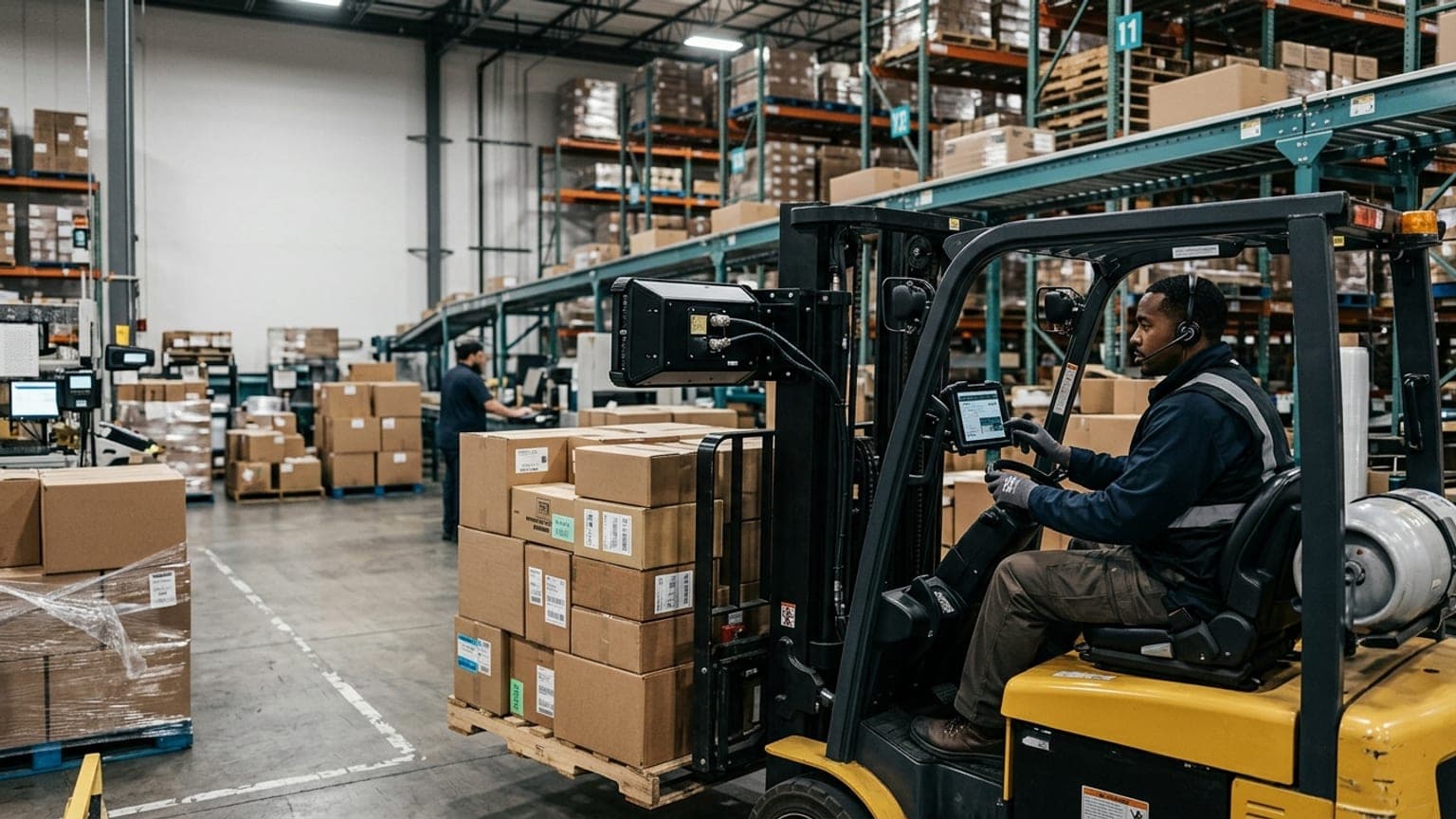
In-motion systems capture dimensions as pallets move through on a conveyor or are transported by forklift. Throughput: 60-100+ pallets per hour depending on your existing material flow.
The right choice depends on your volume and existing workflow. If you're handling under 200 pallets per day, a static system with a dedicated station often makes sense. Above that, the labor savings from in-motion capture usually justify the higher investment.
Integration questions to ask:
- Can the system integrate directly with your WMS for automatic data capture?
- Does it support your forklift fleet or existing conveyors?
- What's the installation footprint? (Some overhead systems need 15+ feet of clearance.)
3. Object Type Handling
Not all pallets are created equal. A standard GMA pallet stacked with uniform cartons is the easy case. Real-world freight includes:
- Irregular shapes (machinery, equipment, wrapped bundles)
- Protruding loads that extend beyond the pallet footprint
- Dark or reflective surfaces that confuse some sensor types
- Mixed unit loads (partial pallets, floor-loaded freight)
Before committing to a system, test it with your actual freight mix. Vendors will demo with perfect cube-shaped loads; what you need to know is how it handles the exceptions—because those are the shipments that cause billing problems.
4. Total Cost of Ownership
The sticker price on a pallet dimensioning system tells you almost nothing about what it will actually cost to operate. A complete cost picture includes:
Upfront costs:
- Hardware and sensors
- Installation and calibration
- WMS integration development (can range from $5K to $50K+ depending on complexity)
Ongoing costs:
- Annual maintenance and recertification (NTEP certification must be renewed)
- Sensor cleaning and replacement
- Software licensing or subscription fees
- Staff training and process changes
For a realistic comparison, build a 3-year total cost model. Some systems with lower upfront costs carry subscription fees that exceed the hardware cost by year two. Others require expensive annual recertification visits.
If you want to model the numbers for your operation, a warehouse automation ROI calculator can help you compare scenarios.
5. Data and Reporting Capabilities
Capturing dimensions is only valuable if you can use the data. Key capabilities to evaluate:
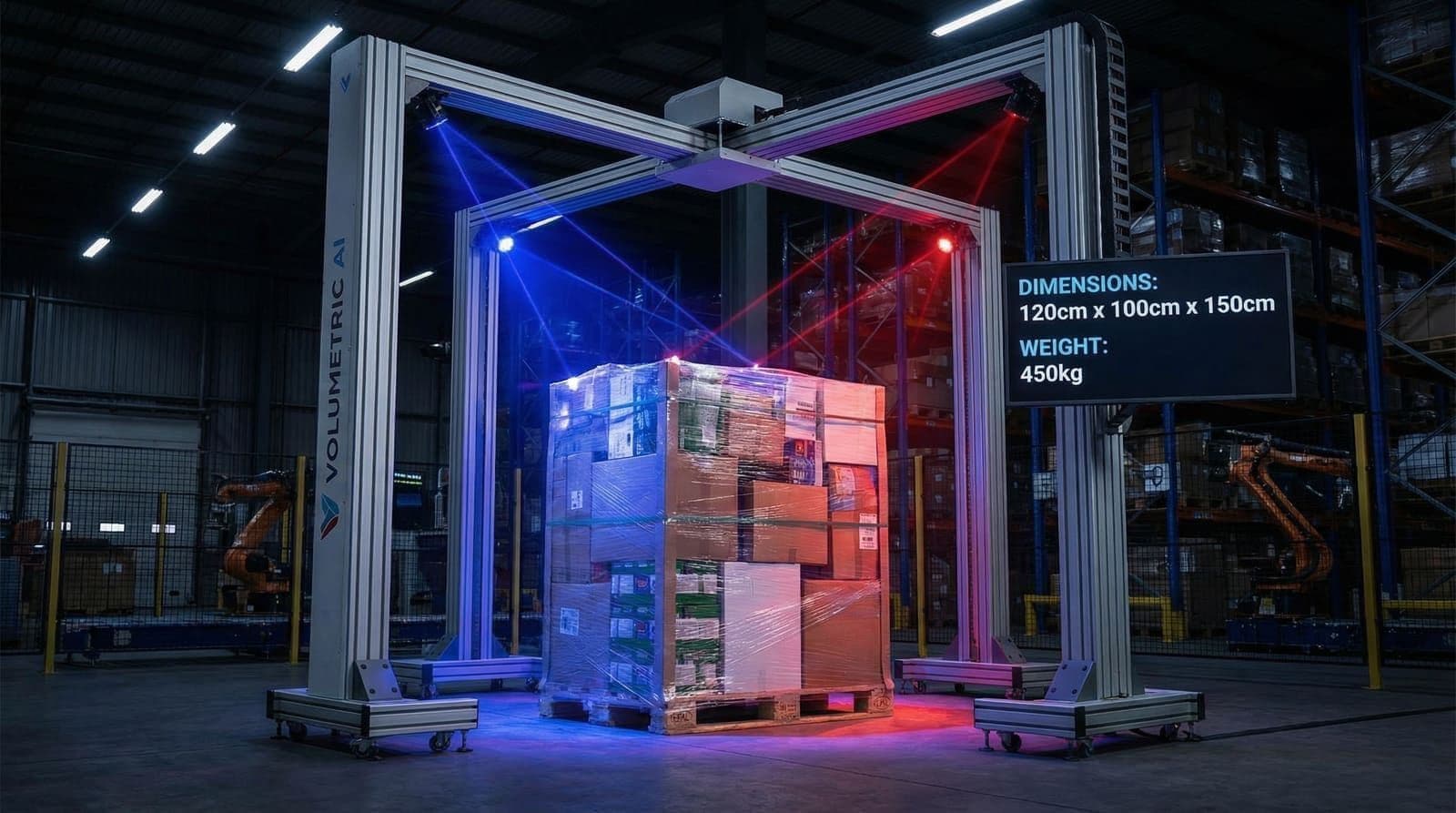
- Image capture with dimension overlay (critical for dispute resolution)
- Audit trails showing when each pallet was measured, by whom, with what result
- Exception flagging for measurements outside expected ranges
- Integration formats (API, flat file export, direct EDI)
The best systems let you pull up any historical measurement with a photo in under 30 seconds. When a carrier disputes a shipment from three weeks ago, that retrieval speed matters.
Questions to Ask During Vendor Evaluation
On accuracy:
- What's the accuracy specification at different load sizes?
- Is the system NTEP-certified, and for what weight/dimension ranges?
- How does accuracy change with irregular or dark-colored loads?
On integration:
- What's the typical timeline for WMS integration?
- Do you provide a documented API?
- Can the system operate standalone if WMS connectivity fails?
On support:
- What's included in the maintenance agreement?
- How often is recertification required, and what does it cost?
- What's the typical response time for hardware issues?
On proof:
- Can you provide references from operations similar to mine?
- What's the measured accuracy and throughput at those sites (not specs, actuals)?
Red Flags to Watch For
No NTEP certification when the vendor claims "legal-for-trade accuracy." If it's not certified, it's not legal for trade—period.
Vague integration timelines. If they can't give you a specific estimate based on your WMS, they probably haven't done it before.
Bundled pricing that hides ongoing costs. Insist on a line-item breakdown of hardware, software, installation, and annual fees.
Demo conditions that don't match your reality. If they only demo with clean, uniform cartons and you handle irregular freight, ask for a pilot with your actual product mix.
Making the Final Decision
Pallet dimensioning is infrastructure, not a quick fix. The system you choose will be capturing data for years, feeding your billing, your WMS, your carrier negotiations. It's worth investing time upfront to get it right.
Build your shortlist based on certification and accuracy requirements. Narrow based on throughput fit and integration feasibility. Make the final call on total cost and vendor track record.
If you're evaluating systems for freight, 3PL operations, or high-volume fulfillment, you likely need a solution that handles both pallets and packages. Sizelabs' Wilkins Pallet Dimensioner integrates pallet dimensioning with broader warehouse automation—worth a look if unified data capture matters for your operation.