Warehouse cube utilization: how to use your vertical space without creating a mess
Most warehouses run out of floor space long before they run out of building. That is usually a cube utilization problem.
Teams add racks, squeeze aisles, or start talking about expansion while empty air is sitting above pallets, cartons, and staging areas. The expensive part is not just the wasted space. Bad cube utilization also creates longer travel paths, awkward replenishment, and more congestion in the exact zones that are already under pressure.
If you want to fix it, start with the right question. Do you actually need more warehouse space, or are you just using your current cube badly?
What warehouse cube utilization actually means
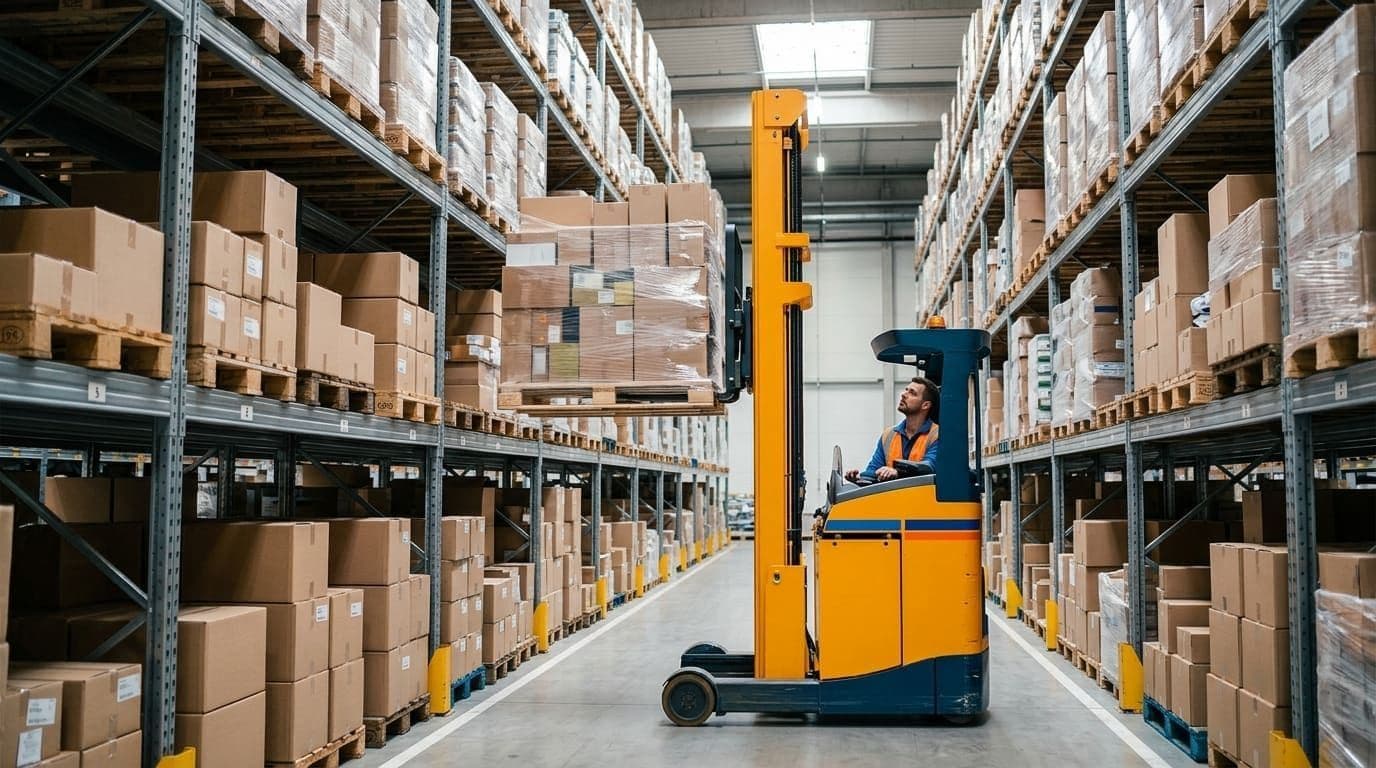
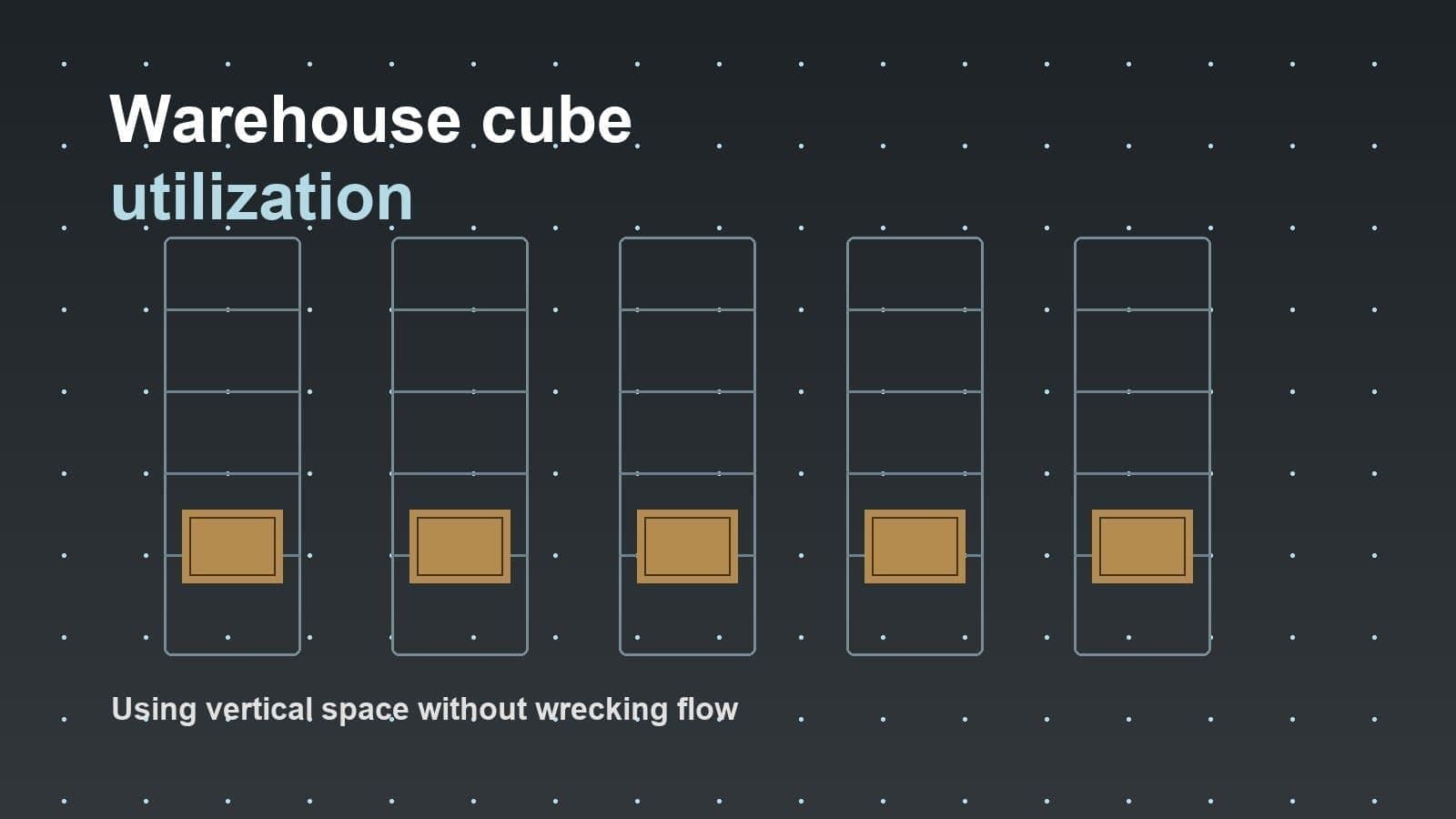
Warehouse cube utilization measures how much of your available storage volume you are really using. Not square footage. Volume.
A facility can look full on the ground and still waste a huge amount of vertical capacity. That usually happens when:
- slotting rules are outdated
- rack heights do not match inventory profiles
- cartons and pallets are stored with too much dead air
- inbound staging starts eating permanent storage space
- teams do not have reliable dimension data for the inventory they handle
That last one matters more than most operators expect. If item and package dimensions are wrong, every slotting decision built on top of them gets worse.
How to calculate cube utilization
The simple version is:
cube utilization = used storage volume / total usable storage volume
If a warehouse has 500,000 cubic feet of usable storage capacity and inventory currently occupies 325,000 cubic feet, cube utilization is 65%.
That sounds simple because it is. Getting accurate inputs is the hard part.
A lot of teams overestimate utilization because they use theoretical rack capacity instead of usable capacity. Those are not the same thing. Real usable capacity has to account for beam spacing, clearance rules, fire code constraints, pallet overhang, damaged locations, and operational buffers.
So if you want a number that means anything, measure:
- Actual clear storage height by area
- True slot dimensions and rack constraints
- Real inventory dimensions, not ERP guesses
- Space lost to staging, exceptions, and low-velocity clutter
If your inventory dimensions are noisy, your cube math is noisy too. That is one reason automated dimension capture matters outside carrier billing. It gives operations teams cleaner inputs for slotting and space planning.
Why cube utilization gets worse over time
Cube utilization almost never falls apart all at once. It erodes.
New SKUs get added. Packaging changes. Fast movers become medium movers. Overflow locations become permanent. A temporary staging lane survives for six months because nobody wants to touch it.
Then one day the warehouse feels "full" even though the building has plenty of air left in it.
I see this pattern constantly in growing 3PLs, ecommerce operations, and freight-heavy facilities. The operation adapts faster than the storage logic does.
The biggest causes of wasted cube
1. Bad slotting based on bad dimensions
If product dimensions in the WMS are wrong, slot profiles drift fast. Cases get assigned to locations that are too large, too small, or just wrong for how the product actually moves.
That wastes storage volume and creates more touches.
If this problem sounds familiar, it is worth looking at your broader WMS integration approach for dimensioning data.
2. One-size-fits-all rack configuration
A lot of warehouses have rack layouts that were reasonable three years ago and wrong today. Inventory mix changes faster than steel.
If every bay is configured around a narrow set of pallet heights, you end up paying for air above short loads and fighting exceptions below tall ones.
3. Overflow becoming the system
Overflow space is supposed to be temporary. In plenty of warehouses it becomes a shadow layout with weak rules, bad visibility, and ugly replenishment logic.
That is where cube utilization quietly dies.
4. Manual measurement and assumption-driven planning
When teams estimate carton and pallet size by eye, planning gets sloppy fast. You do not need perfect data for every decision, but you do need dimension data you trust.
That is especially true for operators comparing layout changes, cartonization logic, and storage density improvements.
What good cube utilization looks like
There is no magic percentage that fits every operation. Anyone giving you one clean benchmark without context is oversimplifying.
Still, here is the blunt version: if your warehouse feels packed while storage profiles, dimensions, and slotting data are unreliable, the answer is probably not expansion first. It is cleanup first.
Good cube utilization usually means:
- storage locations match the inventory they actually hold
- vertical clearance is used intentionally, not accidentally
- overflow is controlled
- dimensions are trustworthy enough to support re-slotting and capacity analysis
- productivity does not collapse as density increases
That last part matters. Chasing density while wrecking flow is stupid. More storage is not helpful if pick paths, replenishment, and forklift traffic get worse.
When dimensioning data helps
This is where a lot of teams think dimensioning is only about carrier compliance. It is not.
Reliable parcel, case, pallet, or freight dimensions can help with:
- slotting analysis
- storage profile design
- cartonization rules
- capacity planning
- identifying wasted cubic volume by SKU class
If you are evaluating systems, the right fit depends on what you handle. Wilkins Parcel Dimensioner makes sense for carton-heavy operations. Wilkins Pallet Dimensioner is the better fit when pallet flow and oversized freight are the bigger problem.
A practical way to improve cube utilization
Do not start by redrawing the entire building. Start smaller.
- Audit one zone that always feels full
- Compare system dimensions against actual dimensions
- Identify locations with chronic dead air or chronic overflow
- Re-slot the worst offenders first
- Track whether density improved without hurting throughput
If you want a quick financial gut check before touching layout, use the ROI calculator. It is a simple way to see whether better data and automation are cheaper than living with the waste.
Tools to measure warehouse cube utilization
Teams usually graduate through three tiers of cube utilization tools:
- Spreadsheet + rack drawings. Fine for a one-time audit of a zone. Breaks down the moment SKU dimensions are wrong, which is usually the reason utilization is bad in the first place.
- WMS slotting modules and warehouse design software. These compute utilization from location capacity and item master dimensions. Their output is only as good as the dimension fields they read — garbage cube data in, confident-looking garbage out.
- Measured-dimension pipelines. A dimensioning system feeds verified item, case, and pallet dimensions into the WMS, so slotting and capacity math run on real numbers. This is the tier where re-slotting recommendations stop being guesses.
The honest sequencing: fix the dimension data before buying analysis tooling. A $200/month parcel dimensioner upgrading your item master beats a six-figure optimization suite reasoning over fiction.
Cube utilization in fulfillment centers
Fulfillment centers hit cube problems differently than storage-driven warehouses:
- Forward-pick zones dominate. The money question isn't total building cube — it's whether high-velocity SKUs occupy right-sized pick faces. Slotting by dimensions is the lever, and it needs current item dims after every packaging change.
- Cartonization ties cube to shipping cost. The same dimension data that fixes storage density also drives carton selection — wasted air in cartons is cube waste you pay dimensional-weight charges on.
- Seasonality punishes static layouts. Peak inventory profiles differ from off-peak. Fulfillment operations that re-slot quarterly from measured dims recover capacity without leasing overflow space.
For the broader floor-space view — aisles, staging, docks, not just racks — see our guide to warehouse space utilization.
Final thought
When a warehouse says it is out of space, that is sometimes true. A lot of the time, it is just out of discipline and clean data. Those are fixable problems.
Sizelabs helps teams capture accurate dimensions so slotting, storage planning, and capacity decisions stop running on guesswork. If you want to see how that fits your operation, look at why teams choose Sizelabs or dig into the dimensioning options across products.