Warehouse Wave Planning: How to Organize Picks for Maximum Efficiency

Your pickers are working hard. But if orders are released to the floor in the wrong sequence, you're wasting 30% or more of their time on unnecessary travel—and still missing carrier cutoffs.
Wave planning is the discipline of grouping and sequencing orders so that picks flow efficiently through your warehouse. Done right, it transforms chaotic scrambling into predictable throughput. Done wrong (or not at all), it creates bottlenecks at pack stations, unbalanced workloads, and missed shipping windows.
Here's how to build wave planning that actually works.
What Is Wave Planning and Why It Matters
Wave planning divides your daily orders into batches—waves—that get released to the floor at scheduled intervals. Instead of drip-feeding orders as they arrive, you accumulate them, then release groups designed to:
- Minimize travel distance by grouping picks from the same zones
- Balance workload across pickers and shifts
- Hit carrier cutoffs by prioritizing time-sensitive orders
- Smooth downstream flow so pack stations aren't overwhelmed
A typical distribution center runs 3-6 waves per shift. Each wave might contain 200-500 orders depending on facility size and order complexity.
The alternative—continuous order release—sounds responsive but creates chaos. Pickers crisscross the warehouse randomly. Pack stations get slammed, then sit idle. Priority orders get stuck behind bulk shipments.
The Four Factors That Define Good Waves
1. Carrier Cutoff Times
Start with the non-negotiables. If your FedEx Ground pickup is at 4:00 PM, orders shipping Ground need to be picked, packed, and staged by 3:30 PM at the latest.
Work backwards from carrier cutoffs to determine when each wave must be released. A wave typically needs 60-90 minutes from release to ready-for-pickup, depending on your operation's velocity.
Practical tip: Create a cutoff calendar that accounts for carrier schedule variations. Monday pickups are often later. Friday cutoffs may be earlier for some carriers.
2. Zone Affinity
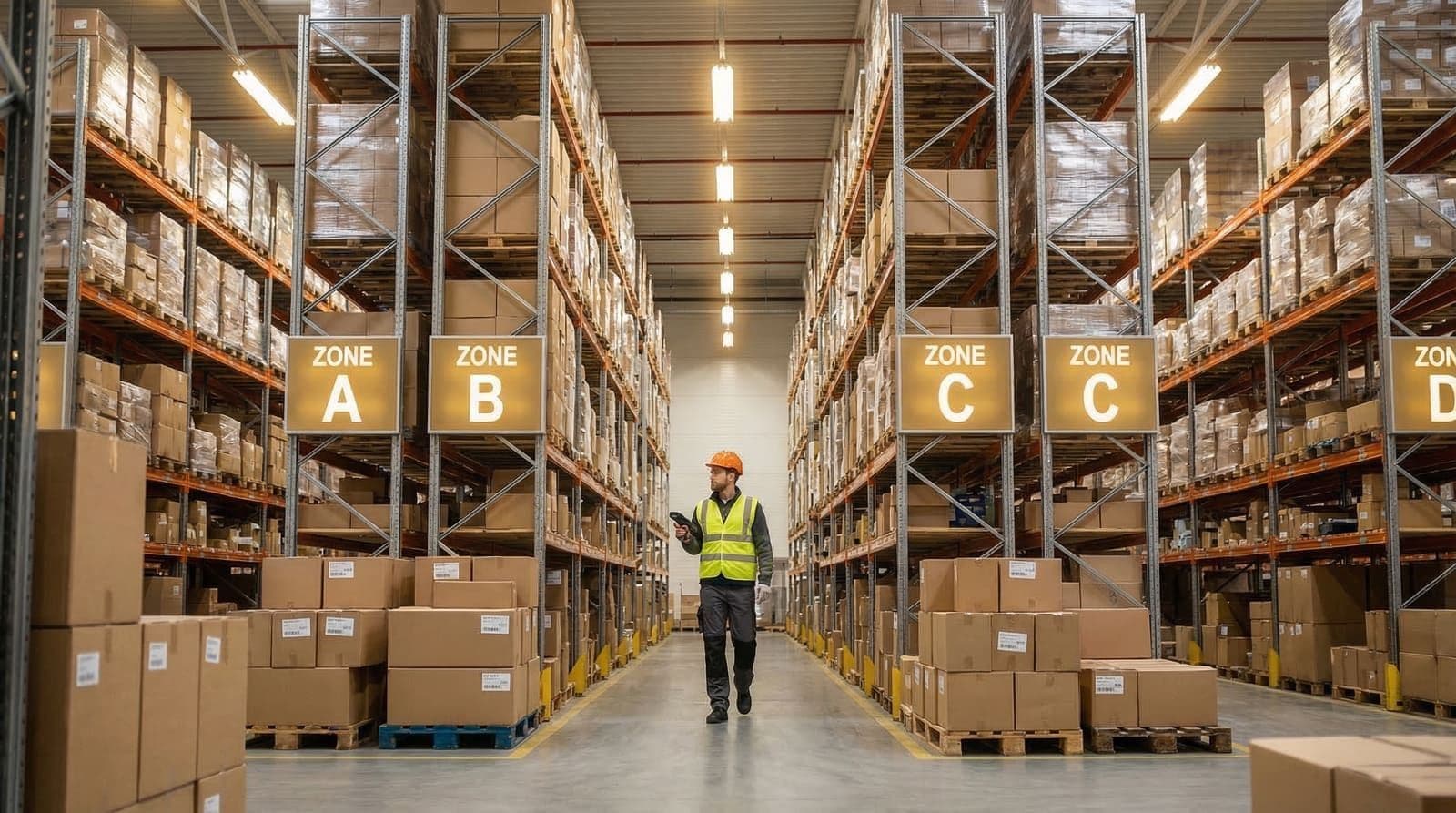
Orders that pull from the same warehouse zones should be grouped together. If 40 orders all need items from Zone A (small parts) and Zone C (bulk), release them as a wave. Pickers complete Zone A in one pass, then Zone C, rather than ping-ponging across the building.
This requires your WMS to analyze order composition before wave release. Most modern systems have zone-based wave building, but it's often poorly configured or ignored entirely.
3. Order Priority and Service Level
Not all orders are equal. Same-day orders, VIP customers, and orders with aging inventory need priority treatment. Your wave logic should flag these for earlier waves—or create dedicated priority waves that jump the queue.
Watch out for: Priority inflation. If 40% of your orders are marked "priority," nothing is actually prioritized. Define clear, enforced criteria.
4. Resource Availability
A wave is only as fast as the bottleneck it creates. If you release 300 orders requiring pack-out but only have 4 packers on shift, those picks will pile up at pack stations while pickers stand idle waiting for work.
Good wave planning considers:
- Picker headcount per zone
- Pack station capacity
- Value-add labor (kitting, quality checks)
- Equipment availability (forklifts, reach trucks)
Building Your Wave Planning Framework
Step 1: Map Your Cutoffs and Work Windows
Create a timeline showing every carrier cutoff, then calculate the latest possible wave release for each. Account for:
- Average pick-to-pack cycle time
- Pack-out time per order
- Staging and load time
- Buffer for exceptions
A facility with a 4:00 PM FedEx cutoff and a 90-minute cycle needs its last wave released by 2:30 PM. Build in a 15-minute buffer, and you're looking at a 2:15 PM hard deadline.
Step 2: Analyze Order Patterns
Pull 30 days of order data and look for patterns:
- What percentage of orders hit each carrier cutoff?
- Which zones have the highest pick density?
- When do orders typically arrive (morning spike? afternoon?)
- What's the average lines-per-order for different product categories?
This data drives wave sizing. If 60% of your daily orders arrive before 11:00 AM, you can build larger, more efficient morning waves.
Step 3: Define Wave Templates
Based on your analysis, create repeatable wave templates:
Example: 3-Wave Day Shift Structure
Wave 1 (9:00 AM release) — Morning rush → Priority orders from overnight → Same-day shipping → ~200 orders, 90-minute window
Wave 2 (12:00 PM release) — Midday bulk
→ Ground and economy shipments
→ Largest wave of the day
→ ~350 orders, 120-minute window
Wave 3 (3:00 PM release) — Afternoon cleanup → Remaining cutoff orders → Next-day prep for late arrivals → ~150 orders, 90-minute window
Step 4: Build Zone Grouping Logic
Configure your WMS or order management system to analyze each wave for zone affinity. The goal: minimize zone transitions per picker.
Most WMS platforms can calculate an "affinity score" for potential wave orders. Orders with high overlap in zone pulls get grouped together.
If you're working with a basic WMS, you can achieve similar results by:
- Creating separate waves for single-zone orders vs. multi-zone orders
- Prioritizing orders that pull exclusively from high-velocity zones
- Using pick path optimization within each wave
Step 5: Implement Dynamic Adjustments
Static wave plans fail on high-variability days. Build triggers for wave adjustment:
- Volume surge: If order volume exceeds 120% of forecast, add an emergency wave or expand existing waves
- Labor shortage: If pickers are down, reduce wave sizes to prevent downstream backup
- Priority spike: If priority orders exceed threshold, create an ad-hoc priority wave
Your supervisors need authority and clear guidelines to make these calls without escalation.
Measuring Wave Planning Performance
Track these KPIs to gauge wave planning effectiveness:
Wave Completion Rate
Percentage of waves completed within their target window. Target: 95%+
Carrier Cutoff Hit Rate
Orders shipped on-time vs. orders intended for each carrier cutoff. Target: 99%+
Picker Utilization
Time spent picking vs. total shift time (includes travel, waiting, breaks). Well-planned waves should achieve 70%+ productive time.
Pack Station Queue Depth
Average orders waiting at pack stations. High queues indicate wave sizes exceed pack capacity. Target: fewer than 15 orders waiting per station.
Zone Transition Frequency
Average zone changes per picker per wave. Lower is better. Track improvements after implementing zone affinity grouping.
Common Wave Planning Mistakes
Releasing orders too early
It feels proactive, but early release floods the floor with orders that don't ship for hours. They consume pick carts, create congestion, and can lead to mis-picks when priorities shift.
Ignoring downstream capacity
The fastest pick operation means nothing if orders stack up at pack-out. Always validate wave sizes against pack station throughput.
Static waves for dynamic demand
A wave plan built in January will be wrong by March. Reassess wave templates quarterly, and empower supervisors to adjust daily.
Over-prioritizing
When everything is urgent, nothing flows efficiently. Reserve priority treatment for orders that genuinely need it—typically under 15% of daily volume.
Technology That Supports Better Wave Planning
Modern warehouse management systems include wave planning modules, but configuration matters more than features. Key capabilities to leverage:
- Automatic zone analysis that groups orders by pick location
- Cutoff-aware scheduling that flags at-risk orders
- Labor planning integration that adjusts waves based on actual headcount
- Real-time wave monitoring with alerts for falling behind
For operations processing high volumes of varying package sizes, accurate dimensioning data becomes critical for wave planning. Knowing exact carton sizes helps predict pack-out times and carton consumption—both factors in wave capacity planning.
Additionally, labor productivity metrics should feed back into your wave planning. If certain wave configurations consistently underperform, the data will show you where to adjust.
Making Wave Planning Stick
Wave planning isn't a one-time project. It's an operational discipline that requires:
- Daily pre-shift review of wave schedule vs. expected volume
- Real-time monitoring with authority to adjust
- Weekly retrospectives on cutoff performance and bottlenecks
- Quarterly template reviews as order patterns shift
The payoff is substantial. Facilities that implement structured wave planning typically see 15-25% improvements in order picking productivity and significant reductions in missed carrier cutoffs.
Start with your biggest pain point—usually the carrier cutoff you miss most often—and build wave discipline around solving that problem first. Once the framework is proven, expand to optimize across all waves.
The warehouse that controls its waves controls its throughput. Everything else is just reacting.
Sizelabs helps warehouses capture accurate dimensions at receiving and shipping, providing the data foundation that makes wave planning and carton optimization possible. See how it works.