How to Choose an In-Motion Dimensioning System for Conveyor Operations
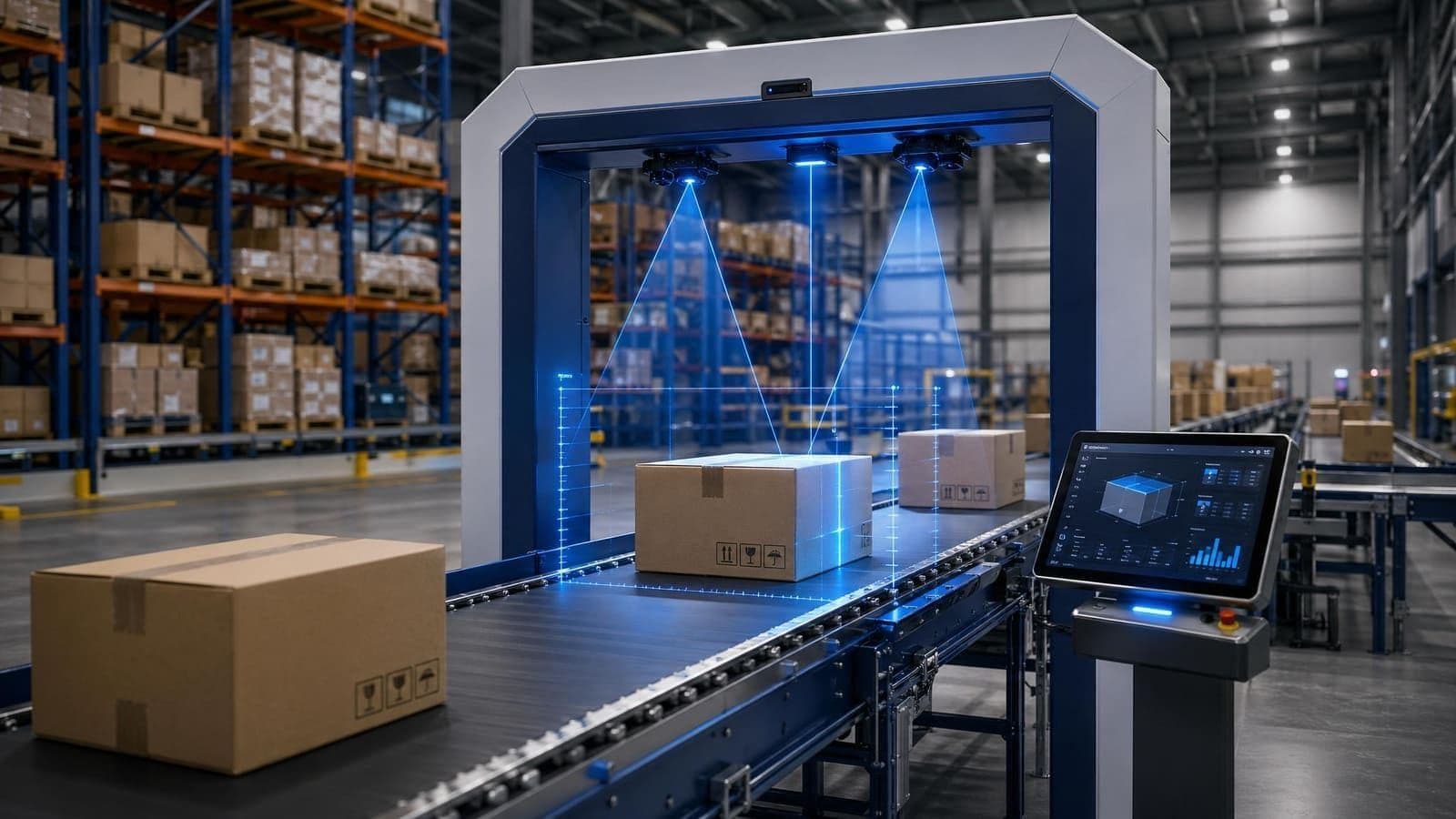
An in-motion dimensioning system can remove a major bottleneck from conveyor-based shipping, but only if it fits the way parcels actually move through the building.
The buying mistake is easy to make. A team sees a high parcels-per-hour number, assumes the system will keep up with peak volume, and later discovers that induction gaps, bad barcode reads, exception handling, or software handoffs slow the line anyway. In-motion dimensioning is not just a scanner over a belt. It is a control point that needs to capture reliable dimensions, weight, barcode data, and sometimes images without forcing operators to stop the flow.
Here is how to evaluate an in-motion dimensioning system for conveyor operations without overbuying, underbuying, or creating a faster way to produce bad shipment data.
Start with the conveyor workflow, not the hardware spec
Before comparing systems, map the workflow around the conveyor.
A useful map should show:
- where parcels are inducted
- where barcodes are scanned
- where weight is captured
- where dimensions are captured
- where labels are printed or verified
- where exceptions are diverted
- where shipment data is released to the WMS, WCS, TMS, or carrier system
This matters because the best installation point is not always the most obvious physical location. If dimensions are captured before the shipment record is identified, the data may not attach cleanly. If the dimensioner sits after the manifest decision, it may be too late to prevent carrier rating errors. If exceptions have nowhere to go, the line stops every time a carton is unreadable or out of tolerance.
A strong in-motion dimensioning project starts by answering three operational questions:
- What decision will the dimension data support?
- Which system needs that data first?
- What happens when the parcel cannot be measured cleanly?
If those answers are unclear, the hardware conversation is premature.
Match in-motion dimensioning throughput to peak reality
Headline throughput can be misleading.
A system may be rated for a high number of parcels per hour under ideal spacing, stable carton orientation, clean labels, and consistent belt speed. Real warehouse flow is rarely that neat. Parcels arrive too close together, labels face the wrong direction, cartons skew on the belt, and peak periods expose every weakness in induction discipline.
When evaluating throughput, ask for specifics such as:
- maximum and recommended belt speed
- required gap between parcels
- minimum and maximum parcel dimensions
- how overlapping or touching cartons are handled
- whether the system measures singulated parcels only
- sustained throughput during peak, not just lab-rated throughput
- what happens when a barcode read fails
A practical test is to compare the system against your busiest hour, not your daily average.
For example, a warehouse that ships 18,000 parcels per day may average 1,500 parcels per hour across a long shift. But if the last carrier pull creates a two-hour surge at 4,000 parcels per hour, the dimensioning system needs to be evaluated against that surge. Otherwise, the team buys a system that looks correct on paper and becomes the bottleneck at the exact moment accuracy matters most.
Verify accuracy, tolerance, and certification requirements
In-motion dimensioning is valuable only when the data is trusted.
For some operations, the main goal is operational consistency: cleaner carton records, fewer manual measurements, and better downstream audit data. For others, dimensions and weight may support billing, carrier rating, or legal-for-trade workflows. Those are not the same requirement.
Ask vendors to clarify:
- measurement tolerance across the full parcel range
- whether the system is certified for legal-for-trade use where required
- calibration frequency and who performs calibration
- whether weight capture is integrated or handled separately
- how the system stores measurement evidence
- how it performs with glossy cartons, dark packaging, poly mailers, tubes, or irregular parcels
Do not evaluate accuracy only with perfect sample cartons. Bring the awkward freight that creates real problems: crushed cartons, overpacked boxes, partially taped flaps, lightweight parcels that shift on the belt, and packages with labels placed in poor positions.
If the system performs well only on clean cartons, it may still have value, but the exception process needs to be designed honestly.
Make exception handling part of the buying decision
Every conveyor operation has exceptions. The question is whether the dimensioning system helps control them or simply pushes them downstream.
Common exceptions include:
- unreadable or missing barcode
- parcel outside the measurement range
- cartons too close together
- weight mismatch
- dimension mismatch against expected item or carton data
- package damage visible at ship time
- failed carrier compliance rule
A good in-motion dimensioning system should make the exception visible quickly and route it to a workflow the team can actually manage.
That may mean a divert lane, an audit station, an operator screen, a reprint process, or an automated hold in the shipping system. What matters is that the parcel does not disappear into the outbound stream with bad data.
This is especially important when the system supports carrier billing control. If the warehouse captures dimensions but does not isolate questionable records, finance and customer service may still inherit disputes later. Clean exception handling turns dimensioning from a measurement tool into an operational control point.
Check integration beyond the first software handoff
The integration question is bigger than “Can it connect to our WMS?”
In-motion dimensioning data may need to support several systems and teams:
- WMS or WCS: shipment identification, carton records, sort decisions, and exception holds
- TMS or shipping software: carrier rating, service selection, manifesting, and label validation
- Finance: billing review, carrier invoice audit, and customer charge validation
- Operations: rework, audit lanes, and performance reporting
- Customer service: shipment evidence when disputes or claims appear
Ask what data is captured and how it is passed:
- length, width, height, and weight
- barcode or shipment ID
- timestamp and station ID
- image evidence if available
- pass/fail status
- exception reason codes
- operator or lane activity
The best system is not always the one with the most data. It is the one that passes the right data at the right moment with minimal manual cleanup.
If your team already uses a parcel dimensioning system for manifest and audit stations, an in-motion setup should complement that workflow. The conveyor system can handle clean, high-volume flow while audit stations manage exceptions, rework, and dispute documentation.
Build the ROI around bottlenecks and billing risk
The business case for an in-motion dimensioning system usually comes from several areas at once.
Look for savings and value in:
- reduced manual measurement labor
- faster parcel release at manifest
- fewer carrier dimensional-weight adjustments
- fewer rebills caused by missing or estimated dimensions
- lower rework at audit stations
- better evidence for disputes and claims
- improved conveyor flow during peak periods
- cleaner shipment records for customer or 3PL billing
Avoid building the ROI only around theoretical labor savings. In many warehouses, the bigger value is control. If bad dimensions create weekly carrier adjustments, customer billing disputes, or supervisor intervention during peak, those costs should be part of the model.
A simple ROI review should compare the current state against the future state:
- How many parcels are manually measured today?
- How long does each measurement or correction take?
- How often are dimensions missing, estimated, or overwritten?
- What carrier adjustments are tied to dimension or weight errors?
- How much peak congestion is caused by measurement, audit, or label issues?
- How many people touch an exception before it is resolved?
Those answers make the buying decision more grounded than a generic automation payback estimate.
What a good in-motion dimensioning system should prove before you buy
Before committing, ask the vendor to demonstrate the workflow with your real operating constraints.
A strong evaluation should prove:
- the system can maintain accuracy at your target belt speed
- the parcel spacing requirement is realistic for your induction process
- barcode, dimension, and weight data attach to the correct shipment record
- exceptions are visible and routable without stopping the whole line
- calibration and maintenance are practical for your team
- integration supports the systems that actually use the data
- reporting helps operations and finance act on the results
If possible, run a sample set that includes normal cartons, peak-volume cartons, and known problem parcels. The goal is not to make the demo look clean. The goal is to find out whether the system can handle your real freight before it becomes part of the line.
The bottom line
An in-motion dimensioning system is a good fit when conveyor speed, shipment accuracy, and carrier billing control all depend on cleaner parcel data.
But the buying decision should be based on workflow fit, not just equipment specs. The right system captures trusted dimensions at speed, connects them to the right shipment record, handles exceptions clearly, and gives operations a better way to control outbound flow.
If your team is evaluating conveyor-based dimensioning, Sizelabs can help map where dimension data should be captured, how it should integrate with the rest of the operation, and which workflow will create the strongest return without adding unnecessary complexity.