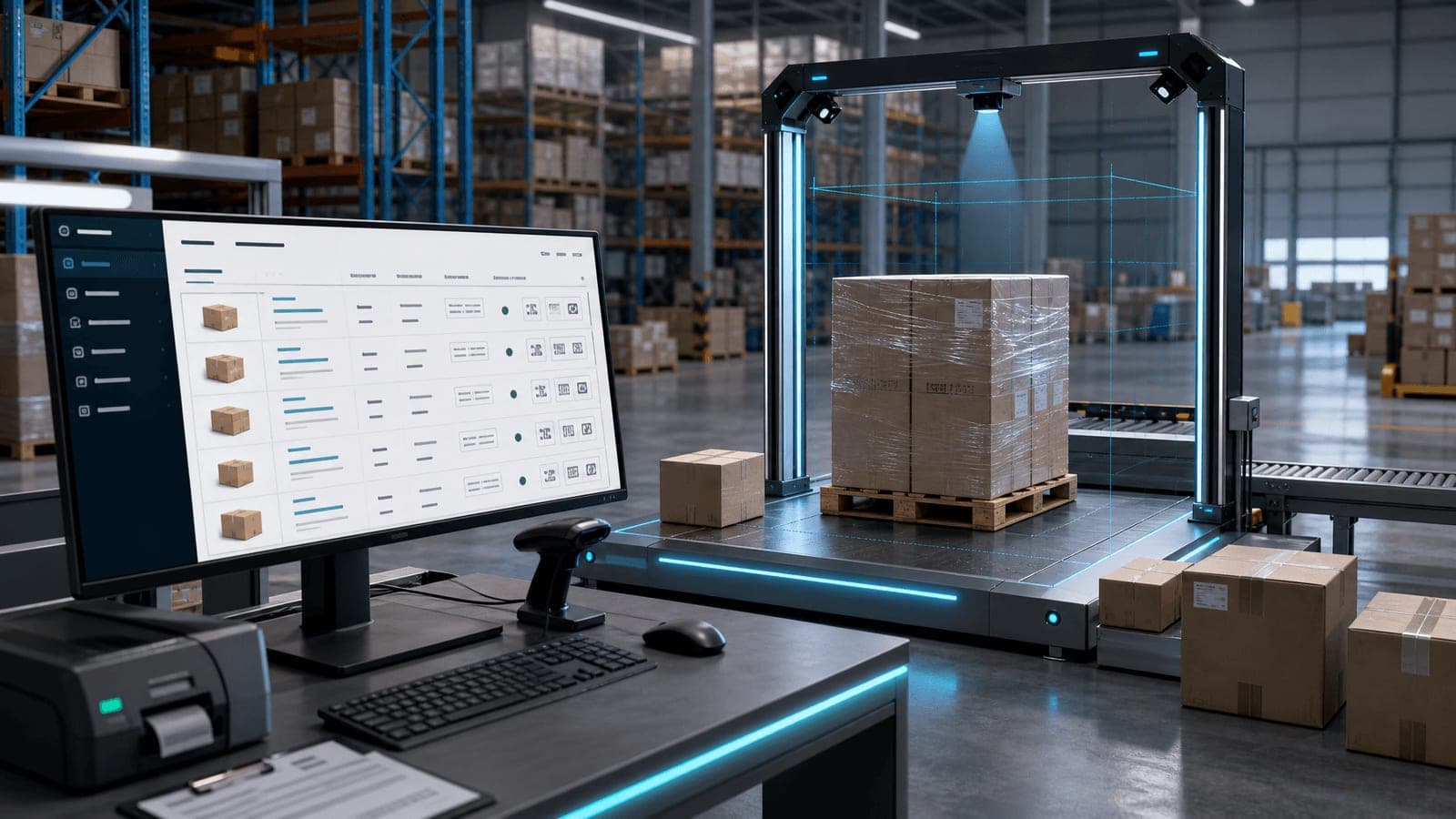
How to Choose a Parcel Dimensioning System for Manifest and Audit Stations
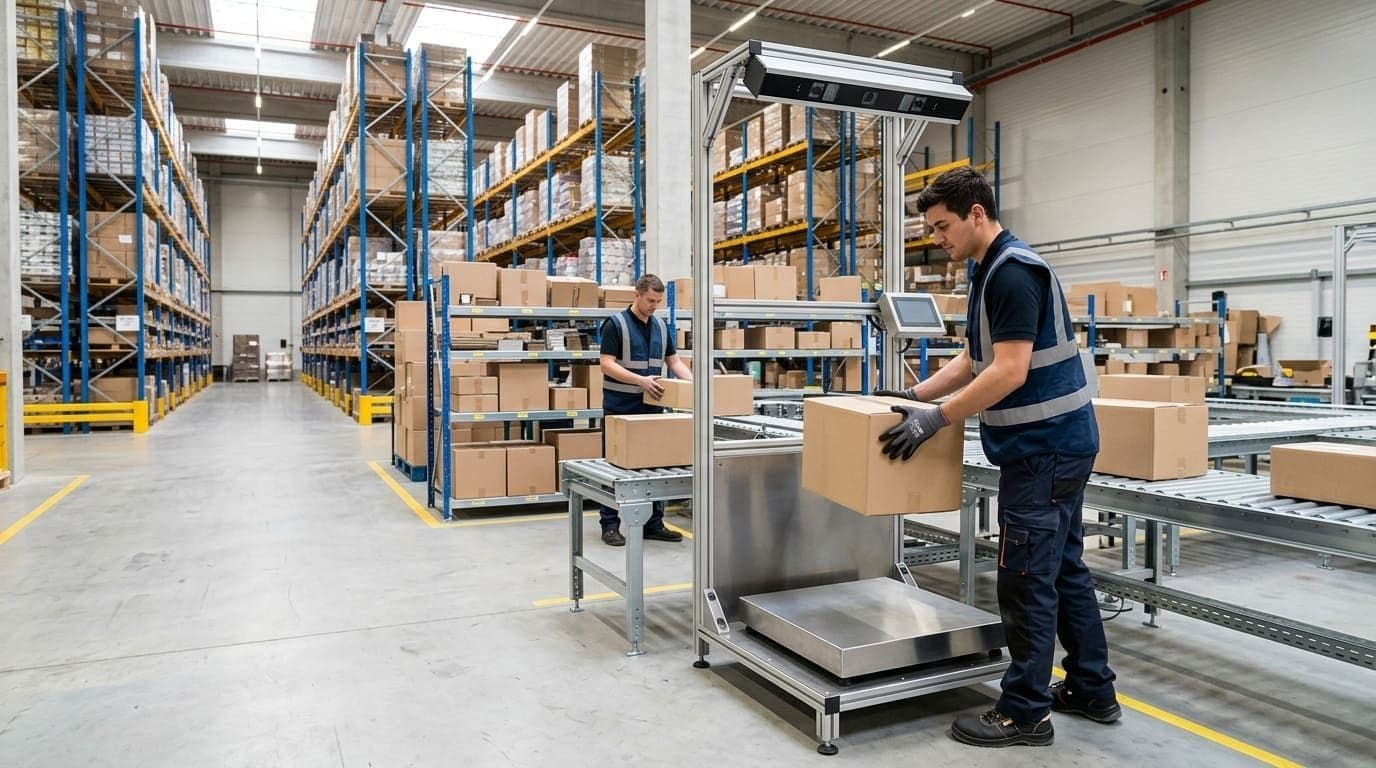
A lot of warehouses start looking at a parcel dimensioning system only after carrier adjustments pile up or manifest stations become a bottleneck.
Operators are typing dimensions by hand, skipping measurements during peak periods, or using old product master data that no longer matches what actually ships. Then finance sees unexpected dimensional-weight charges, customer service gets pulled into disputes, and operations has to explain why the same carton was measured three different ways in one month.
That is why buying a parcel dimensioning system should not start with hardware specs alone. The real question is where the system will sit in your workflow, what decisions the data needs to support, and how much operational friction you can remove when dimensions are captured consistently.
Here is how to evaluate a parcel dimensioning system for manifest and audit stations without overbuying, underbuying, or pushing the problem into another part of the warehouse.
Why manifest and audit stations create the clearest business case
Parcel measurement matters in several parts of the building, but manifest and audit stations often create the fastest path to measurable ROI.
That is because they sit close to the commercial consequences of bad data.
At these stations, dimensions affect:
- dimensional-weight rating
- carrier compliance checks
- shipment record quality
- rebill and dispute documentation
- exception handling speed
- operator touch time per parcel
If dimensions are missing, estimated, or inconsistent, the pain shows up quickly. Labels get delayed, audit lanes back up, and carrier invoices become harder to defend.
This is also why the buying decision is different from a broader mixed parcel and freight dimensioning strategy. A parcel station needs to be optimized for carton flow, scan-and-ship rhythm, and exception control, not just measurement range.
Step 1: Map the exact workflow before you compare systems
Do not treat parcel measurement as one generic use case.
A manifest station and an audit station may both capture parcel dimensions, but they solve different problems.
Manifest station workflows
These usually focus on speed and shipment release:
- capturing dimensions before label creation
- validating dimensional weight at ship time
- reducing manual key entry
- preventing pack station slowdowns
- passing clean data into carrier and shipping software
Audit station workflows
These usually focus on control and exception handling:
- verifying parcels flagged for rating or compliance issues
- checking cartons after repack or relabel events
- documenting dimensions for carrier disputes
- isolating exceptions without stopping the whole line
- reviewing shipments with unusual surcharge exposure
Questions to answer up front
Before you compare vendors, document:
- daily parcel volume
- peak hourly parcel volume
- how many stations need dimension capture
- average time spent measuring or correcting dimensions today
- where carrier adjustments or rebills occur most often
- how many parcels are irregular, overpacked, or exception-prone
If you skip this step, every vendor demo will sound good because the real constraints were never defined.
Step 2: Match the system type to your throughput reality
A parcel dimensioning system that works well at 400 parcels per day may become frustrating at 4,000.
The key is to buy for actual flow, not theoretical maximums.
Static parcel dimensioning setups
Static systems are often a good fit when:
- operators already pause briefly at a manifest or audit station
- parcel volume is moderate
- the workflow includes more exception handling than pure conveyor throughput
- floor space is limited
- you need a lower-cost first phase
A good static setup can work very well in small and mid-volume operations, especially when paired with barcode scanning, weight capture, and clean operator prompts.
Dynamic or in-motion setups
Dynamic systems make more sense when:
- parcel flow is high enough that operator pauses create a real bottleneck
- the line already uses conveyorized shipping or audit lanes
- the operation needs faster hands-free capture
- peak windows cause measurement steps to get skipped
- labor savings depend on reducing touches at scale
The mistake is assuming faster is always better. If your audit volume is low and exception-heavy, a dynamic system may add cost without solving the main workflow problem.
Step 3: Define what level of accuracy actually matters
Not every warehouse needs the same level of dimension capture performance, but every buyer should be clear on what the data is used for.
Ask whether the parcel dimensioning system will support:
- carrier rating and dimensional-weight calculations
- internal shipping audits
- customer billing or pass-through charges
- warehouse planning and carton analysis
- formal dispute documentation
The more financially sensitive the use case, the more important consistency becomes.
This is where teams often underestimate the cost of variance. A parcel that is measured differently depending on who handles it creates more than a data-quality issue. It creates downstream argument, rework, and margin leakage.
If legal-for-trade or compliance requirements are part of the decision, make sure you understand how that connects to the operation's billing exposure and audit process. For some buyers, that starts with clarifying what NTEP certification means.
Step 4: Check integration depth, not just API availability
A vendor saying "we have an API" is not enough.
For manifest and audit stations, the parcel dimensioning system has to fit the live workflow. That means the data needs to land in the right place, at the right moment, with the right parcel identity attached.
At minimum, verify how the system will connect to:
- shipping or manifest software
- WMS records
- TMS or carrier systems where applicable
- barcode scan events
- scale data capture
- audit or exception queues
- photo or evidence records if disputes are common
Ask practical questions such as:
- Can the system associate dimensions with a parcel ID automatically?
- What happens if the barcode scan fails on the first try?
- Can the operator remeasure without creating duplicate shipment records?
- How is exception data surfaced to supervisors or office teams?
- Does the integration require custom middleware for each station?
In many projects, integration quality matters more than raw measurement speed.
Step 5: Look closely at exception handling
This is where weak evaluations usually fall apart.
Most warehouses do not ship only clean, uniform cartons. They also deal with:
- soft packs that do not sit neatly
- bulging cartons after repack
- taped-over labels
- multi-piece orders with last-minute changes
- irregular parcel shapes
- parcels routed to manual audit after manifest errors
A system that performs well only under ideal carton conditions may disappoint the team that actually has to use it every shift.
During evaluation, ask the vendor to demonstrate:
- common carton sizes in your operation
- peak-flow station use
- irregular or slightly damaged parcels
- repack and relabel scenarios
- operator recovery when the first capture fails
- how quickly a parcel can move through a remeasure workflow
If the demo avoids exceptions, it is not a serious buying exercise.
Step 6: Build the ROI model around four value buckets
A practical business case usually comes from several gains working together.
1. Labor savings
Estimate current measurement and correction time for:
- manual parcel measurement
- key entry into shipping screens
- remeasure events
- supervisor intervention
- audit handling
Even small time savings per parcel add up quickly at manifest stations.
2. Reduced carrier adjustments and dispute effort
Review how often parcel dimensions contribute to:
- dimensional-weight corrections
- carrier invoice adjustments
- customer rebills
- audit holds
- internal research time
This is often one of the strongest ROI levers, especially in parcel-heavy operations.
3. Faster throughput during peak periods
A parcel dimensioning system should reduce the number of moments when work pauses because the operator needs to measure, type, confirm, and correct at the same time.
That matters most when:
- carrier cutoff windows are tight
- labor is stretched across multiple lines
- volume spikes create skipped process steps
- audit parcels pile up late in the shift
4. Cleaner data for downstream decisions
Better dimension capture also improves:
- carton analysis
- packaging compliance reviews
- cost-to-serve visibility
- root-cause analysis on shipping exceptions
These benefits are harder to model than labor minutes, but they often influence the long-term value of the project.
What to ask vendors before you decide
Use a short buying checklist that reflects the real workflow.
Ask:
- What parcel volume range is this system best suited for?
- How does it handle irregular cartons and repacks?
- What barcode and scale integrations are already proven?
- How quickly can operators recover from failed reads?
- What evidence can the system store for disputes or audits?
- How much configuration is required per station?
- What does deployment look like across multiple shipping lanes?
- What support is needed to keep accuracy stable over time?
A strong vendor should answer these without hiding behind generic automation language.
The right parcel dimensioning system should make the station simpler
The best buying decision is not the one with the most impressive spec sheet. It is the one that makes manifest and audit stations easier to run under real operating pressure.
If the system reduces touches, improves record quality, and helps the team move parcels without creating new exception work, it is probably a good fit. If it adds complexity, depends on perfect cartons, or pushes too much burden into integration cleanup, the ROI will be weaker than the demo suggests.
If you are evaluating parcel measurement as part of a broader warehouse automation plan, Sizelabs can help you map the workflow, estimate the ROI, and compare the right deployment options for your operation.