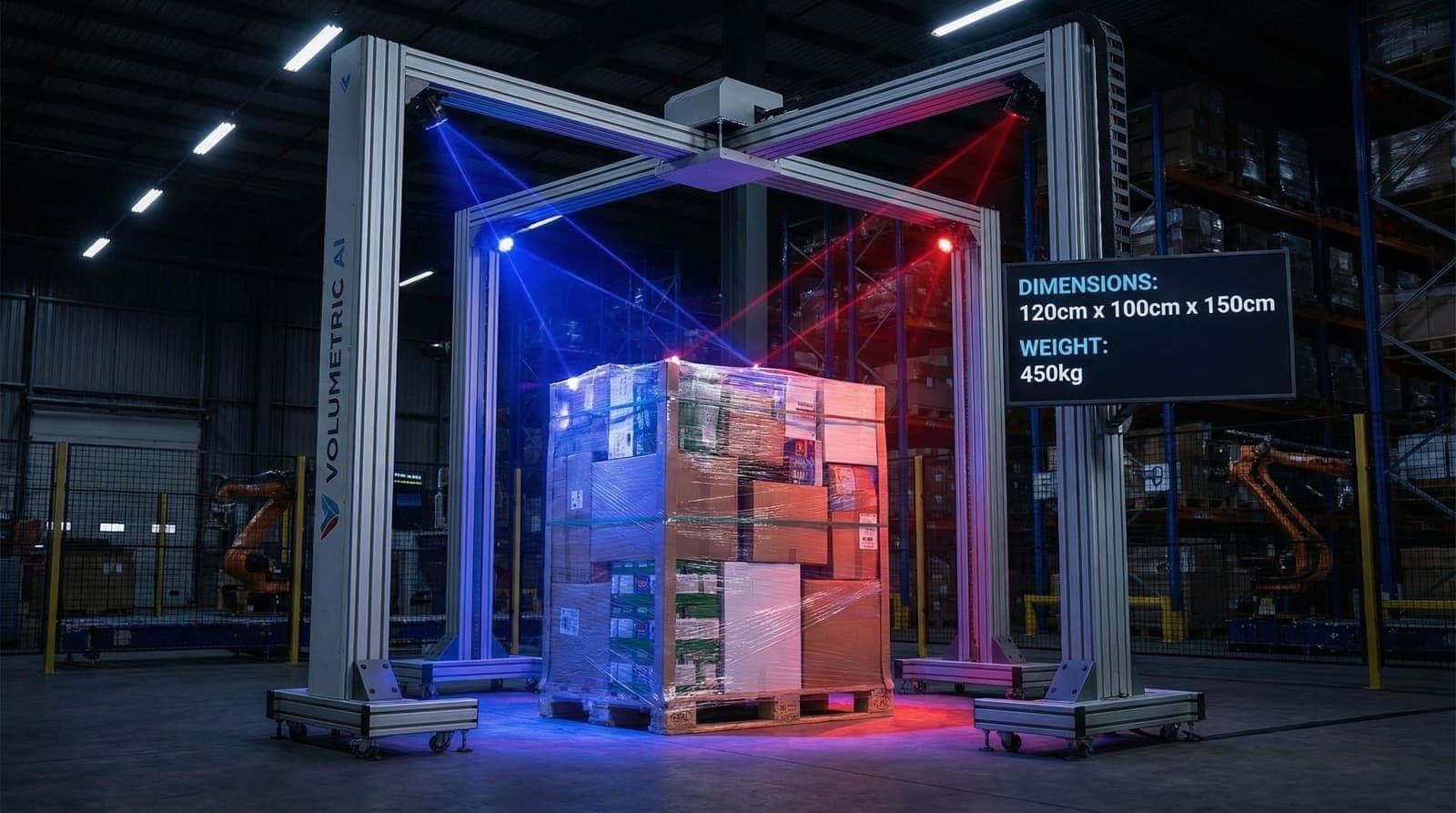
How to Choose a Dimensioning System for Mixed Parcel and Freight Operations
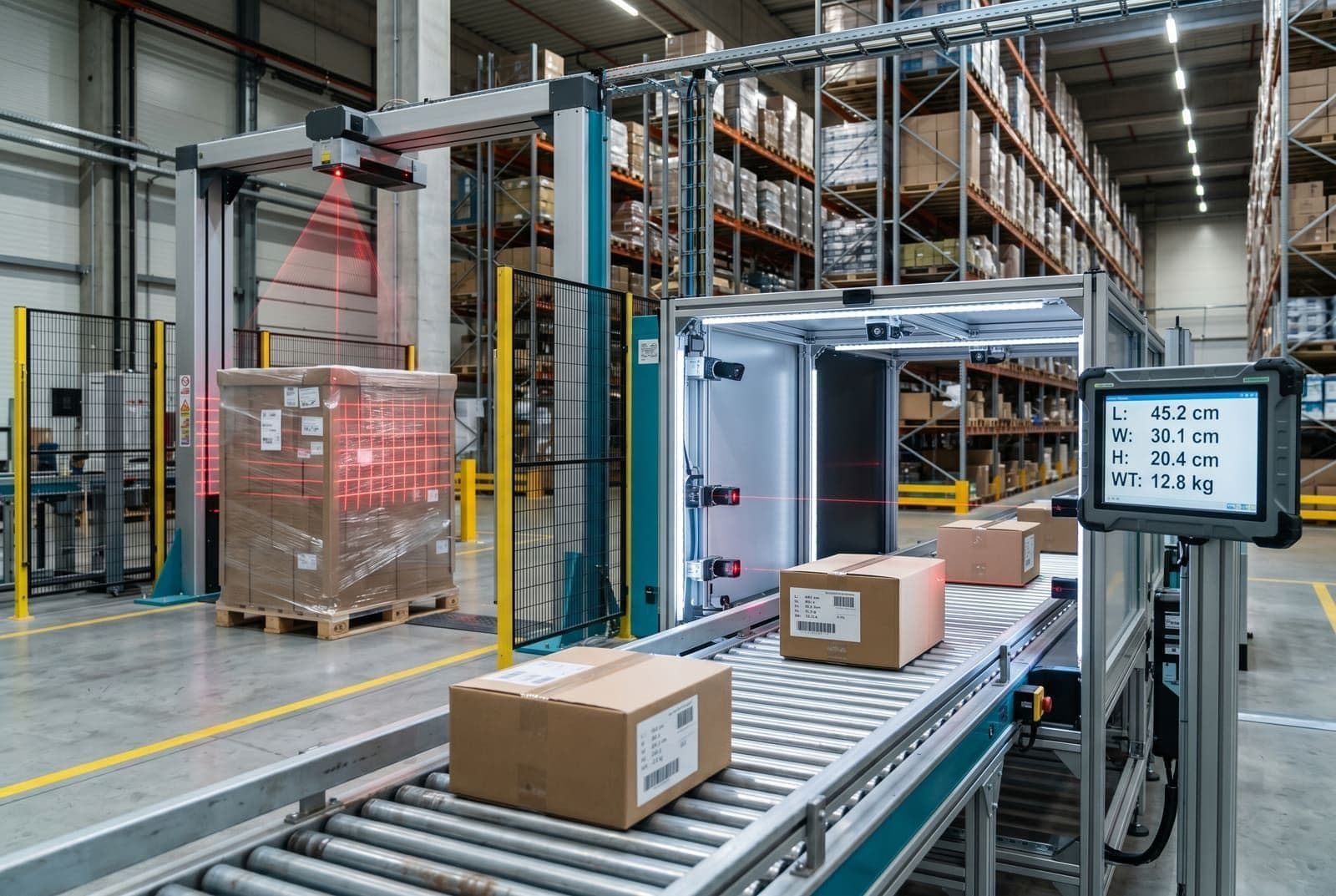
Many warehouses do not live in a clean single-mode world.
They ship parcels at pack stations, receive palletized freight at the dock, and occasionally handle awkward loads that do not fit either workflow neatly. That is exactly why choosing a dimensioning system for mixed parcel and freight operations can get expensive if you buy the wrong architecture.
A parcel-only setup may work well at shipping but fail at receiving oversized freight. A freight-focused system may handle pallets well but create friction for high-volume carton flows. If your operation lives in both worlds, the right answer is usually not a generic all-in-one promise. It is a system design that matches your traffic, accuracy needs, and process constraints.
Here is how to evaluate it.
Why mixed parcel and freight operations need a different buying approach
Warehouses with mixed flow usually face three realities at once:
- Different measurement envelopes across cartons, pallets, and irregular loads
- Different workflow speeds at pack-out, receiving, staging, and audit stations
- Different downstream uses for the data, such as carrier billing, WMS updates, invoicing, slotting, or claims documentation
That changes the buying decision.
A pure parcel operation can often choose between static and dynamic systems mostly based on throughput. A pure freight operation can focus on pallet size range, scale capacity, and forklift workflow. Mixed operations have to decide whether one capture point can serve both environments well, or whether separate stations will deliver a better result with less operational compromise.
Step 1: Map what actually moves through your building
Before comparing vendors, document your real shipment mix.
At minimum, gather:
- percentage of daily volume that moves as parcels
- percentage that moves as palletized freight or LTL
- largest and smallest items you need to measure
- peak hourly volume by process area
- proportion of irregular or overhanging loads
- which flows are inbound, outbound, or both
This matters because a warehouse that ships 2,000 cartons a day and receives 40 pallets has a very different answer than a 3PL that handles 400 parcels, 150 pallets, and a constant stream of exceptions.
If you skip this step, you risk buying around averages instead of operational pain.
Step 2: Separate your use cases before you compare hardware
Mixed operations often blur multiple needs into one conversation. That leads to vague requirements and weak vendor proposals.
Break the use cases apart.
Parcel-focused use cases
These usually include:
- manifest and ship stations
- carton audit points
- rate shopping workflows
- dimensional weight capture before label creation
- exception handling for packaging compliance
In these workflows, speed and repeatability from a purpose-built parcel dimensioner usually matter most.
Freight-focused use cases
These usually include:
- inbound dock measurement
- outbound pallet verification
- LTL reweigh and remeasure checks
- claims support
- customer billing documentation
Here, the key questions shift toward envelope size, legal-for-trade requirements, and how easily forklift operators can complete the measurement on a dedicated freight dimensioner.
Shared operational use cases
Some mixed sites also need dimension data for:
- WMS master data improvement
- storage planning
- cartonization logic
- labor planning
- customer visibility and audit trails
Once the use cases are separated, you can tell whether one measurement station truly serves all of them or whether you need a parcel station plus a freight station with shared data infrastructure.
Step 3: Decide between one-system simplicity and two-station practicality
This is often the most important decision.
Option 1: One shared system
A shared setup can make sense when:
- total volume is moderate
- parcel flow is not conveyor-heavy
- freight volume is low to medium
- the same team handles both measurement tasks
- floor space is limited
The benefit is lower upfront complexity. The risk is that one workflow starts slowing down the other.
For example, if a shared station gets tied up remeasuring bulky freight while outbound cartons stack up, the savings disappear fast.
Option 2: Separate parcel and freight stations
This is often the better fit when:
- parcel throughput is high
- freight handling involves forklifts or oversized loads
- legal-for-trade requirements differ by flow
- different teams own receiving and shipping
- service levels depend on fast parcel processing
Separate stations usually cost more upfront, but they often create better operational fit, less congestion, and cleaner ROI.
In practice, many growing operations discover that a single flexible system looks attractive during procurement, then becomes a compromise during daily execution.
Step 4: Evaluate the measurement envelope and the ugly-edge cases
Vendors love to present the standard operating range. Mixed operations should probe the exceptions.
Ask:
- What is the smallest carton the system can capture reliably?
- What is the largest pallet or freight piece it can measure?
- How does it handle dark wrap, reflective surfaces, and overhang?
- What happens with irregular freight, soft packages, or partial pallet loads?
- Does accuracy degrade near the edges of the capture zone?
This is where mixed environments get exposed. A system that works beautifully for standard corrugate can struggle with loose-wrapped pallets. A freight setup that handles large loads may not be efficient for rapid carton flow.
If possible, ask vendors to test your real freight profile, not just sample boxes.
Step 5: Clarify certification and audit requirements early
Not every mixed operation needs the same compliance posture.
If dimensional data supports carrier billing, customer invoicing, or formal dispute resolution, legal-for-trade capability may matter. If the data is only used for internal planning, you may have more flexibility.
Questions to ask:
- Do you need NTEP-certified measurement and scale components?
- Will you use the data in parcel carrier disputes?
- Will freight dimensions be tied to customer invoices?
- Do you need timestamped image records or only structured dimension data?
- How often will the system need calibration or recertification?
This is especially important for operations trying to reduce carrier billing disputes. Accurate measurement helps, but defensible records matter just as much.
Step 6: Check whether the workflow fits the people doing the work
A strong measurement system should reduce friction, not add it.
For parcel flows, think about:
- scan speed
- label workflow timing
- conveyor compatibility
- operator feedback when a scan fails
- rework handling for exceptions
For freight flows, think about:
- forklift approach and exit path
- platform visibility
- alignment requirements
- time per measurement
- ease of retry when the first capture fails
Mixed environments suffer when the hardware technically works but the motion around it does not.
A good buying process should include a floor-level question: can the team complete the step correctly under normal shift pressure?
Step 7: Integration matters more in mixed operations
A mixed parcel and freight operation creates more downstream handoffs, which means integration quality matters even more than hardware specs.
At minimum, validate how dimension and weight data will move into:
- your WMS
- your TMS or shipping platform
- ERP or invoicing systems
- billing dispute workflows
- analytics or reporting tools
The important question is not just whether an API exists.
It is whether the system can reliably associate each measurement with the right shipment, load, pallet, carton, or transaction without manual cleanup.
This is where many projects lose value. Teams automate the capture but still force supervisors to reconcile records later. If your site depends on clean data flow between receiving, shipping, and billing, strong WMS integration for dimensioning data should be part of the buying criteria, not an afterthought.
Step 8: Model ROI by workflow, not just by total volume
A single ROI number can hide bad decisions.
For mixed operations, build the case separately for each flow:
Parcel ROI factors
- reduced manual measurement labor
- fewer dimensional weight adjustments
- faster pack station throughput
- better carton compliance
Freight ROI factors
- faster dock processing
- fewer invoice disputes
- stronger claims documentation
- cleaner customer billing records
- less rework around oversized or irregular freight
Then add the shared value:
- better dimension data across the business
- improved storage and planning decisions
- more consistent audit trails
- less manual re-entry
This usually produces a better answer than simply dividing system cost by total pieces measured.
Red flags when buying for mixed parcel and freight operations
Watch for these warning signs during vendor evaluation:
"One system handles everything equally well"
Maybe, but mixed operations should ask exactly how. Equal marketing language is not equal operational fit.
No proof using real mixed-volume scenarios
If the demo only shows neat cartons or one perfect pallet, you still do not know how the system behaves in your world.
Weak exception handling
If unusual freight, damaged loads, or odd parcel profiles cause frequent retries, labor savings erode quickly.
Integration that depends on manual matching
That is not true process automation. It is measurement hardware plus admin work.
ROI based only on labor
For mixed operations, avoided disputes, billing integrity, and throughput protection often matter just as much.
A practical way to choose the right architecture
If you need a clean buying process, use this sequence:
- Profile the flow by parcel, freight, irregular load, and peak-hour demand
- Define the data use case for billing, compliance, planning, or all three
- Test workflow fit for both pack stations and forklift-based freight handling
- Validate integration paths into the actual systems your team uses daily
- Compare one-station versus two-station designs based on throughput and operational friction
- Model five-year ROI with labor, disputes, throughput, and support costs included
That sequence usually prevents the two most common mistakes: overbuying a complex architecture you will not use well, or underbuying a simple one that breaks under mixed-volume reality.
Final thought
The best dimensioning system for mixed parcel and freight operations is usually not the one with the broadest claims. It is the one that fits the real movement of your building, supports the data decisions that matter, and stays reliable under day-to-day pressure.
If your warehouse handles both cartons and palletized freight, take the time to evaluate the architecture, not just the device. That is where most of the long-term value gets decided.
Sizelabs helps warehouses design dimensioning workflows for both parcel and freight environments, with systems built to support accurate capture, integration, and defensible records across the operation. If you are comparing options, explore Wilkins Parcel Dimensioner, Wilkins Pallet Dimensioner, or talk with the team about the right fit for your flow.