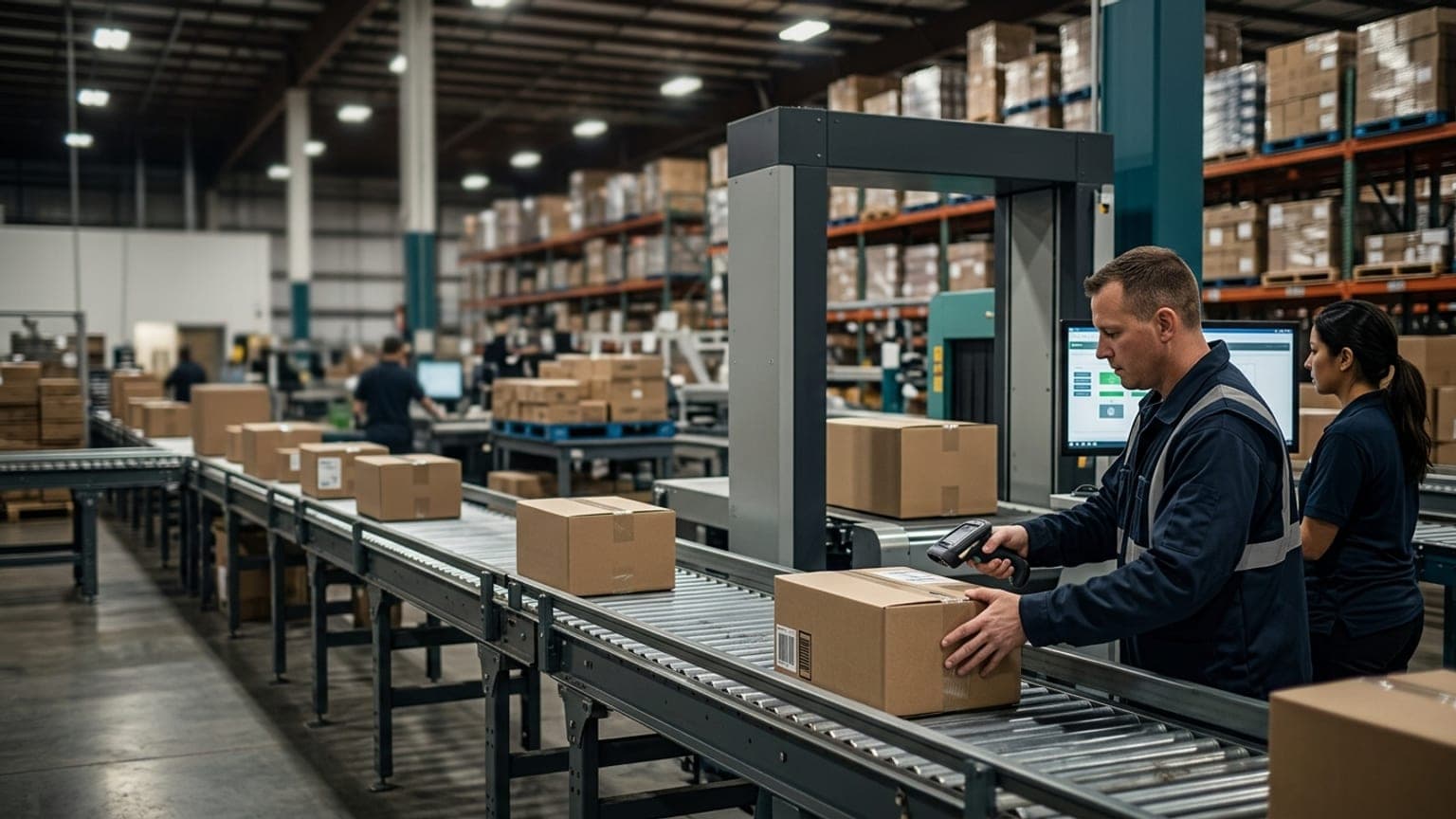
Warehouse Trailer Loading Plan: How to Build Outbound Loads Without Rework

A warehouse trailer loading plan is not just a dock task. It is the point where picking, packing, staging, carrier scheduling, freight profile, and cutoff discipline either come together or create expensive rework.
Most loading problems do not start inside the trailer. They start earlier: freight arrives at the dock in the wrong sequence, pallets are taller than expected, cartons are mixed across routes, labels are missing, heavy freight reaches the door after light freight is already loaded, or nobody knows whether an exception should wait or ship.
A strong loading plan gives the outbound team a clear answer before the door gets crowded: what goes on this trailer, in what order, with what constraints, and what should happen when the plan breaks.
Start the warehouse trailer loading plan before freight reaches the dock
The trailer should not become the place where the operation discovers the load profile.
Build the plan from the decisions that matter before loading starts:
- Carrier and appointment: pickup time, trailer type, seal requirements, service level, and detention risk
- Route or stop sequence: whether freight must unload in reverse stop order, by customer, by zone, or by delivery priority
- Freight profile: pallet count, loose cartons, oversized items, non-stackable freight, fragile goods, hazardous materials, temperature needs, and high-value shipments
- Dimensions and weight: pallet height, carton dimensions, total weight, weight concentration, stackability, and cube use
- Operational status: picked, packed, manifested, held, damaged, late, customer-service review, or waiting on paperwork
- System readiness: shipment IDs, labels, bills of lading, routing instructions, and closeout requirements
This prevents the common dock pattern where loaders make good local decisions with incomplete information. A pallet may fit physically, but it may block the wrong stop. A stack may save space, but crush the cartons below it. A late high-priority order may ship, but only after the team unloads part of the trailer to reach the correct lane.
The goal is not a perfect theoretical diagram. The goal is a practical plan that the dock can execute under time pressure.
Stage freight by trailer, sequence, and exception status
Loading is slow when staging is really sorting.
Outbound staging should answer three questions visually:
- Which trailer or route does this freight belong to?
- When should it load?
- Is it ready, or is there an exception?
A useful staging setup separates freight by trailer door, carrier, route, stop sequence, service level, and readiness. If a trailer has multiple stops, the last stop may need to stage closest to the trailer because it loads first. If the warehouse ships parcel, LTL, and full truckload freight from nearby doors, the lane markings and identifiers must make cross-contamination obvious.
Do not let exceptions sit in the same lane as ready-to-load freight. Missing labels, damaged cartons, overweight pallets, customer holds, routing questions, and paperwork issues need a separate visual status. Otherwise, the loader discovers the problem at the trailer door, exactly when there is the least time to fix it.
A simple rule helps: ready freight moves forward; exception freight moves sideways. Forward movement means it is safe to load. Sideways movement means it needs an owner, a reason, and a decision before cutoff.
Use dimensions and weight to prevent trailer rework
A warehouse trailer loading plan fails when the physical freight does not match the assumed load.
The most common issues are practical:
- pallets are taller than the trailer clearance or customer limit
- cartons overhang the pallet and lose stackability
- heavy freight is discovered after light or crushable freight is already loaded
- non-stackable pallets consume more floor space than planned
- mixed freight leaves unusable voids in the trailer
- one side of the trailer becomes too heavy
- a shipment triggers carrier or customer handling rules after staging
Dimensions and weight are not only billing data. They are load planning data. When the warehouse knows the real length, width, height, weight, and stackability profile before freight reaches the dock, supervisors can make better decisions about lane assignment, build sequence, trailer selection, and exception routing.
For example, a pallet that is 98 inches tall may be acceptable for one trailer but not another. A lightweight oversized carton may drive cube use more than weight. A dense pallet may need to load low and forward, while fragile cartons need protection from compression. If these facts are known late, the team either accepts a bad load or spends time rebuilding it.
The best loading plans treat dimensional constraints as part of release logic, not just a final check.
Protect carrier cutoff with exception rules
Carrier cutoff pressure turns small problems into missed shipments.
A clean trailer loading process defines escalation rules before the afternoon rush. Common triggers include:
- freight staged in the wrong lane
- picked orders not packed by a defined time
- packed orders not manifested before trailer close
- missing or unreadable shipping labels
- pallets over height, overweight, damaged, or unstable
- freight waiting for customer service, quality, or supervisor approval
- route changes after staging has started
- trailer capacity risk based on cube, pallet positions, or weight
Each trigger should have an owner and a time limit. If a wrong-lane pallet sits unnoticed for two hours, the problem is not only the pallet. The problem is that the operation had no visible aging rule.
Cutoff protection also requires honest prioritization. Not every exception deserves the same response. A same-day premium shipment, a key retail order, or a route-critical pallet may justify immediate labor. A low-priority order missing paperwork may roll to the next pickup if fixing it would jeopardize the rest of the trailer.
That decision should be deliberate, not discovered after the carrier leaves.
Measure the trailer loading plan, not just the shipment count
If the only outbound metric is whether the trailer left, the warehouse misses the cost of how it left.
Track metrics that reveal load quality and planning discipline:
- Trailer cube utilization: how much usable trailer space was actually used
- Load rework: pallets or cartons removed, resequenced, rebuilt, or shifted after loading began
- Dock dwell time: how long freight waited in staging before loading
- Ready-to-load accuracy: percentage of freight staged with correct label, route, status, and paperwork
- Cutoff performance: trailers closed on time without emergency labor or supervisor intervention
- Damage and crush incidents: issues tied to stacking, sequence, pallet condition, or freight mix
- Short shipments: orders picked or packed but not loaded as planned
- Exception reasons: recurring causes such as missing labels, late replenishment, wrong lane, over-height pallets, or carrier changes
Review these metrics by door, carrier, shift, customer, route, and freight type. The pattern usually points to a specific upstream fix. If rework is high on mixed LTL loads, staging and sequence may be weak. If cube utilization is poor, dimensional visibility or pallet build standards may need attention. If cutoff misses cluster around one carrier, appointment timing or manifest rules may be the constraint.
Make the loading plan easier to follow than to ignore
The best warehouse trailer loading plan is simple enough to survive a busy shift.
Use clear lane labels, trailer assignments, ready-versus-exception status, sequence markers, and supervisor triggers. Keep the plan close to the work: on the dock board, in the WMS task flow, in the shipping system, or wherever loaders and leads actually make decisions.
Then audit whether the plan matches reality. If operators constantly override it, the plan may be wrong, too late, or too difficult to follow. If supervisors must explain the same exception every day, the workflow needs a rule, not another reminder.
Sizelabs helps warehouse teams capture accurate dimensions, weight, and shipment evidence with a freight dimensioner so outbound decisions are based on the freight that is actually moving through the building. If trailer loading is creating rework, missed cutoffs, or billing noise, better measurement data can make the load plan more reliable before the dock gets crowded.