Warehouse Yard Management: How to Stop Trailer Chaos Before It Hits the Dock
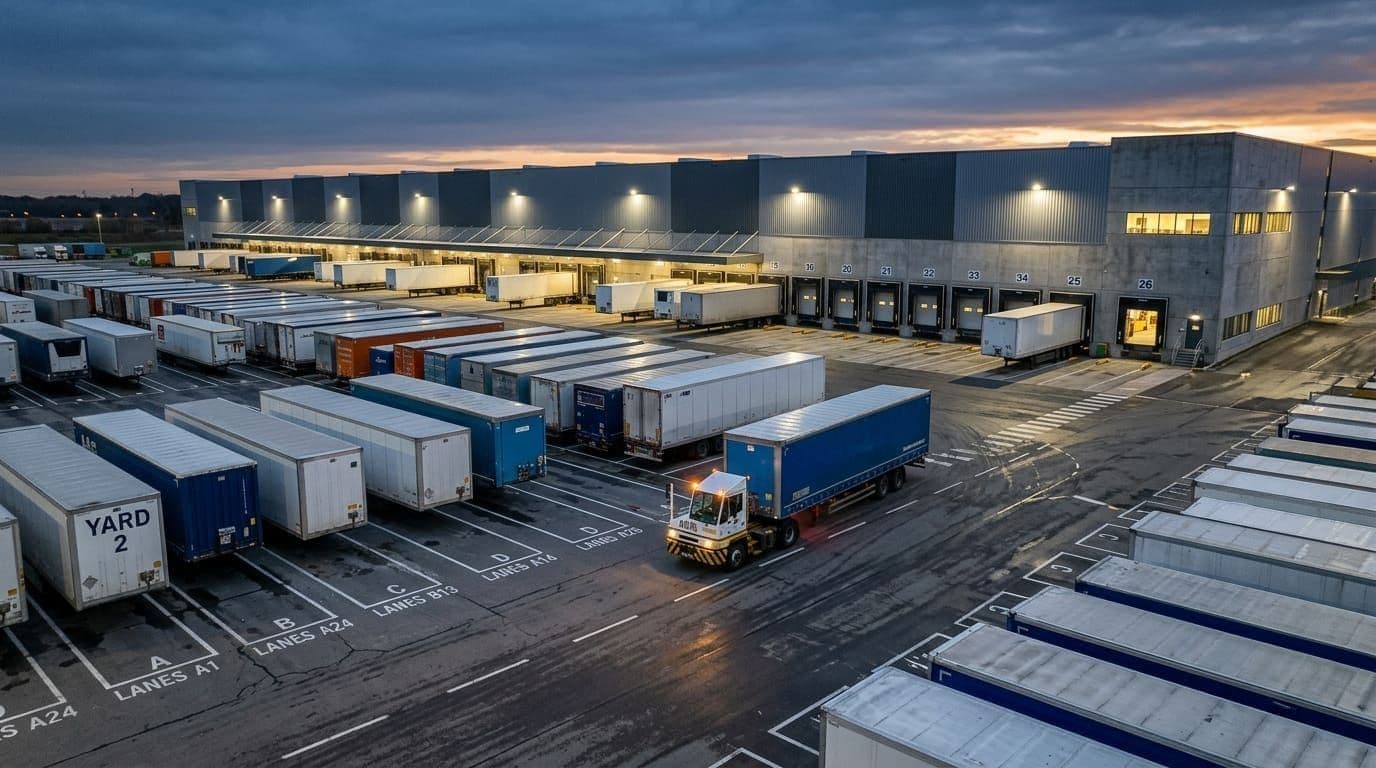
Warehouse yard management usually becomes a priority only after the dock starts falling behind.
Inbound trailers arrive early or late, outbound trailers sit in the wrong spots, drivers wait for instructions, and supervisors keep making radio calls just to figure out what is parked where. By the time freight reaches a door, the operation is already reacting to congestion instead of controlling flow.
That is why yard management should be treated as part of warehouse throughput, not as a separate parking problem. If the yard is disorganized, receiving slows down, shipping misses windows, and labor gets pulled into avoidable trailer moves.
Here is how to improve warehouse yard management in a way that reduces dock pressure instead of just shifting the chaos outside.
Why yard problems quickly become dock problems
A lot of warehouse teams focus on what happens once a trailer reaches a door. The trouble usually starts earlier.
When yard visibility is weak, the operation loses control of:
- inbound arrival sequencing
- door assignment priority
- live trailer availability
- detention exposure
- hostler workload
- labor planning for unload and load windows
That creates a chain reaction. The wrong trailer gets pulled first, urgent freight waits in the yard, outbound loads sit unsealed because the door was given to a lower-priority move, and dock teams end up working around poor sequencing.
This is one reason strong dock scheduling matters. Appointment discipline helps, but schedules alone will not save the operation if the yard has no clear control logic once trailers arrive.
Step 1: Make every trailer visible in operational terms
A useful yard view is not just a list of trailer numbers.
Supervisors need to know, in real time:
- which trailers are on site
- whether they are inbound, outbound, empty, or loaded
- what freight priority they carry
- whether they are live loads, drop trailers, or exceptions
- how long they have been waiting
- what move should happen next
Without that visibility, the yard turns into a memory test. People make decisions based on who called last, which driver is standing at the window, or which trailer is easiest to grab.
Even a simple yard control process should answer four questions fast:
- What is here?
- What is urgent?
- What is blocking a door?
- What needs to move next?
If the team cannot answer those questions in under a minute, the yard is already creating hidden delay.
Step 2: Tighten gate check-in and exception rules
Many yard problems start at the gate because check-in data is incomplete or inconsistent.
At minimum, every arriving trailer should be tied to:
- appointment or expected arrival information
- carrier and driver identity
- load type
- origin or destination
- dock or staging intent
- exception status if paperwork, seal, or freight details are off
This matters because the gate is where the warehouse either creates flow or creates confusion. If a trailer enters the yard without clean purpose and ownership, the dock team inherits a guessing problem.
Good gate rules should also define what happens when a trailer is:
- early
- late
- missing paperwork
- assigned to a full zone
- carrying urgent freight without a clean appointment
- waiting on labor that is not ready yet
A strong operation does not just log arrivals. It decides what each exception means and who owns the next action.
Step 3: Assign doors by business priority, not habit
A surprising number of warehouses still assign doors based on routine instead of current need.
That creates avoidable friction when:
- outbound trailers with tight departure windows wait behind routine receipts
- replenishment-critical inbound freight sits in the yard too long
- live unloads block capacity because no one reprioritized the lineup
- a driver reaches a door before the labor and equipment are actually ready
Better door assignment starts with a simple rule set.
Prioritize trailers based on:
- departure cutoff or appointment commitment
- freight urgency
- labor readiness
- unload or load time required
- downstream impact if the trailer waits
- detention and accessorial risk
The goal is not to create a complicated optimization engine. The goal is to stop making low-value moves while high-impact trailers sit idle.
This becomes especially important when the building is already dealing with congestion between receiving, staging, and outbound lanes. Tight staging area management only works if the yard is feeding the dock in the right sequence.
Step 4: Treat trailer dwell time as a real KPI
Many sites measure door productivity but ignore how long trailers spend waiting outside.
That hides one of the biggest sources of delay.
Track dwell time in three zones:
- At the gate: time from arrival to check-in completion
- In the yard: time parked before a move is assigned
- At the dock: time at the door before load or unload completion
When those numbers are visible, patterns become obvious.
You may find that:
- a specific carrier arrives in bunches that overwhelm the same time window
- one door group causes repeat congestion because labor is shared across too many priorities
- live unloads wait too long for instruction
- outbound trailers are staged early but not loaded in sequence
- hostler response time is driving detention more than dock labor itself
Those are operational problems you can actually fix. Without dwell-time data, they stay stuck in anecdotal complaints.
Step 5: Use a short KPI set that changes behavior
Yard dashboards often become too busy to matter. Keep the scorecard tight.
A practical warehouse yard management KPI set includes:
- Trailer turn time: total time from arrival to departure
- Yard dwell time: parked waiting time before door assignment or release
- Door utilization by shift: whether available doors are being used in the right windows
- Hostler response time: how long trailer moves wait after request
- Detention risk count: trailers nearing penalty thresholds
- On-time door assignment rate: percent of trailers assigned when planned
These KPIs help supervisors spot whether the problem is scheduling, yard control, labor readiness, or dock discipline.
If you only track how many trailers were moved, you can miss the fact that the operation is working hard but still sequencing poorly.
Where data quality helps yard flow
Yard control is mainly a workflow issue, but cleaner shipment data improves decisions upstream and downstream.
For example, better freight and shipment dimensions can support:
- more realistic trailer planning
- cleaner staging allocation
- earlier identification of freight that needs special handling
- faster exception review when freight does not match expectation
For pallet-heavy operations, Wilkins Pallet Dimensioner can help teams capture more reliable freight dimensions. For parcel-heavy shipping areas, Wilkins Parcel Dimensioner helps improve the data feeding downstream dock and audit decisions.
A practical way to improve warehouse yard management this quarter
If your yard feels chaotic, do not start with a massive technology project.
Start with a 30-day control plan:
- Create one live trailer status board with clear move categories
- Standardize gate check-in fields and exception ownership
- Define a door-priority rule for urgent inbound and outbound moves
- Track dwell time at the gate, in the yard, and at the dock
- Review the worst delay patterns every week and correct one root cause at a time
That approach usually reveals whether the biggest issue is scheduling discipline, poor trailer visibility, weak move prioritization, or labor timing.
Final thought
Warehouse yard management is not glamorous, but it has a direct effect on dock throughput, detention cost, and daily operational stress.
When the team knows what is in the yard, what matters most, and what move comes next, the dock works with less friction. When that control is missing, the warehouse spends the day chasing trailers instead of moving freight.
If you are trying to improve inbound and outbound flow without adding unnecessary complexity, Sizelabs can help you map the bottlenecks, tighten the decision points, and connect better data to the real operation.