How to Choose a Dimensioning System for Returns and Reverse Logistics
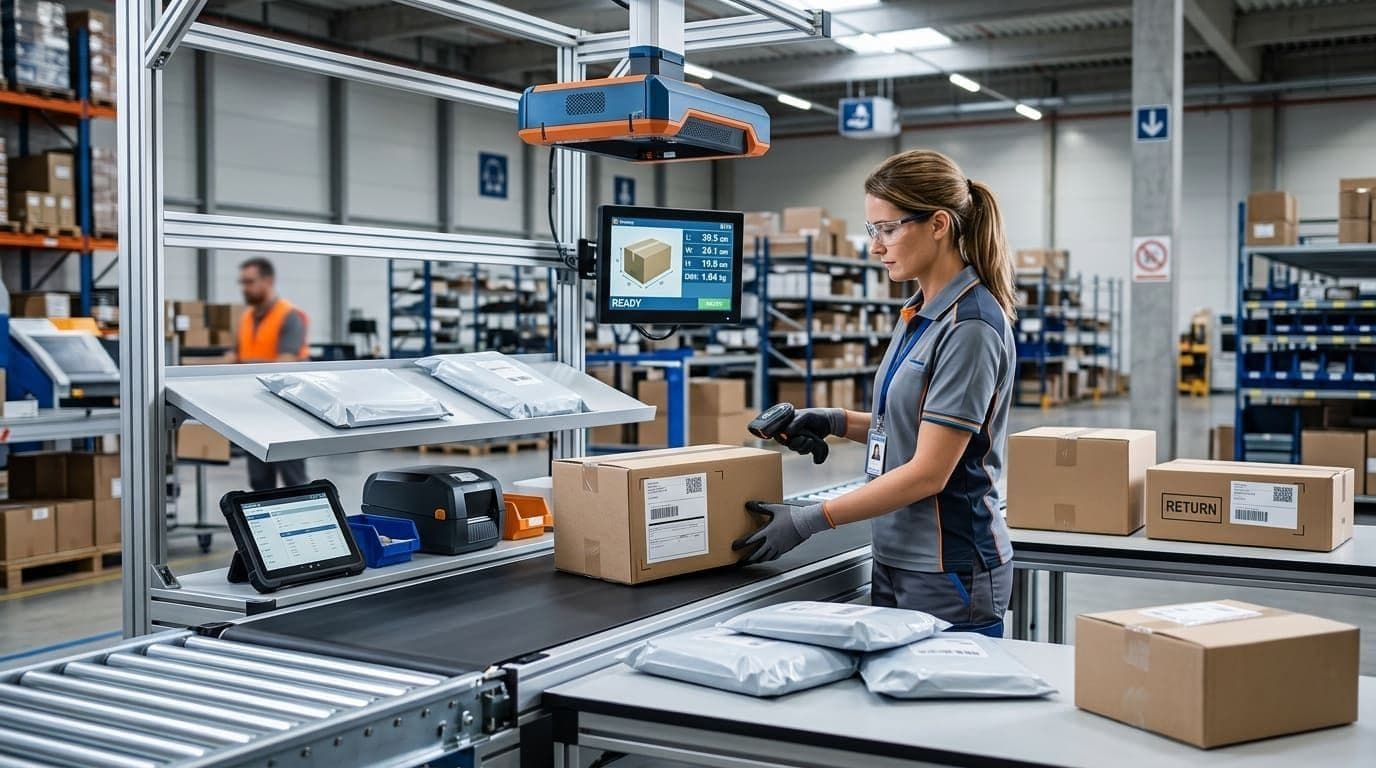
A lot of warehouse teams start thinking about returns automation only after reverse logistics becomes too expensive to ignore.
Operators are opening cartons, checking product condition, repacking units, printing labels, and making disposition decisions, all while trying to keep returned inventory moving. In that environment, dimensions are often captured late, estimated loosely, or skipped entirely. That creates avoidable delays in resale, carrier claims, storage planning, and customer refund workflows.
That is why buying a dimensioning system for returns and reverse logistics should not be treated like a copy-paste version of outbound shipping automation. Returns are messier, more exception-heavy, and more dependent on inspection logic. The right system should help the team handle irregular parcels, damaged packaging, and mixed dispositions without adding more friction to an already complicated station.
Here is how to evaluate a dimensioning system for reverse logistics in a way that fits the real workflow.
Why returns create a different dimensioning problem
A standard outbound pack station usually deals with known SKUs, cleaner packaging, and a simpler objective: get the shipment out accurately and fast.
Returns are different.
A returns station may need to handle:
- unopened cartons ready for restock
- opened boxes with changed dimensions after repack
- poly mailers that do not hold a rigid shape well
- damaged packaging that affects usable dimensions
- items that need to be routed to resale, refurbishment, quarantine, or disposal
- customer-service or carrier claims that need evidence
That means the buyer should focus less on headline speed alone and more on whether the system can support real exception handling.
This is one reason reverse logistics deserves its own evaluation path, separate from a general parcel dimensioning system for manifest and audit stations. The workflow constraints are different, and the station usually has more decision points per item.
Step 1: Map where dimensions actually create value in the returns workflow
Do not assume every returns station needs the same level of measurement.
Start by mapping the actual steps in your reverse logistics flow:
- return receipt
- package opening or identification
- inspection and grading
- repack or relabel if needed
- disposition decision
- restock, resale, transfer, or outbound return-to-vendor shipment
Then identify where dimensions change decisions or reduce manual work.
In many operations, dimensions are most valuable when they help with:
- selecting the right carton for resale or re-ship
- documenting condition and packaging changes after inspection
- routing returns into the correct storage or staging area
- producing cleaner records for claims or dispute review
- improving downstream carrier rating when a returned item ships again
If you do not define this clearly, you can end up buying a system optimized for shipping speed when your real need is exception control and record quality.
Step 2: Evaluate the exception profile, not just the happy path
Returns rarely arrive in ideal condition.
That is why one of the most important buying questions is how the dimensioning system performs when packaging is inconsistent.
Ask the vendor to show how the system handles:
- soft poly mailers
- partially crushed cartons
- open-box returns that need repack
- multi-item returns in one container
- items with missing labels or unclear package identity
- parcels that require a second measurement after inspection
This matters because returns teams spend a lot of time on recovery work. If the system only performs well with clean, rigid cartons presented perfectly every time, it may look good in a demo and frustrate operators in production.
A serious buyer should ask to see irregular returns, not just standard boxes.
Step 3: Match the system type to the station's real pace
A returns operation can be high-volume, but that does not automatically mean the fastest in-motion system is the best fit.
In many reverse logistics environments, operators already pause to inspect, scan, grade, photograph, or relabel the item. When that is true, a static or semi-assisted dimensioning setup may be enough.
A more automated approach makes sense when:
- return volume is high enough to create long backlogs
- the operation is already conveyorized
- re-ship or resale workflows need quicker data capture at scale
- manual measurement is creating visible labor waste
- exception handling is structured enough that faster capture will actually improve throughput
The wrong decision is buying for theoretical speed while ignoring station rhythm.
If each return already requires human inspection, the best system may be the one that captures dimensions reliably inside that pause, not the one with the most impressive top-line throughput.
Step 4: Check integration with returns, inventory, and customer workflows
Integration quality matters a lot in reverse logistics because the same return often touches multiple systems.
Depending on your environment, the dimensioning system may need to feed:
- WMS records
- returns management software
- shipping systems for return-to-vendor or re-ship flows
- customer-service workflows handling refunds or claims
- product grading or QA records
- photo or evidence logs used in disputes
Ask practical questions such as:
- How is the returned item identified before dimensions are captured?
- Can the system keep one return record intact through remeasure, repack, and disposition?
- What happens when the first barcode is missing or unreadable?
- Can dimensions be tied to photos or inspection notes?
- How much custom middleware is needed to make the workflow usable?
This is where many projects get stuck. The hardware may work, but the process still fails because the data lands in the wrong place or arrives too late to support the decision.
If your team is also improving reverse-logistics process control, it helps to align this evaluation with a stronger warehouse returns process so the data supports the operating model instead of floating beside it.
Step 5: Build the ROI around four value buckets
A reverse-logistics dimensioning project usually pays back through a mix of operational and financial gains.
1. Labor savings
Measure the time currently spent on:
- manual parcel measurement
- remeasurement after repack
- key entry into shipping or returns screens
- searching for the right package size
- supervisor review when package information is incomplete
In returns, small delays happen over and over. That is why even modest time savings can matter.
2. Faster disposition and inventory recovery
One hidden cost in reverse logistics is how long sellable inventory stays in limbo.
Cleaner dimension data can help accelerate:
- repack decisions
- resale preparation
- restock or transfer handling
- outbound return-to-vendor shipments
- staging and storage assignment
The faster good inventory gets back into a usable path, the stronger the business case becomes.
3. Better claims and billing support
For some operations, returns also involve customer disputes, carrier claims, or supplier conversations about packaging condition.
A stronger dimensioning record can support:
- better evidence when package condition changed in transit
- more consistent records for carrier adjustments
- cleaner internal review of packaging and handling exceptions
- better visibility into why reverse-logistics costs are climbing
4. Cleaner data for packaging and process improvement
Returns often expose packaging problems that outbound teams miss.
Accurate dimension records can improve:
- repack planning
- packaging redesign analysis
- storage allocation for returned goods
- root-cause analysis on damages and exceptions
- long-term reverse-logistics cost visibility
These gains may not all show up as immediate labor minutes, but they often make the project more valuable over time.
What to ask vendors before you decide
Use a short buyer checklist grounded in the actual reverse-logistics workflow.
Ask:
- What packaging profiles does this system handle well in returns?
- How does it perform with soft mailers, damaged cartons, and open-box items?
- Can operators remeasure easily after repack?
- How does the system associate dimensions with a return authorization or item ID?
- What integrations already exist for WMS, RMS, and shipping workflows?
- Can the station support photos, notes, or evidence records?
- What level of operator training is needed?
- How should we model ROI for returns rather than outbound shipping alone?
If the vendor can answer only with generic automation language, the evaluation is not mature enough yet.
The right system should simplify a messy station
The best dimensioning system for reverse logistics is not the one with the flashiest spec sheet. It is the one that helps operators move through inspection, repack, and disposition with less manual rework and better records.
If the system can capture reliable dimensions under real returns conditions, connect that data to the right workflows, and reduce exception handling time, it is probably a strong fit. If it assumes perfect packaging and clean carton flow, it will usually disappoint the team using it every day.
If you are evaluating reverse-logistics automation as part of a broader warehouse improvement plan, Sizelabs can help you compare the right dimensioning approach for your packaging mix, workflow complexity, and ROI goals. Explore why Sizelabs or review the full product lineup.