Warehouse Inventory Hold Workflow: How Buyers Should Keep Blocked Stock Visible

A warehouse inventory hold workflow is where stock visibility either stays useful or starts to break down.
Most warehouses have some version of blocked, quarantined, damaged, pending inspection, or unavailable inventory. The problem is not the hold itself. Holds are often necessary. They protect customers from bad product, prevent unapproved shipments, preserve claim evidence, and give supervisors time to resolve mismatches.
The problem is what happens after the hold is created. If the reason is vague, the owner is unclear, the evidence is missing, or the release rule lives in someone's inbox, inventory can sit for days while planners, customer service, and operations still see demand pressure. Buyers evaluating WMS rules, inspection workflows, scanning controls, or warehouse automation should treat inventory holds as an operating workflow, not just a status code.
Define which inventory hold workflow you actually need
Start by separating hold types.
A single "blocked" status is usually too broad. It may hide very different problems that require different people, evidence, and release decisions.
Common inventory hold reasons include:
- damaged packaging, crushed cartons, wet product, unstable pallets, or suspected concealed damage
- quantity variance between receipt, ASN, purchase order, license plate, or system record
- missing lot, serial, expiration, country of origin, customer label, or compliance document
- quality inspection pending before product can be released
- customer-specific hold for allocation, routing, labeling, kitting, or account approval
- vendor compliance issue, wrong item, mixed SKU pallet, or incomplete receiving record
- returns disposition pending inspection, refurbishment, scrap, or restock approval
- billing, claims, or finance review before product can be used or invoiced
- regulatory, hazmat, temperature, food, medical, or restricted-product control
Each reason should map to a decision. "Damaged" may require photos, carrier information, and claim disposition. "Missing lot" may require receiving correction and quality approval. "Customer hold" may require account owner release. Treating all of them the same creates aging inventory that nobody feels responsible for.
A buyer-ready requirement sounds like this:
"The system must create inventory holds with a required reason code, physical location, affected quantity, evidence record, owner, due time, and release authority."
That requirement is stronger than asking whether the WMS supports hold status because it defines how work will move.
Capture evidence before stock enters the hold area
Inventory holds often become hard to resolve because the evidence is captured too late.
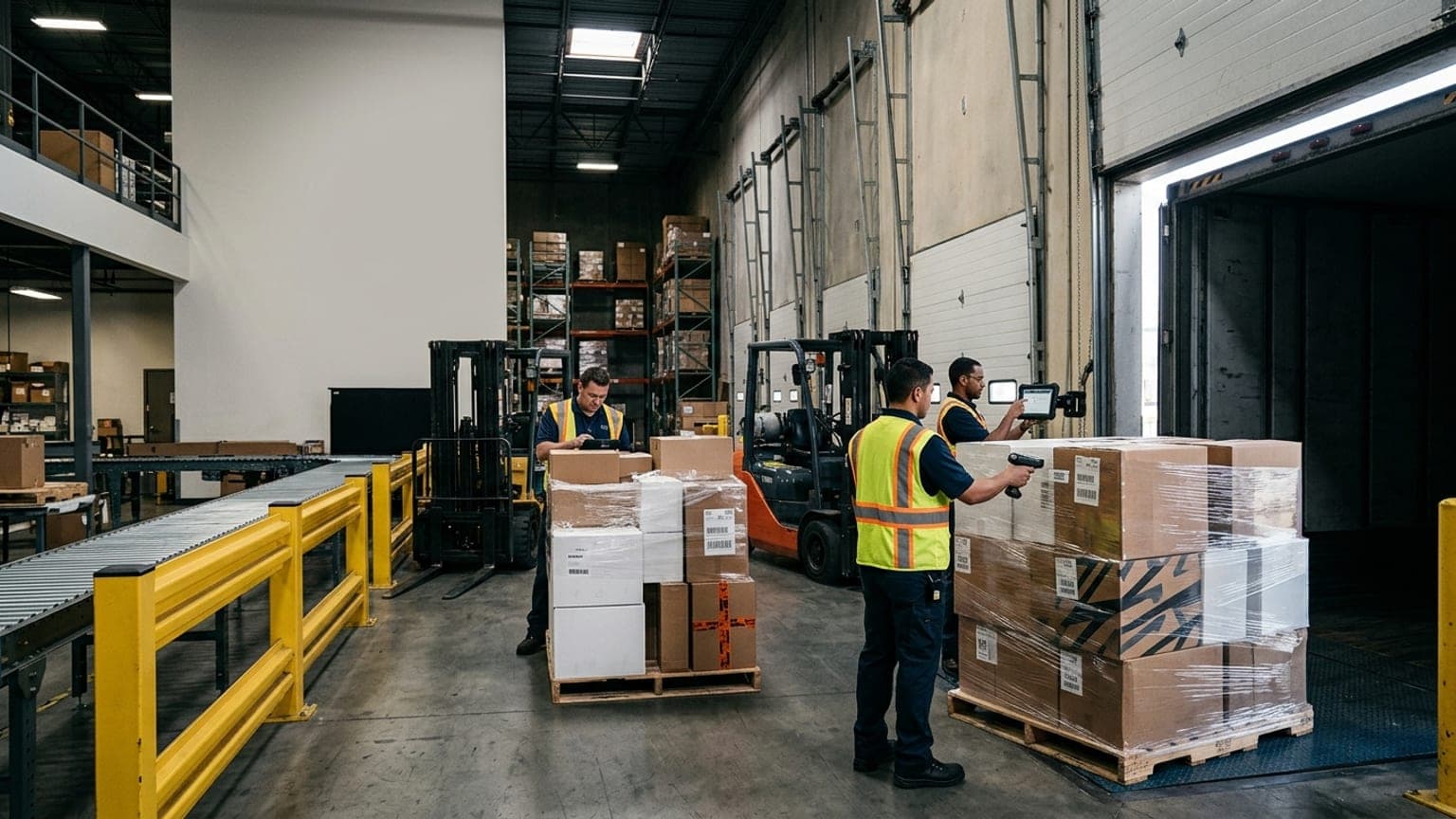
Once product is moved to a cage, exception lane, returns table, or back corner of the dock, the original condition may be gone. Labels may be removed, pallets may be rebuilt, cartons may be opened, or operators may no longer remember why the stock was stopped.
For each hold, capture the record while the inventory is still at the control point:
- SKU, item, lot, serial, case, carton, pallet, license plate, PO, ASN, order, return authorization, customer, vendor, and carrier identifiers
- exact quantity affected and unit of measure
- current location, intended destination, and previous workflow step
- reason code and short operator note
- photos of condition, labels, damage, mismatch, overage, shortage, or packaging issue
- dimensions and weight when the hold affects storage, shipping eligibility, billing, claim evidence, or master data
- timestamp, site, shift, station, operator, and device
- related documents such as packing slip, BOL, inspection form, or return authorization
The goal is not to create paperwork for its own sake. The goal is to make the hold searchable and actionable. A supervisor should be able to answer: what is blocked, why is it blocked, where is it, who owns it, how old is it, what decision is needed, and which orders or customers are affected?
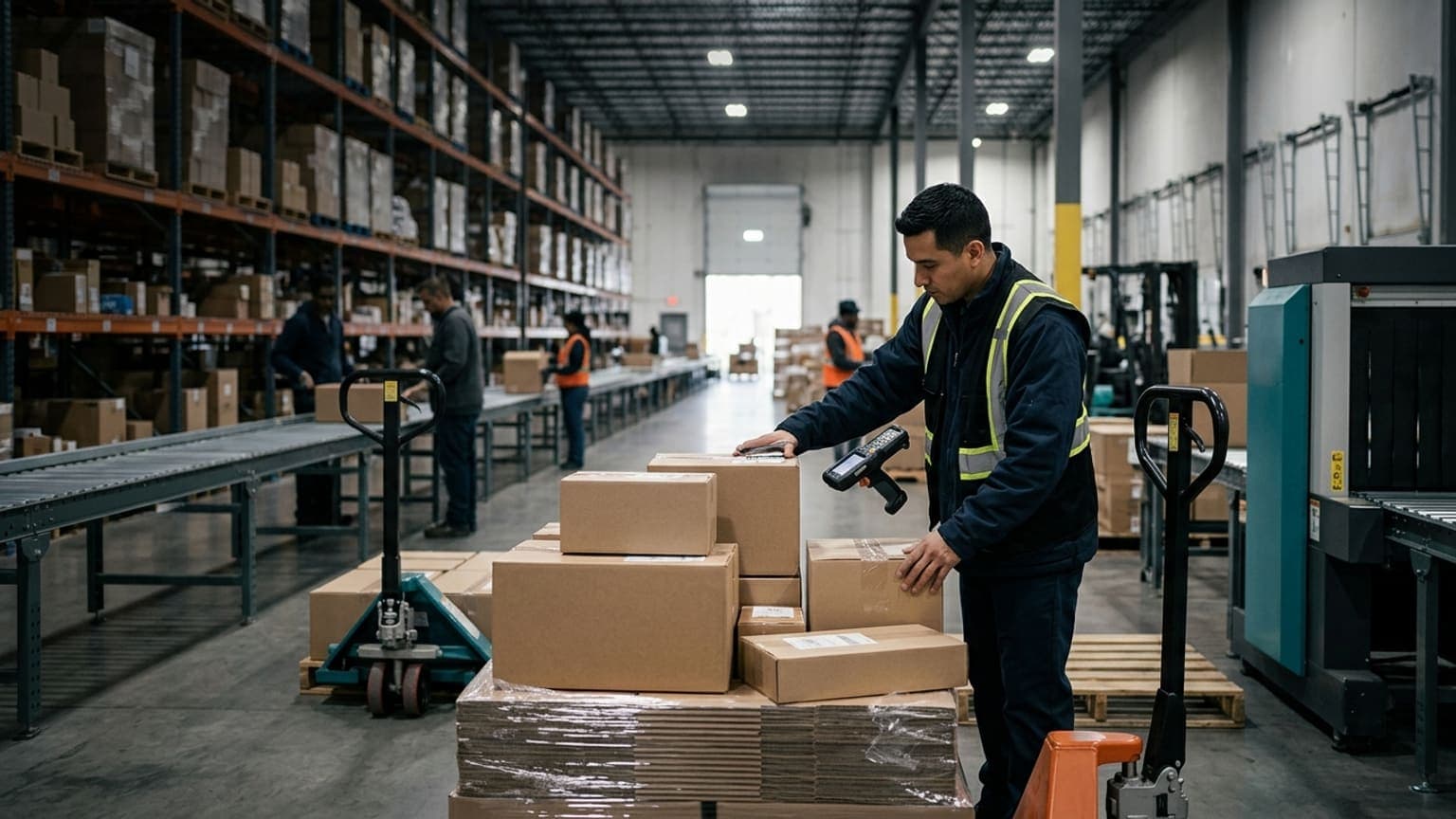
This is where automation can help. A scanning workflow, inspection station, photo capture process, parcel dimensioner, or freight dimensioner can turn a physical problem into a structured record instead of a loose message thread.
Assign owners by decision, not department
Many hold queues fail because ownership is defined too broadly.
"Inventory control owns holds" may sound clean, but inventory control may not be able to release damaged freight, approve customer-specific stock, resolve missing quality paperwork, or decide whether returned product can be restocked. The queue needs owners based on the decision required.
Useful owner paths include:
- Receiving owner: overage, shortage, ASN mismatch, wrong item, incomplete receipt, or vendor labeling issue
- Quality owner: inspection pending, suspected defect, lot or expiration issue, regulatory hold, or product condition review
- Inventory control owner: count variance, wrong location, license plate mismatch, cycle count hold, or system correction
- Customer service owner: customer-specific release, allocation question, urgent order impact, or account instruction
- Claims or finance owner: damaged inbound freight, carrier claim, vendor debit, billing hold, or charge recovery
- Returns owner: disposition, refurbishment, restock, scrap, or customer credit support
- Supervisor owner: override, urgent release, aging escalation, or final disposition when policy does not cover the case
The release rule should be explicit. Who can release the hold? What evidence must exist first? Does the release change quantity, location, status, order allocation, customer billing, or claim eligibility? Can an operator release it, or does a supervisor need to approve?
For buyer evaluation, ask vendors and internal teams to show the workflow with real roles:
"A damaged inbound pallet must stay unavailable until claims captures photos, receiving confirms quantity, and a supervisor selects release, rework, return, or scrap disposition."
That is more useful than seeing a generic status change from "hold" to "available."
Measure aging before the hold becomes hidden inventory
Inventory holds become expensive when nobody measures age and impact.
A hold that lasts one hour may protect the operation. A hold that lasts seven days may create stockouts, late orders, expedited purchasing, excess receiving work, customer escalations, or avoidable write-offs. The physical stock exists, but the business cannot use it.
Track these metrics:
- open holds by reason, site, owner, customer, vendor, SKU, and location
- average and 90th percentile hold age
- inventory value blocked by hold type
- order demand blocked by held inventory
- holds older than the agreed service level
- release, rework, return-to-vendor, scrap, claim, or restock disposition
- repeat root causes by vendor, carrier, SKU, customer, shift, or dock
- percentage of holds missing required evidence
- supervisor overrides and release-without-evidence events
The most useful dashboard is not just a count of held units. It shows which held inventory is creating operational pressure.
For example, 200 units on quality hold may not matter if demand is zero and the review is on time. Ten units on hold may matter a lot if they block same-day orders for a high-priority customer. Buyers should require the workflow to connect hold status to order demand, inventory value, and aging, not just a bin location.
Test hold scenarios before approving the workflow
Do not approve an inventory hold workflow from a clean demo.
Test messy scenarios that happen in real warehouses:
- an inbound pallet has damaged cartons, missing case labels, and a quantity mismatch
- a returned item looks sellable but is missing required inspection evidence
- a lot-controlled SKU arrives without usable lot data
- a customer order needs inventory that is physically present but on quality hold
- a supervisor releases part of a pallet and keeps the rest blocked
- an operator moves held inventory to a new location before the investigation is closed
- finance needs evidence for a vendor debit or carrier claim after the product has been dispositioned
- an integration fails after the hold is created, leaving the WMS and reporting layer out of sync
For each test, confirm the basics:
- the inventory is unavailable when it should be unavailable
- the record shows reason, quantity, location, owner, age, and evidence
- the right person receives the work
- the release rule prevents accidental shipment
- the final disposition updates inventory correctly
- downstream teams can retrieve the record later
If the workflow cannot handle these cases during a pilot, it will not get easier during peak volume.
Make inventory holds part of the buying case
A strong warehouse inventory hold workflow protects service levels because it keeps problem stock visible, owned, and moving toward a decision.
For buyers, the key is to avoid treating holds as a passive status. The workflow should capture evidence at the control point, assign a real decision owner, define release authority, measure aging, and connect blocked inventory to customer demand and financial impact.
If you are evaluating inspection automation, receiving controls, dimensioning, returns workflows, or WMS improvements, include inventory holds in the scope. Sizelabs helps warehouse teams capture the structured records behind these decisions, including dimensions, images, timestamps, identifiers, and exception context, so blocked stock does not disappear from the operation.