

Hardware
Move Pallet Dimensioner
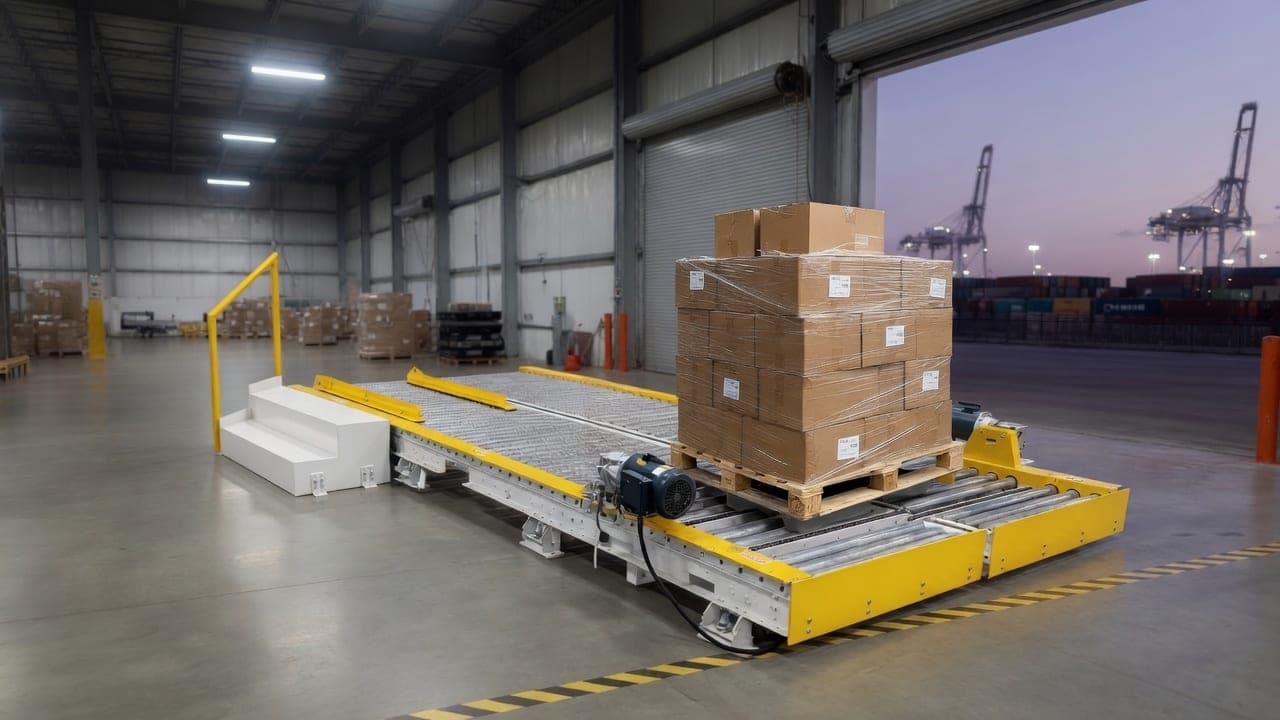
Low powered conveyors for oversized cargo. The load moves, gets weighed, gets dimensioned, and gets processed on the line — the same idea as Move Parcel, built for freight that will not fit a carton belt.
Move Pallet is not Pallet Dimensioner in-motion. It is not a forklift driving under sensors. It is Move on a low conveyor: the load rides the rollers, the station weighs and dimensions, and the receipt writes while oversized cargo is still moving.
Low powered conveyors for oversized cargo. The load moves, gets weighed, gets dimensioned, and gets processed on the line — the same idea as Move Parcel, built for freight that will not fit a carton belt.
The line weighs, dimensions, and keeps photos while the cargo travels. The warehouse receipt the WMS already expects is written on the conveyor. No second device.
We run Parcel, Pallet, Move Parcel, and Move Pallet in a real warehouse at 6121 NW 72nd Ave, Miami. Leads, partners, and future clients come to walk the line — the low conveyors, the oversized cargo, the receipt. That visit is the demo.
6121 NW 72nd Ave, Miami, FL 33166
Infeed onto the low conveyor. No lift onto a static scale. The line is the station.
Powered low rollers keep the freight traveling. The floor does not wait for a tape.
Weight, length, width, height, and photos land while the cargo is still moving.
The brain extracts what the receipt needs — on the conveyor, not on a phone.
AI builds the warehouse receipt the WMS already expects. The next load is already on the infeed.
Low conveyors replace a static scale. Operators process more oversized freight because the load does not stop to be measured.
This is Move for crates, pallets, and freight that does not belong on a carton belt. The deck is low so the load can ride it.
Weight lands from the line as the cargo travels. No park on a scale to get a number.
Length, width, height, and photos are captured on the conveyor. The record is a measurement, not a later guess.
Move Pallet does not use a separate Operator phone. The intelligence sits in the line, the same way it does on Move Parcel.
The conveyor sets the pace. Floor operators process more oversized cargo because the freight does not stop to be typed.
Photos land with dimensions and weight. Evidence for a later lookup, not a photo someone forgot to take.
Suggestions and alerts when a load looks incomplete, a weight does not match, or something on the line needs a second look.
The brain is inside Move Pallet, not in a phone beside the line. The low conveyor fills weigh and dimension while oversized cargo is still moving. The warehouse receipt is structured, and the next load is already on the infeed.
It is Move for oversized cargo: low conveyors that move, weigh, dimension, and process the load while it travels. The extraction brain is built in. There is no separate Operator phone on the line.
Move Parcel is the carton conveyor — HD cameras on a weigh belt for parcels. Move Pallet is the same idea on low conveyors, built for freight that will not fit that belt: crates, pallets, and oversized cargo.
Pallet Dimensioner in-motion is the Pallet Dimensioner: the forklift does not stop to set the pallet on a scale. It passes under the sensors at up to 5 mph and capture happens automatically. Weight comes from the forklift, or from a forklift weighing system you can add. Move Pallet is a conveyor line, not a forklift pass-through.
Not on this line. Operator is built into Move Pallet, the same way it is built into Move Parcel. The independent Operator page is for benches and docks that are not on a Move conveyor.
The showroom is a live operation with every Sizelabs system running. We invite leads, opportunities, partners, and future clients.
250+ installations · 99.5% accuracy
Book a Demo