Warehouse Replenishment Priority Rules: How Buyers Should Prevent Pick Face Stockouts
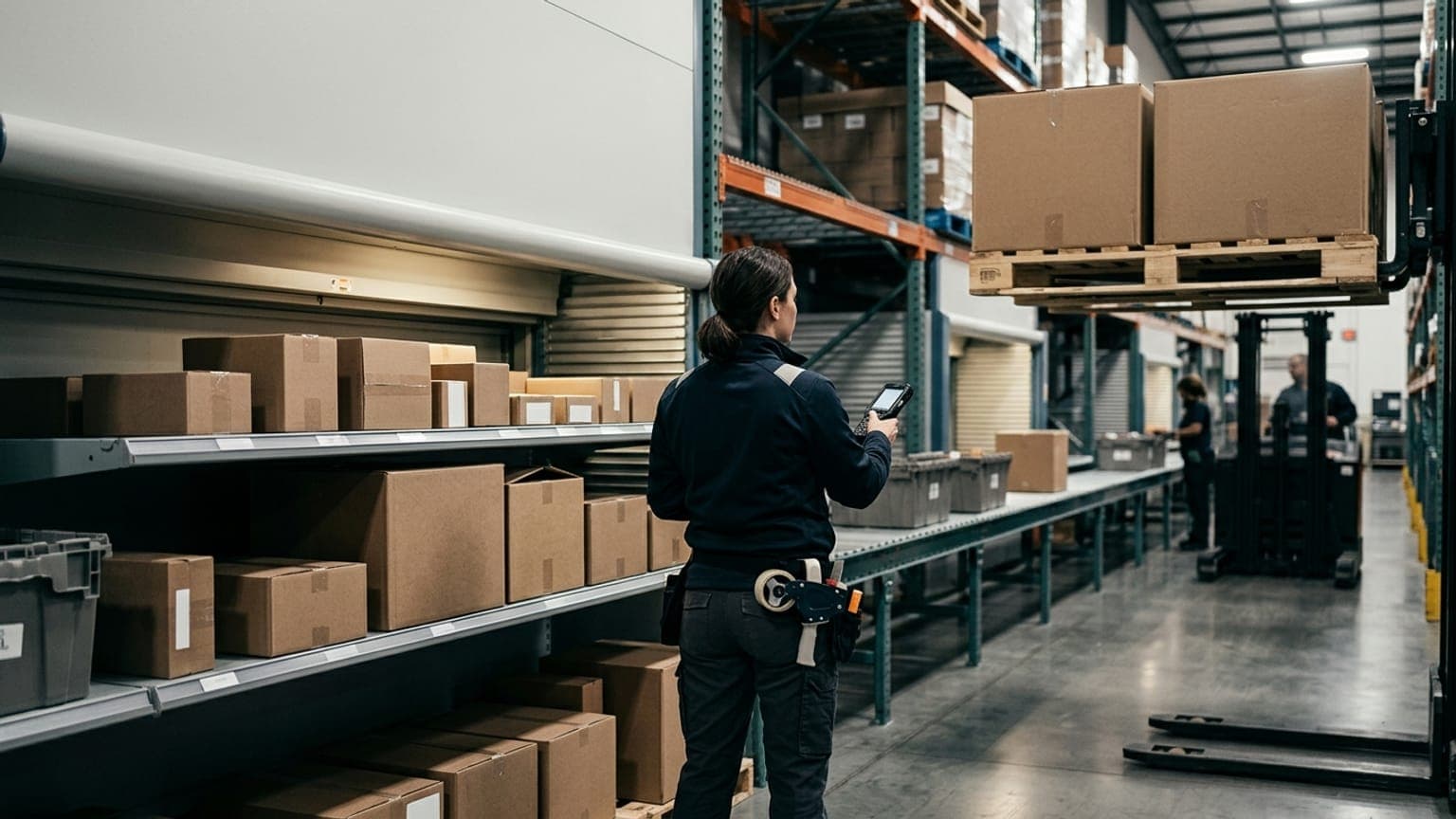
Warehouse replenishment priority rules decide whether pickers find product when the wave starts or wait while someone rushes reserve inventory to the pick face.
That makes replenishment more than a housekeeping task. It is a promise-protection process. When the rule is weak, a warehouse can have enough inventory in the building and still miss the order because the right inventory is not available at the right location at the right time.
For buyers evaluating WMS rules, tasking logic, scanning workflows, mobile automation, or visibility tools, replenishment should be defined as a control system. The goal is not simply to create more tasks. The goal is to create the right tasks early enough, route exceptions quickly, and prevent the operation from discovering the problem at the pick slot.
Separate inventory stockouts from pick face stockouts
The first requirement is naming the failure correctly.
A true inventory stockout means the product is not available in the building. A pick face stockout means the product may exist in reserve, staging, receiving, or another location, but the picker cannot access enough sellable inventory at the forward pick location.
Those problems require different fixes.
Useful categories include:
- No inventory available: purchasing, inbound delay, allocation, or planning problem
- Inventory available in reserve: replenishment timing, task priority, or labor problem
- Inventory available but not trusted: count variance, damaged stock, hold status, or wrong-location problem
- Inventory received but not released: dock-to-stock, inspection, labeling, or putaway delay
- Inventory allocated elsewhere: wave planning, customer priority, or reservation logic problem
If every missed pick is reported as a generic stockout, buyers will purchase the wrong fix. A dashboard may show shortages while the real issue is replenishment aging. A labor project may add people while the real issue is a WMS rule that creates tasks after demand is already active.
A stronger requirement sounds like this:
"The system must distinguish true no-stock conditions from pick face stockouts caused by reserve inventory not replenished before wave release."
That definition lets operations protect orders without confusing replenishment misses with purchasing misses.
Define replenishment triggers by demand pattern
Many warehouses start with simple min-max rules: replenish when the pick location drops below a minimum quantity and fill it back to a maximum. That can work for stable movers, but it breaks when demand is spiky, waves are large, or the pick face holds only a small amount of product.
Buyers should define trigger logic by SKU behavior:
- Fast movers: trigger before the wave consumes the pick face, not after the slot is nearly empty
- Medium movers: use min-max rules with enough safety stock to cover normal replenishment latency
- Slow movers: replenish based on actual order demand, not a fixed shelf target that creates excess forward inventory
- Bulky or irregular items: account for location capacity, carton profile, and handling time before assigning the task
- Promotional or seasonal SKUs: override normal history-based rules during planned demand spikes
- High-value or controlled items: require inventory status, scan confirmation, or supervisor release before movement
The trigger should include timing. A task created five minutes before the picker arrives may be technically correct and operationally useless. If reserve stock is far from the pick face, if forklifts are shared, or if replenishment must happen between waves, the rule needs a longer lead time.
For wave-based operations, the buyer requirement may be:
"Before wave release, compare open demand to pick-face available quantity and create priority replenishments for any SKU projected to fall below one wave of demand plus safety stock."
For continuous picking, the requirement may be:
"Recalculate pick-face risk throughout the shift using open orders, current pick velocity, confirmed quantity, replenishment queue age, and travel time from reserve."
The right rule depends on the operation. The important point is that replenishment should be triggered by expected need, not only by yesterday's static minimum.
Prioritize tasks so urgent work does not hide
Replenishment queues often fail because they treat all open tasks as equal.
A task for a slow-moving SKU needed tomorrow should not outrank a fast-moving SKU needed in the current wave. A clean reserve pallet in an accessible aisle should not be treated the same as inventory in a blocked location. A task protecting a same-day ship cutoff should not wait behind routine slot maintenance.
Priority logic should consider:
- order demand due in the current wave or next wave
- customer promise date, carrier cutoff, or production requirement
- current pick-face quantity and projected depletion time
- SKU velocity and historical pick rate
- reserve inventory location and travel distance
- handling equipment required
- labor availability by zone and shift
- inventory confidence and exception status
- whether the task blocks multiple orders or one order
This is where buyer conversations should move beyond "does the WMS support replenishment?" Most systems can create replenishment tasks. The harder question is whether the system can rank them in a way that matches operational risk.
Ask vendors to show what happens when five replenishment tasks compete for the same forklift driver. Which one goes first? Can supervisors see why? Can they override the sequence? Does the system expose tasks that are aging past the point where they can still protect the wave?
Build exception paths before go-live
Replenishment exceptions are expensive because they appear in the middle of live order execution.
Common exceptions include:
- reserve inventory is missing, short, damaged, or on hold
- the reserve location is blocked
- the pick face has a count variance
- the wrong SKU is found in the pick location
- the system shows inventory that operators cannot locate
- the pick face cannot physically hold the planned quantity
- a license plate, pallet, carton, lot, or serial does not match the task
- the replenishment task needs equipment that is unavailable
- a putaway or receiving delay prevents inventory from being released
For each exception, define who owns the next decision. Inventory control may own variance. Supervisors may own priority overrides. Receiving may own unreleased stock. Maintenance or operations may own blocked aisles. Customer service may need to know when orders are at risk.
The workflow should make exceptions visible without burying operators in manual messages. A clean task should move quickly. A risky task should create a reason code, timestamp, owner, and aging signal.
If the replenishment issue begins upstream, connect the rule to receiving metrics such as dock-to-stock cycle time. If the issue is inventory trust, pair replenishment reporting with warehouse inventory accuracy so the team can see whether the task queue is fighting bad counts.
Measure whether the rules protect orders
Replenishment performance should be measured by the orders it protects, not only by the number of tasks completed.
Track metrics such as:
- pick face stockouts by SKU, zone, wave, shift, and customer
- urgent replenishments created after pickers already needed the product
- picker wait time caused by empty or short pick locations
- replenishment task aging by priority level
- tasks completed before wave release
- orders delayed by replenishment failure
- reserve inventory available but not moved in time
- inventory variances found during replenishment
- supervisor overrides and the reasons behind them
- locations where capacity does not match demand
The 90th percentile matters here too. Average replenishment time may look acceptable while a small group of high-velocity SKUs repeatedly creates late picks and missed cutoffs.
For a pilot, choose a focused scope: one zone, one customer profile, one high-volume SKU family, or one shipping wave. Compare baseline and pilot performance using the same definitions. Do not measure only task completion. Measure whether the pick face had enough trusted inventory before demand arrived.
Make replenishment a buyer requirement, not an afterthought
Warehouse replenishment priority rules are easy to underestimate because the work looks routine. Move product from reserve to the pick face. Keep the slot full. Let pickers pick.
In real operations, the difference between a weak rule and a strong rule is the difference between finding the problem during planning and finding it when the order is already late.
Buyers should require replenishment logic that can see demand early, prioritize by operational risk, handle exceptions cleanly, and report whether orders were protected. That is the standard that matters.
Sizelabs helps warehouse teams connect physical evidence, dimensions, weight, inventory context, and exception signals at the points where operational decisions happen. If replenishment problems are hiding inside stockout reports, pick delays, or late wave recovery, start by making the trigger, priority, and exception rules visible.