Forklift-Mounted Dimensioning System: Buyer Requirements for Warehouse Teams
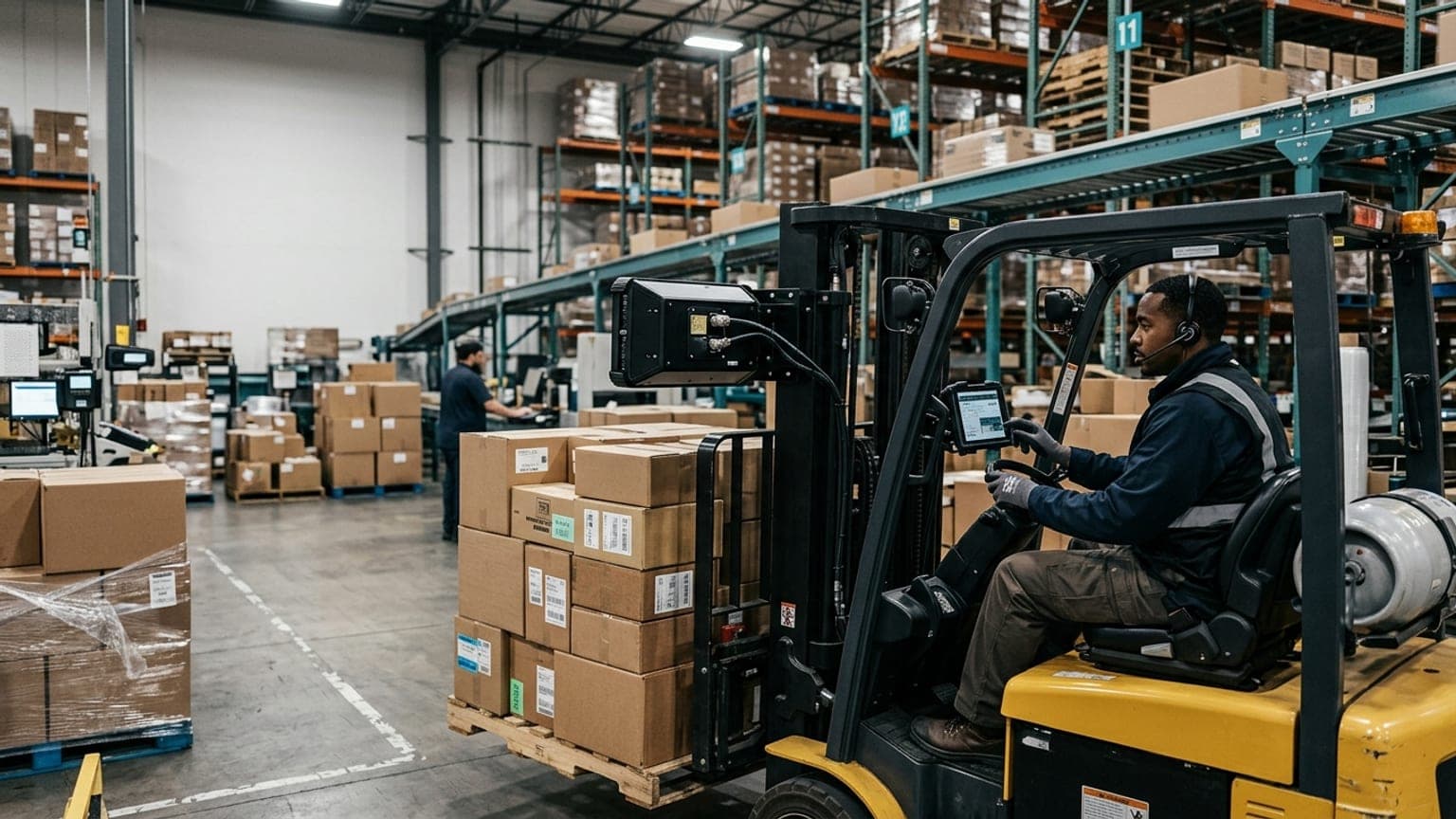
A forklift-mounted dimensioning system can be attractive because it measures freight during movement instead of forcing every pallet through a fixed station.
That promise matters in buildings where pallets already move through receiving, staging, cross-dock, replenishment, shipping, and returns under time pressure. If the system captures dimensions, weight, identifiers, images, and workflow context while the forklift is doing work it already had to do, the warehouse can reduce rehandling and collect better freight records.
But buyers should be careful. A forklift-mounted workflow is not automatically better than a fixed pallet dimensioner, a dock-side station, or an audit lane. It only works when the measurement point fits traffic, safety, operator behavior, data requirements, and the commercial decision the measurement supports.
Here is what warehouse teams should require before buying.
Start with the freight decision, not the forklift
The first question is not whether the system mounts neatly on a forklift. The first question is which decision needs trusted measurement data.
Common decisions include:
- customer billing for 3PL storage, handling, or outbound freight
- carrier rating and dimensional weight review
- freight class validation or reclassification support
- inbound profile creation for new SKUs, pallets, or vendor shipments
- trailer loading, cube planning, and staging assignment
- overhang, height, or damage exceptions
- proof for claims, accessorials, or customer disputes
Each decision changes the workflow. Customer billing may require stronger evidence retention and review rules. Carrier audit support may require certified measurement, weight capture, and retrieval by shipment ID. Receiving profile creation may care more about speed and item master updates. Trailer planning may care about when the data becomes available relative to load building.
Write the workflow in one sentence before comparing vendors: "We need forklift operators to capture pallet dimensions and images at receiving before putaway so the WMS can store accurate profiles and route oversize freight." Or: "We need certified pallet records before shipping so billing and carrier audit teams can defend the invoice."
If the capture point is still unclear, use the dimensioner workflow finder to compare forklift-lane, pallet, parcel, and audit-station paths before evaluating hardware.
Make traffic and safety part of the buying requirements
Forklift-mounted dimensioning depends on movement. That makes site fit more important than it looks in a product demo.
Buyers should review:
- aisle width and turning radius near the measurement point
- dock congestion during live receiving and shipping windows
- pedestrian crossings, blind corners, and shared equipment zones
- whether the operator must stop, slow down, square the load, or reposition
- rack, door, sprinkler, and trailer clearance near tall freight
- battery charging, device charging, and shift-change handoff
- whether the equipment affects operator visibility or forklift ergonomics
Do not accept a workflow that requires drivers to perform awkward alignment in a busy traffic lane. A few extra seconds can be acceptable if the data is valuable. A habit that creates hesitation, extra reversing, or congestion will fail during peak volume.
For some buildings, a fixed Wilkins Pallet Dimensioner near a controlled staging point will be cleaner. For others, a forklift-based approach may reduce touches because the forklift already owns the movement. The right answer depends on where freight naturally pauses and where the record must be created.
Define what counts as a good measurement
Forklift-mounted systems need clear accuracy requirements because pallet freight is rarely perfect.
The pilot should include:
- standard wrapped pallets
- unstable or leaning loads
- overhanging cases
- dark wrap, reflective wrap, and mixed packaging
- tall pallets near height limits
- partial pallets and irregular freight
- damaged corners or crushed cartons
- pallets with poor label placement
- freight that often triggers remeasurement or billing review
For each profile, define the required outcome. Does the system need to measure the maximum outside dimensions? Does it need to flag overhang? Should it reject a poor capture and ask for a rescan? Should a supervisor review certain profiles before the record is used for billing?
Accuracy should also be tied to business use. Internal storage planning may tolerate different requirements than legal-for-trade billing. If measurements affect invoicing, carrier disputes, or customer contracts, review certification needs early. The NTEP certification guide explains when certified dimensioning becomes part of the buying decision.
Require a complete freight record
Dimensions alone are not enough. A forklift-mounted dimensioning system should create a record that someone can trust later.
Useful records include:
- length, width, height, and weight
- shipment, order, pallet, license plate, or customer identifier
- operator, forklift, dock, zone, or location
- timestamp and workflow step
- images of the freight, label, overhang, or damage
- measurement confidence or exception flag
- manual override reason and approver when used
- downstream update status
The record should answer a practical question without making someone search through camera folders, spreadsheets, and system logs: what was measured, when, by whom, where, and why should the business trust it?
This is especially important for 3PLs and freight forwarders. If dimensions support customer billing, the measurement record needs to survive the billing cycle and the dispute window. If the system only captures numbers but cannot retrieve proof by shipment or customer, finance may still be stuck defending charges manually.
For a deeper record model, pair this evaluation with the 3PL billing evidence guide.
Verify integration timing before rollout
The value of a forklift-mounted dimensioning system depends on when the data lands.
Ask vendors and internal teams to define:
- whether the WMS receives dimensions before putaway, before allocation, before shipment close, or after the fact
- whether the TMS or shipping platform receives data before rating and manifest decisions
- whether customer billing receives the final approved record or a preliminary measurement
- how image evidence is stored and retrieved
- what happens when a network update fails
- whether operators can see a failed update before freight moves away
- how duplicate scans, changed pallets, repacks, or split shipments are handled
"We have an integration" is not specific enough. The buyer needs to know the trigger, payload, validation rule, retry behavior, and exception path.
For example, if dimensions update the WMS only after putaway, the warehouse may miss the chance to route oversize freight correctly. If billing receives a record before supervisor review, customer invoices may need correction. If failed updates sit in a hidden log, the floor may believe the record is complete when the business system never received it.
Use the WMS dimensioning integration playbook to turn integration promises into testable requirements.
Test operator adoption with real drivers
Forklift workflows live or die with operators.
A system can be accurate in a demo and still fail if drivers feel it slows them down, distracts them, or creates extra correction work. During the pilot, include operators from different shifts and skill levels. Watch how they approach the capture point, scan identifiers, handle exceptions, and recover when a pallet is not clean.
Score adoption with practical measures:
- average capture time per pallet
- extra stops or repositioning moves
- percentage of clean captures without supervisor help
- exception rate by freight type
- failed scan or missing identifier rate
- driver feedback on visibility and ergonomics
- training time before independent use
- backlog created during peak receiving or shipping
Do not judge only the screen. Judge the floor behavior. If operators create workarounds in the pilot, those workarounds will become the real process after go-live.
Build the pilot around the buying case
A good pilot should prove the business reason for the system.
If the goal is billing accuracy, compare billed records before and after the pilot. If the goal is receiving speed, measure dock-to-stock impact and profile completeness. If the goal is carrier audit defense, test retrieval of dimensions, weight, images, and shipment identifiers for disputed freight. If the goal is trailer planning, measure whether earlier dimension data improves load decisions.
Useful pilot metrics include:
- pallets captured per hour without disrupting forklift flow
- percentage of freight with complete dimensions, weight, identifier, and image
- measurement exceptions by reason code
- integration success rate
- manual remeasurement avoided
- billing records held or corrected
- carrier adjustments disputed with supporting proof
- operator training and support cases
The pilot should include messy freight, busy traffic, shift changes, and failed updates. Clean pallets prove the equipment can work. Difficult pallets prove whether the workflow deserves rollout.
Choose the workflow that operators can keep using
A forklift-mounted dimensioning system is strongest when it captures trusted freight data without creating a second process. It should fit the path the pallet already takes, protect safety, preserve evidence, update the right systems, and give operators a simple way to handle exceptions.
For warehouse buyers, the decision is not "forklift-mounted versus everything else." The decision is which capture workflow creates the cleanest operational record with the least friction.
Sizelabs helps teams compare those workflows across parcel, pallet, freight, and operator-led automation. If your team is deciding where dimensioning belongs, compare the Wilkins Pallet Dimensioner, Operator AI, and the dimensioner workflow finder before locking the buying requirements.