Warehouse Dock Door Release Workflow: How to Prevent Bad Loads From Leaving
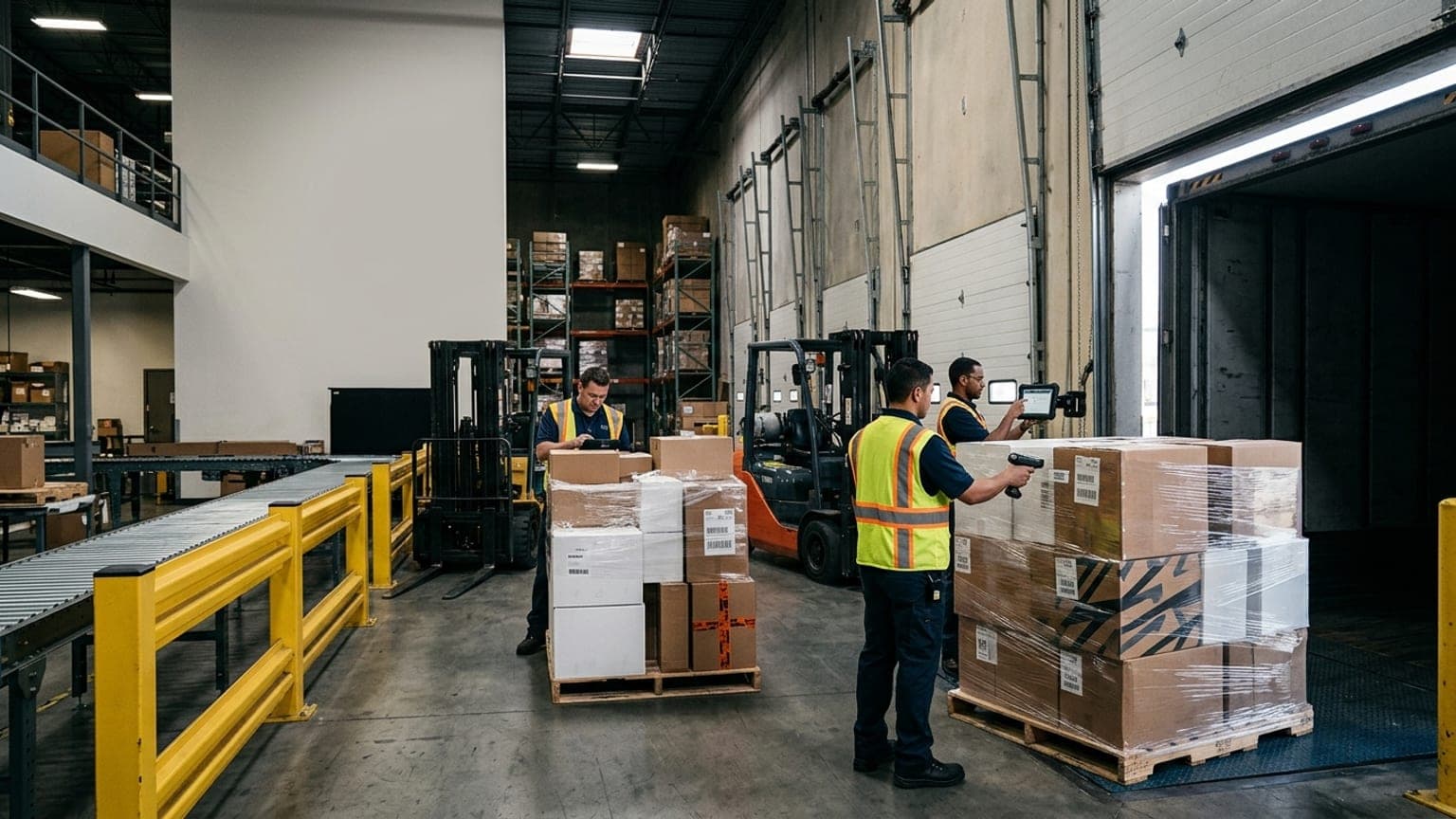
A warehouse dock door release workflow is the last practical chance to stop a bad load before it becomes a customer complaint, carrier dispute, chargeback, or expensive recovery project.
Most warehouses put a lot of control earlier in the process: receiving checks, inventory holds, picking scans, packing rules, labels, and staging lanes. Those controls matter. But the dock door is where separate pieces of work become a shipment. If the release step is loose, a damaged pallet, wrong trailer, missing parcel, poor load photo, incorrect dimensions, or incomplete paperwork can leave the building with no clean evidence trail.
For warehouse buyers evaluating shipping automation, inspection workflows, dock controls, dimensioning, or WMS/TMS integration, the question is not just whether orders can be shipped. The better question is: what must be true before the operation is allowed to release the door?
Define what a clean dock door release means
Start by writing the release criteria for each outbound flow.
A parcel manifest, LTL pallet, full truckload, store route, customer pickup, and cross-dock shipment may all need different checks. Treating them as the same release event creates gaps because the failure modes are different.
Common release criteria include:
- all orders, cartons, pallets, license plates, or route stops assigned to the load are present
- carrier, trailer, route, appointment, BOL, manifest, PRO, seal, and service level match the shipping plan
- freight is staged at the right door and loaded in the right sequence
- labels, placards, customer instructions, routing guides, and compliance documents are complete
- cartons or pallets show no unresolved damage, overhang, instability, wet packaging, crushed corners, or missing wrap
- dimensions and weight are captured when they affect rating, routing, billing, claims, or customer rules
- high-risk exceptions are cleared, held, or approved before the door closes
The point is not to slow every shipment with unnecessary review. The point is to make the final release decision explicit. A clean load should move quickly because the required checks are already visible. A risky load should stop before the carrier leaves.
A buyer-ready requirement sounds like this:
"Outbound loads must require a release record with shipment identifiers, dock door, carrier, trailer or route, required checks, exception status, evidence, release owner, timestamp, and final approval."
That requirement is stronger than asking whether the system supports shipping confirmation because it defines the control point.
Capture evidence while the load is still visible
The worst time to prove what happened at the dock is after the trailer has left.
Once the seal is applied or the carrier pulls away, the warehouse may lose access to the freight condition, load pattern, count, staging lane, trailer number, or paperwork. If a customer reports missing cartons, a carrier adds a reclass charge, or a retailer issues a compliance chargeback, the team is left reconstructing the release from scans and memory.
Capture the release record before the door closes:
- order, shipment, carton, pallet, license plate, customer, carrier, trailer, route, BOL, manifest, and appointment identifiers
- photos of pallet condition, label placement, trailer loading, seal, overhang, wrap quality, damage, or special handling requirements
- dimensions, weight, and measurement status when freight profile affects billing, rating, class, storage, or load planning
- dock door, staging lane, site, shift, operator, supervisor, and timestamp
- expected count versus scanned count for cartons, pallets, or stops
- exceptions found, action taken, owner, and release decision
- seal number, carrier check-in/out time, and final departure event when relevant
Photo evidence should be tied to the shipment record, not trapped in a phone gallery or group chat. If the team needs to prove that a pallet was wrapped, a carton was not visibly damaged, a seal was applied, or a trailer was loaded correctly, the image has to be searchable later by shipment, customer, carrier, date, and door.
When dimensions and photos are both part of the release decision, a freight dimensioner or parcel dimensioner can help create a structured record at the point where the physical shipment is still in control.
Build an exception hold path for failed release checks
A dock door release workflow needs a clean path for problems.
Without an exception path, operators face a bad choice during cutoff pressure: ship the load and hope the issue is harmless, or stop the load with no clear owner and risk missing the carrier. Both choices create friction.
Common release exceptions include:
- a carton or pallet is missing from the expected load
- the wrong pallet is at the door
- labels, BOL, manifest, seal, ASN, or customer documents are missing or mismatched
- freight appears damaged, unstable, overhanging, wet, crushed, or poorly wrapped
- dimensions, weight, class, or service level does not match the expected shipment profile
- a customer routing guide, retailer requirement, hazmat rule, temperature rule, or delivery appointment is incomplete
- the trailer, route, carrier, or pickup time does not match the plan
- a system update fails before the shipment can be confirmed
Each exception should answer three questions:
Can the load leave? Some exceptions should block release. Others may allow release with evidence and approval.
Who owns the decision? Shipping, transportation, customer service, inventory control, quality, finance, or a supervisor may need to act.
What evidence is required? The workflow may need photos, rescans, remeasurement, paperwork correction, customer approval, or supervisor override.
This is where many projects miss the operational detail. A dashboard that only shows "open exceptions" is not enough. The release workflow should show which exceptions threaten the next pickup, which loads are blocked, which owner has the action, and whether the release criteria have been satisfied.
Protect the release decision from cutoff pressure
Cutoff pressure is real.
When the carrier is waiting, labor is tight, and the building is trying to close a wave, small defects can get waved through. A missing photo, weak label, unstable pallet, unmatched carton, or skipped measurement may feel less important than getting the truck out.
That is exactly why the release workflow needs rules before the shift is under pressure.
Useful controls include:
- required checks that cannot be bypassed for high-risk customers, carriers, lanes, or product types
- warning checks that allow release only with reason code and evidence
- supervisor approval for release with unresolved exceptions
- automatic hold for missing count, missing documents, failed scan, damaged freight, or measurement variance above tolerance
- cutoff visibility that shows which exceptions are blocking which carrier pickups
- override history with user, timestamp, reason, and affected shipment
The goal is not to remove judgment from the floor. The goal is to make judgment visible. If a supervisor approves a release with an unresolved issue, the record should show why. If the same exception repeats every afternoon, leadership should see the pattern instead of treating each problem as a one-off.
For broader timing context, compare the release workflow with your dock scheduling and dock-to-stock cycle time metrics. A door release control that ignores appointment windows and carrier departure pressure will be hard to sustain.
Measure release quality, not just shipped volume
Outbound teams are usually measured on volume, productivity, and cutoff performance. Those metrics matter, but they do not show whether the dock is releasing good loads.
Track release quality with metrics such as:
- failed release checks by reason, door, shift, carrier, customer, route, and site
- loads released with supervisor override
- loads delayed because of missing cartons, paperwork, labels, dimensions, or carrier mismatch
- late corrections made after staging but before departure
- customer claims tied to missing, damaged, late, or incorrectly documented shipments
- retailer chargebacks connected to label, routing, packaging, ASN, or paperwork issues
- carrier billing disputes tied to weight, dimensions, class, accessorials, or detention
- percentage of release records with complete photos and required fields
- repeat root causes by customer, carrier, SKU family, order type, or workflow step
The most useful view combines quality and timing. A site may hit the carrier cutoff while quietly creating avoidable claims. Another site may catch issues but hold loads too long because ownership is unclear. Buyers should want both: fast release and clean release.
If shipping defects are already creating billing or customer pressure, connect this workflow to your shipping charge audit requirements and warehouse receiving inspection standards so inbound and outbound evidence follow the same operating logic.
Make dock release a buying requirement
A warehouse dock door release workflow turns the final outbound step into a controlled decision instead of a rushed confirmation.
For buyers, the requirement is practical: define what a clean release means, capture evidence before the door closes, create a hold path for failed checks, assign release ownership, protect the decision from cutoff pressure, and measure release quality after the shipment leaves.
Sizelabs helps warehouse teams connect dimensions, weight, images, identifiers, timestamps, and exception status at the physical points where release decisions happen. If bad loads are creating claims, chargebacks, billing disputes, or customer escalations, start by tightening the last control point before freight leaves the building.