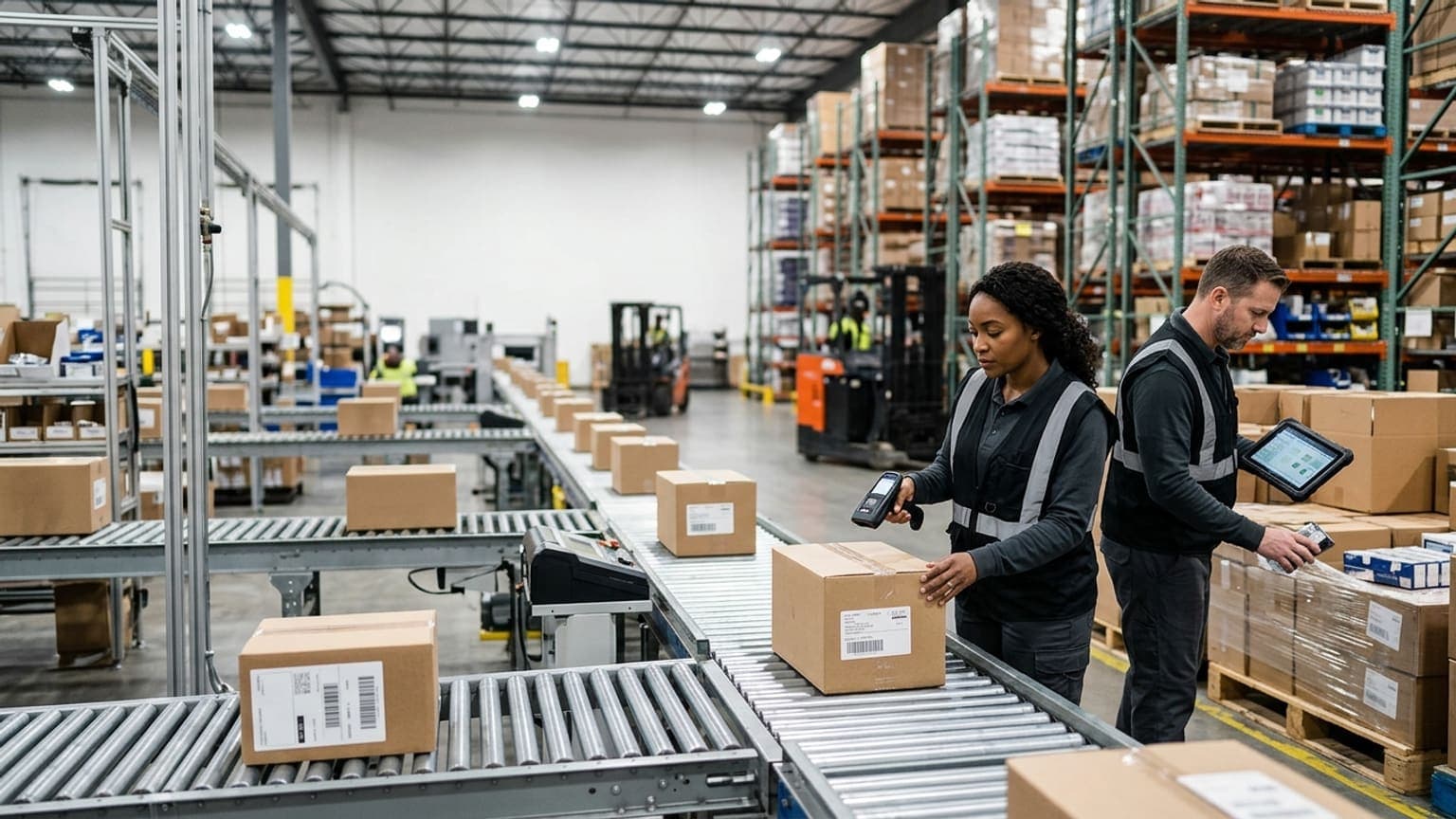
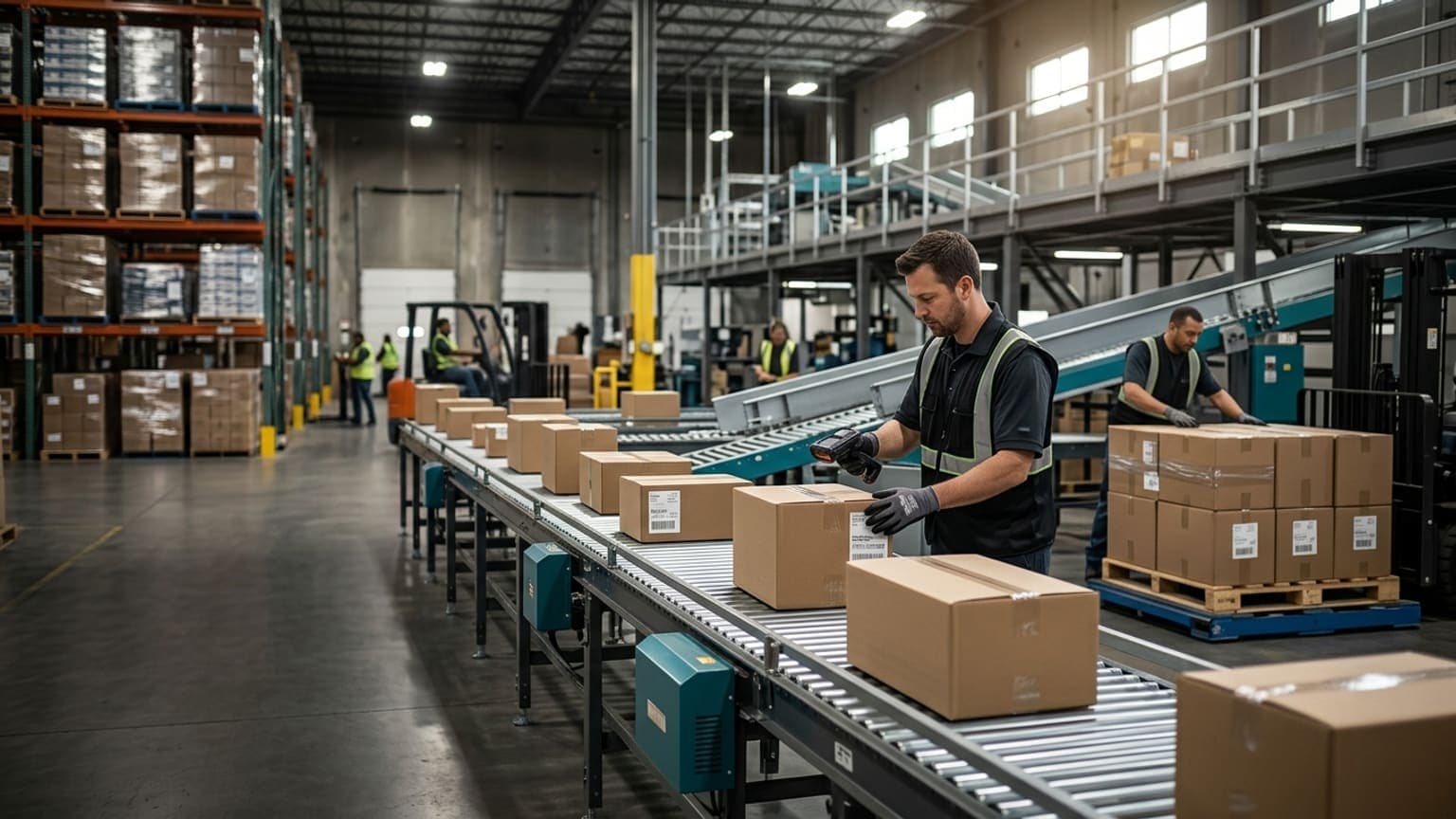
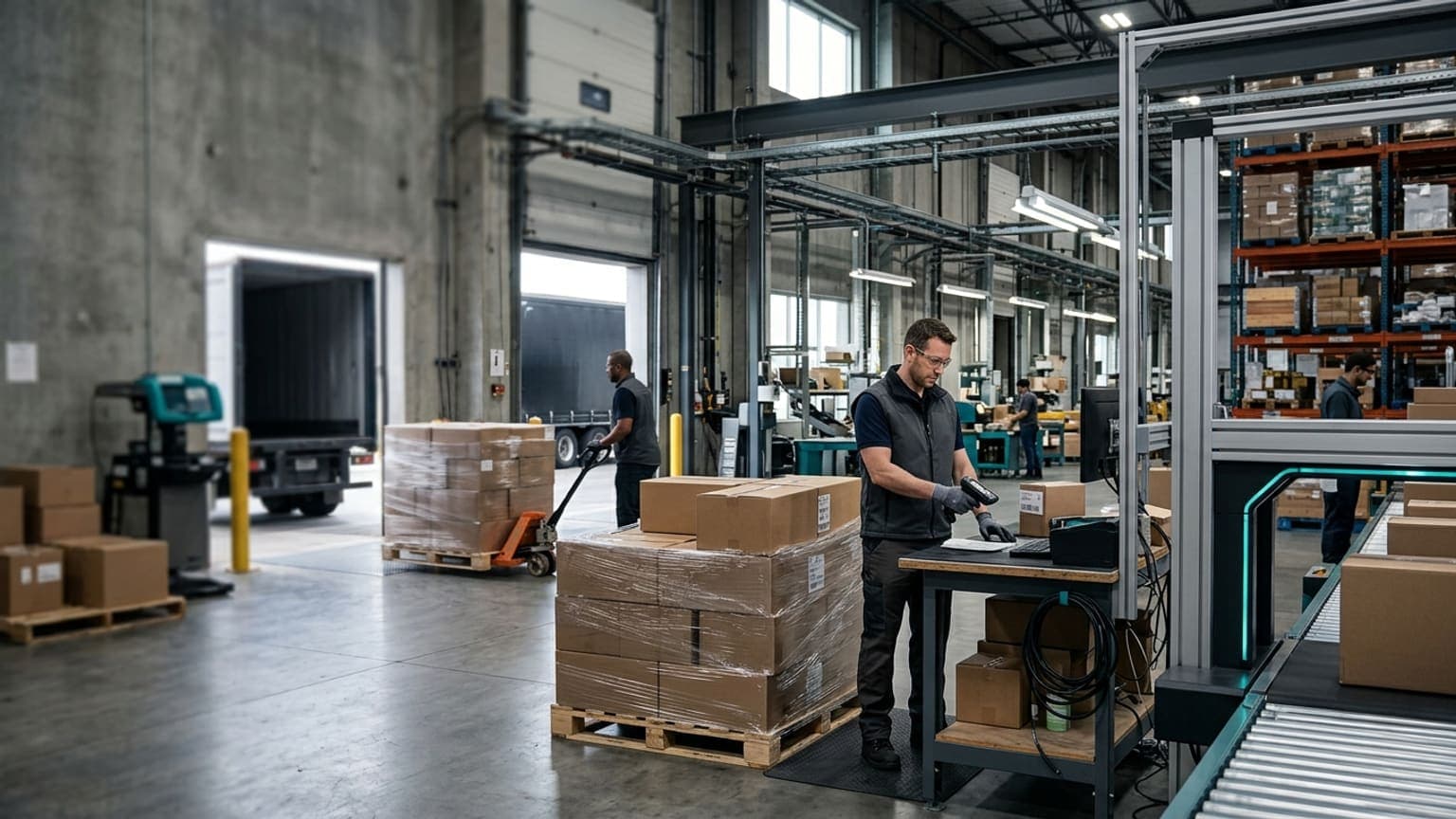
Warehouse Order Consolidation: How to Combine Picks Without Creating Shipping Errors
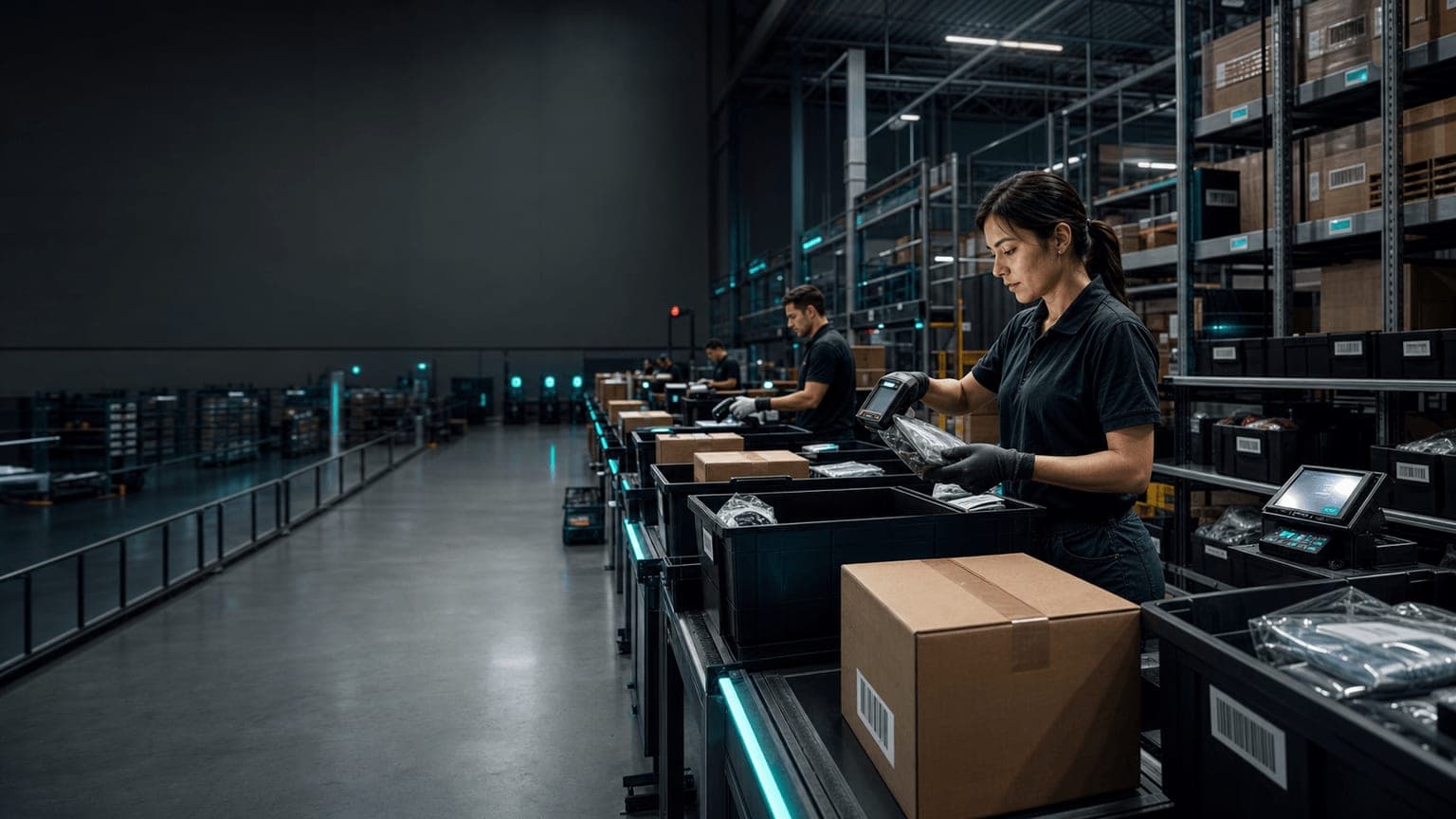
Warehouse order consolidation is where productivity gains from batch picking, zone picking, and multi-location fulfillment either become faster shipping or turn into preventable errors.
The idea is simple: pick work in the most efficient way, then bring the pieces of each order back together before packing, manifesting, or loading. The risk is also simple. If the consolidation process is loose, the warehouse can pick faster while shipping incomplete orders, mixing customer lines, delaying carrier cutoffs, and creating a second wave of supervisor work at pack-out.
Good consolidation is not a pile of totes waiting for someone experienced to sort them. It is a controlled handoff between picking and shipping, with clear identity, status, verification, and exception rules.
Here is how to build warehouse order consolidation that protects speed and accuracy at the same time.
Use warehouse order consolidation for the right problem
Consolidation is useful when the picking method separates work that later has to ship together.
Common use cases include:
- Zone picking: different associates pick different parts of the same order from separate zones.
- Batch picking: one picker collects the same SKU across several orders, then the work is sorted downstream.
- Multi-location orders: inventory for one order comes from reserve, forward pick, mezzanine, freezer, hazmat, or oversized areas.
- Value-added services: orders need labeling, kitting, inserts, inspection, personalization, or customer-specific packaging before shipment.
- Carrier or route sorting: orders are grouped by service level, parcel carrier, LTL route, store, or delivery wave.
- Split shipment control: partial orders need a decision before the warehouse ships what is available.
The wrong reason to add consolidation is "because picking is slow." If pickers are slow because slotting is poor, replenishment is late, or the WMS sends them through bad travel paths, a consolidation station may only move the pain downstream.
Start with the specific constraint. If travel time is the issue, zone or batch picking with consolidation can help. If shipping errors are the issue, the consolidation point needs stronger verification before pack-out. If carrier cutoff is the issue, consolidation must be timed around order release and pack capacity, not just pick efficiency.
For the picking side of the equation, the guide to warehouse order picking productivity covers how to reduce travel without creating hidden handoff costs.
Design the consolidation point as a workflow, not a waiting area
A consolidation area should make order status visible without asking a supervisor to interpret the floor.
At minimum, define:
- where each tote, carton, pallet, or cart enters consolidation
- how the order, wave, batch, or customer is identified
- where partial orders wait
- when an order is complete enough to move to pack-out
- where exceptions go
- who owns aged or blocked work
- how the next process knows the order is ready
Physical layout matters. A clean consolidation station usually has separate space for inbound picked work, active sorting, complete orders, exceptions, and ready-to-pack orders. Mixing those statuses in one lane creates the classic problem: the order is "somewhere in consolidation," but nobody knows whether it is complete, short, damaged, or waiting on a late zone.
Use simple visual and system statuses:
- Awaiting first pick: no picked lines have arrived.
- Partially arrived: one or more zones have arrived, but the order is not complete.
- Ready to verify: all expected pick containers have arrived.
- Verified complete: line count and quantities match the order.
- Exception hold: the order needs a decision before pack-out.
- Released to pack: the order can move forward.
Those statuses do not need to be complicated. They need to be consistent enough that operators stop relying on memory.
Order consolidation wall systems: when a put wall earns its space
The most common physical form of a consolidation point is the order consolidation wall — usually called a put wall. It is a bank of cubbies, one order per slot, where batch-picked items are sorted ("put") into their orders and released to packing when complete.
A consolidation wall system pays off when three conditions hold:
- Batch or zone picking feeds it. Put walls exist to reverse batching — if you pick discrete orders, a wall just adds a touch.
- Orders are multi-line and multi-zone. Single-line orders should bypass the wall entirely; routing them through it is pure added handling.
- Slot status is system-tracked. Put-to-light or scan-confirmed walls keep the status honest. A wall managed by memory becomes the same "somewhere in consolidation" black hole as an unmanaged table — with more shelving.
Sizing rule of thumb: slots ≈ orders in process during your peak interval, plus 15–20% headroom for exception and aged-order slots. Walls run best at 70–85% occupancy; a chronically full wall backs pressure up into picking, and a chronically empty one wastes prime floor space.
Whether the wall is lit, scanned, or manual, the completeness check that follows is the same — and it is where consolidation errors are actually caught.
Verify completeness before the order reaches packing
Packing should not be the first place the warehouse discovers that an order is incomplete.
The consolidation process should verify three things before release:
- Identity: the right totes, cartons, or items are tied to the right order.
- Completeness: all expected lines, quantities, and required service steps are present.
- Condition: the items are acceptable to ship and not waiting on damage review, customer hold, or compliance work.
The verification method depends on the operation. A small team may use scan confirmation and expected line counts. A higher-volume operation may use put-to-light, scan-to-slot, order-level weight checks, image capture, or guided workflows that tell the operator which container belongs in which consolidation position.
Weight checks can be useful, but they should be treated as a signal, not a complete control. A wrong color, wrong lot, missing insert, or duplicate low-weight item may pass a simple weight check. Combine weight with barcode confirmation, line-level expectations, and exception prompts.
The goal is not to inspect every order twice. The goal is to stop incomplete or mixed orders before they consume pack labor, miss cutoff, or reach the customer.
For outbound teams already tightening pack-out discipline, warehouse packing station optimization is the natural next step after consolidation control.
Keep exceptions out of the clean consolidation flow
Consolidation often fails because exceptions sit in the same physical and system queue as clean work.
Common consolidation exceptions include:
- one zone has not completed its part of the order
- a picked tote arrived without a readable label
- the quantity in the container does not match the pick record
- an item is damaged or missing customer-required packaging
- a substitute or split-shipment decision is needed
- the order has an address, carrier, fraud, payment, or customer-service hold
- one line requires value-added work before pack-out
- the WMS says the order is complete, but the floor record disagrees
Each exception should have an owner and a next action. If every exception goes to "supervisor review," the process will age quickly. Some issues belong to inventory control, some to customer service, some to picking, some to packing, and some to systems support.
A practical rule works well: clean orders move forward; unclear orders move sideways.
Sideways means a defined exception lane, not an informal pile. The exception record should show the reason, owner, timestamp, order priority, carrier cutoff risk, and next decision. That keeps the main consolidation flow moving while still making blocked orders visible.
The broader discipline is covered in warehouse exception management. Consolidation is one of the places where that discipline pays back fastest because unresolved issues sit directly between picking labor and shipping revenue.
Time consolidation around carrier cutoffs
A consolidation process can be accurate and still fail operationally if it releases work too late.
Cutoff pressure changes the rules. A complete order that waits 45 minutes in consolidation may be harmless at 10 a.m. and dangerous at 4 p.m. The station should know which orders are tied to same-day parcel pickups, premium service levels, customer appointments, LTL close times, or route departure windows.
Useful time controls include:
- release waves early enough for consolidation and pack-out, not just picking
- flag orders with missing zones before the final hour
- prioritize complete cutoff-critical orders over low-risk work
- define when to split, hold, upgrade, or escalate an order
- prevent exception orders from hiding inside the ready-to-pack queue
- review late releases by customer, zone, carrier, and shift
This is where consolidation connects directly to warehouse shipping cutoff management. The cutoff is not only a shipping event. It is the deadline for every upstream handoff that must happen before the carrier arrives.
If consolidation is always full in the last hour, do not only add people to packing. Look upstream at wave release, zone completion timing, replenishment blocks, and the number of orders that arrive incomplete.
Track KPIs that reveal hidden rework
The best consolidation metrics show whether the process is improving flow or creating a new bottleneck.
Track:
- Consolidation dwell time: how long work waits between pick arrival and release to pack.
- Touches per order: how many times an order is handled after picking.
- Incomplete arrival rate: percentage of orders that reach consolidation without all expected zones or lines.
- Mis-sort rate: orders, totes, or items placed in the wrong consolidation position.
- Pack rework rate: orders sent back from packing because consolidation missed an issue.
- Exception aging: how long blocked orders sit before ownership or resolution.
- Cutoff risk: orders delayed in consolidation inside the final carrier window.
- Shipping error cause: whether customer errors trace back to picking, consolidation, packing, manifesting, or loading.
Review the metrics by zone, picker group, batch type, customer, shift, and carrier. If incomplete arrivals cluster in one zone, the issue may be replenishment or release timing. If pack rework spikes on one customer, the issue may be customer-specific packaging rules. If dwell time rises near cutoff every day, the release plan may be creating more simultaneous consolidation work than the station can absorb.
The point is not to blame consolidation. The point is to use it as an early-warning system for the handoffs that create shipping errors.
Where technology helps
Technology should make consolidation decisions clearer, not simply add another scan.
Useful capabilities include:
- tote, carton, order, and lane scan validation
- guided put-to-position instructions
- order completeness checks before pack release
- image capture for damage or customer-specific proof
- weight and dimension checks where they support shipment validation
- exception prompts with owner and reason codes
- integration with the WMS, shipping software, customer systems, and reporting tools
For many teams, a guided workflow such as Warehouse Assistant can reduce dependence on tribal knowledge at the consolidation point. The associate should not need to remember every customer rule, service-level constraint, or exception path. The system should surface the next right step.
Sizelabs' integrations page shows the larger requirement: consolidation data only helps when it reaches the systems that release, pack, rate, bill, and analyze orders.
Conclusion: consolidation should make speed safer
Warehouse order consolidation is worth doing when it lets the operation pick efficiently without losing control before shipping.
The winning process is clear about which work belongs in consolidation, how order completeness is verified, where exceptions go, and when cutoff risk changes the priority. If the station becomes a waiting area, the warehouse will feel faster in picking and slower everywhere else.
If your team is using zone picking, batch picking, value-added services, or multi-location fulfillment, Sizelabs can help map the data capture, validation, and workflow points that make consolidation safer. Start with the handoffs where errors appear today, then build the controls that keep clean orders moving and unresolved orders visible.