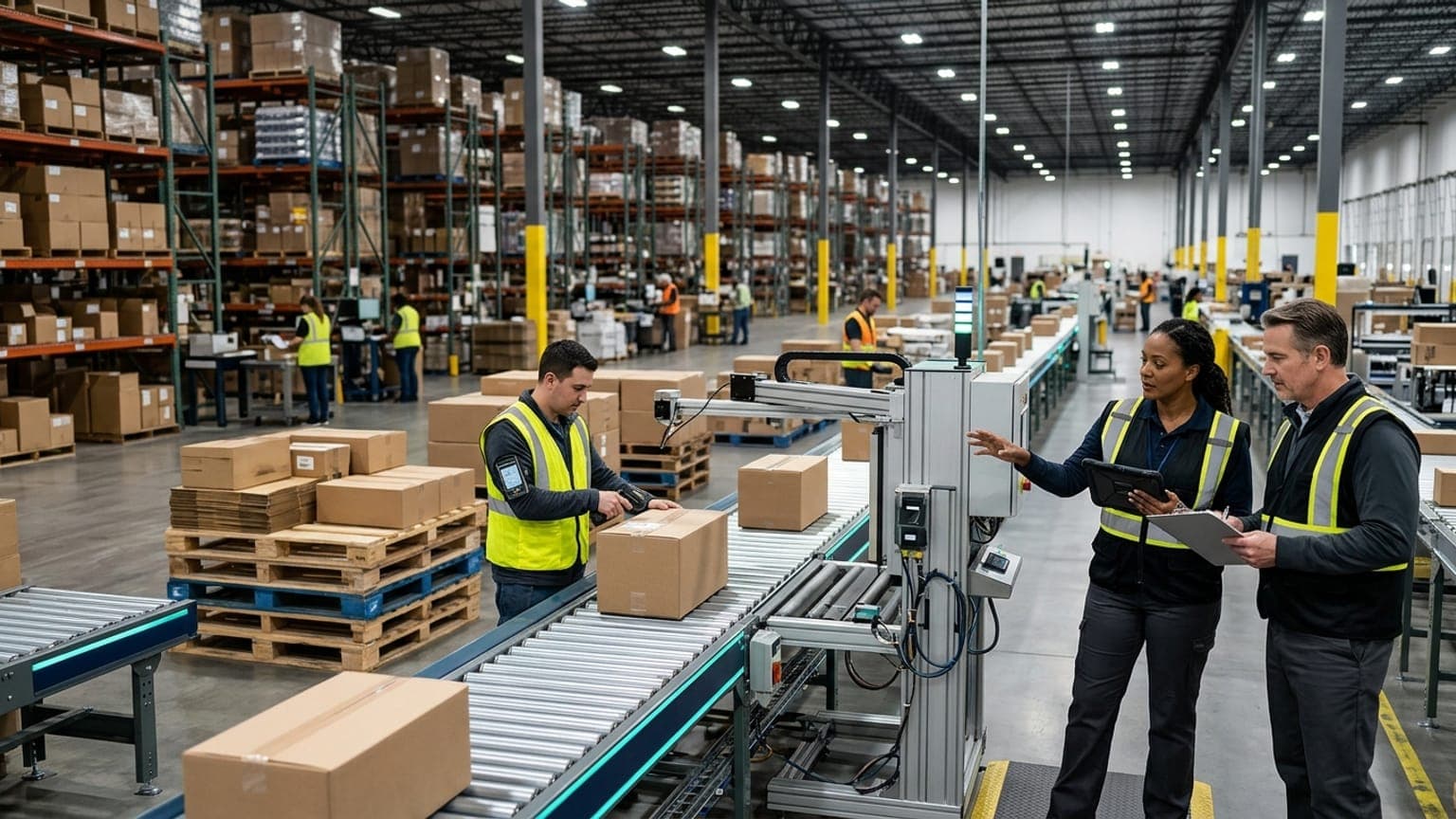
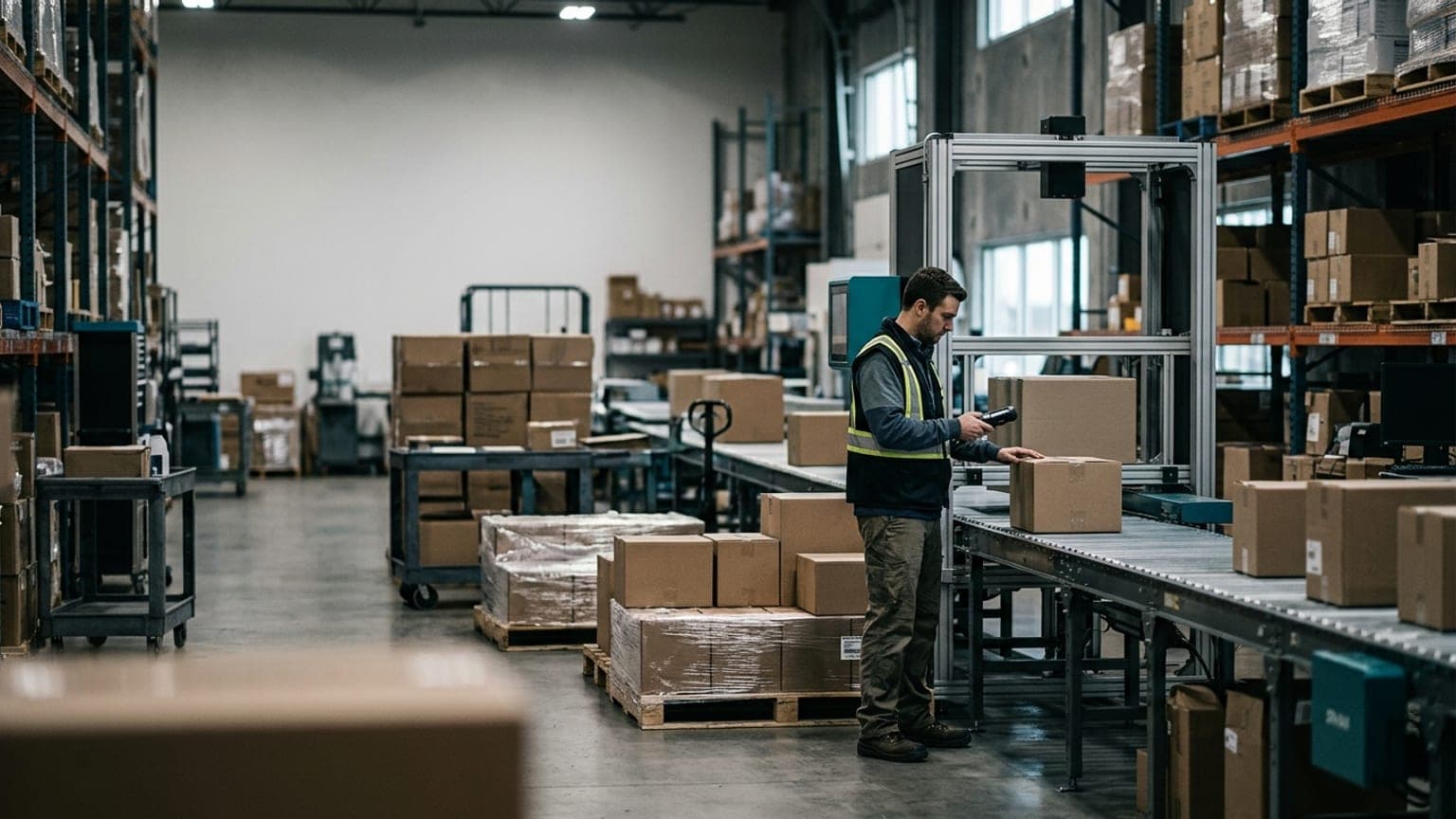
Parcel Dimensioner Throughput Requirements: How Buyers Should Plan Capacity
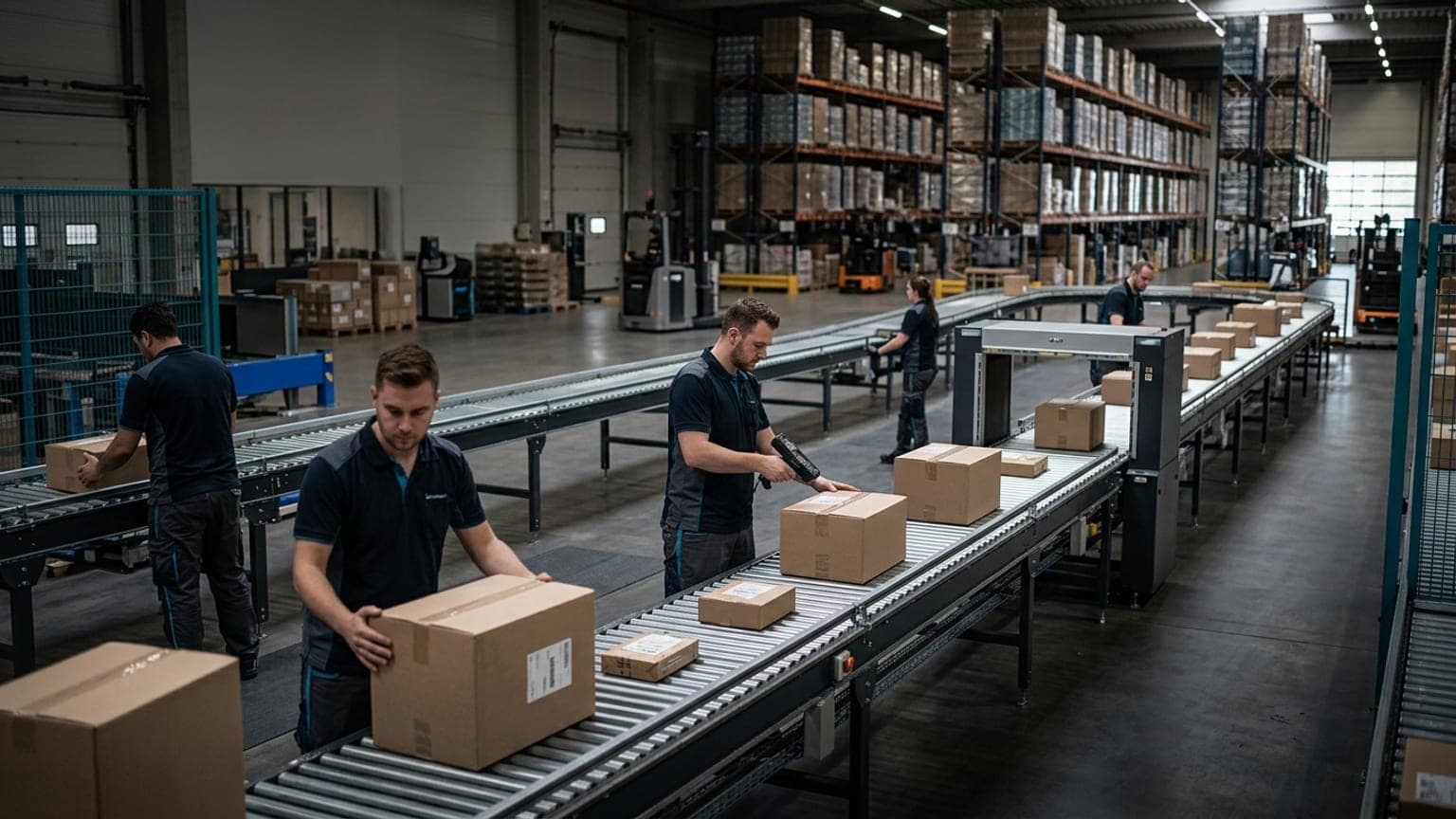
Parcel dimensioner throughput requirements are often underestimated because buyers look at the equipment speed instead of the real parcel workflow.
A device may be able to capture dimensions and weight quickly in a controlled demo. That does not mean the warehouse can process the required volume during a late carrier pickup, a promotion wave, a mixed carton and polybag flow, or a shift with new operators. The practical question is not "how fast is the dimensioner?" The better question is: can the full process capture reliable data before the next warehouse decision depends on it?
For buyers evaluating a parcel dimensioner, throughput planning should include volume profile, station placement, exception rate, integration timing, labor model, and pilot evidence. Otherwise, the project can look right on paper and still create a bottleneck in shipping.
Start with the parcel volume profile
Average daily parcel volume is a weak starting point.
Two warehouses can both ship 8,000 parcels per day and need very different dimensioning capacity. One may run steady volume across two shifts. The other may process most parcels between 2:00 p.m. and 5:00 p.m. before carrier pickup. One may ship consistent cartons. The other may ship cartons, polybags, irregular items, marketplace orders, and customer-specific packaging.
Build the profile around operating pressure:
- parcels per day by site, shift, carrier, service level, and customer
- peak parcels per hour, not just daily total
- carrier cutoff windows and the final two hours before pickup
- parcel flow by pack station, conveyor, audit lane, manifest close, or exception area
- carton, polybag, mailer, tube, and irregular package mix
- percent of parcels that already have trusted dimensions
- percent that need first-time capture, remeasurement, or audit
- expected seasonal, promotion, or marketplace spikes
- rework volume caused by label problems, damaged packaging, missing weight, or out-of-tolerance dimensions
The peak profile matters because parcel dimensioning often supports time-sensitive decisions: rate shopping, label print, manifest close, carrier billing, customer chargeback defense, cartonization feedback, or shipping release. If the record arrives after the carrier decision, the value is lower.
A buyer-ready requirement sounds like this:
"The parcel dimensioning workflow must process peak eligible volume before carrier cutoff while preserving dimensions, weight, identifiers, images when required, exception status, and integration updates."
That requirement is stronger than asking for a transactions-per-hour number because it connects capacity to the decision window.
Choose the capture point before choosing capacity
Throughput requirements change depending on where the parcel dimensioner sits.
A packout capture point may need to support many operators working in parallel. A shipping audit lane may process a smaller sample but require stronger evidence. A manifest-close station may face intense cutoff pressure. A returns workflow may have lower speed requirements but more exceptions and inspection steps.
Common capture points include:
- Pack station: dimensions and weight are captured before label print or rate selection
- Shipping audit: parcels are checked after packing to catch wrong carton, label, weight, or dimension issues
- Manifest close: final record is captured before carrier handoff
- Receiving or returns: parcel dimensions are captured for master data, inspection, storage, resale, or claim support
- Exception lane: parcels with missing, unexpected, or disputed dimensions are routed for review
Each placement has tradeoffs.
Pack station capture can prevent bad labels earlier, but it may add work to operators who are already measured on packing speed. Audit capture can preserve flow at packout, but it may catch problems late. Manifest capture can centralize control, but it can become a dangerous bottleneck during cutoff.
Before buying, map the physical path. Where does the parcel stop today? Who touches it? Which system needs the record? What happens if the scan fails? Does the operator have room to rotate, remeasure, relabel, photograph, or hold the parcel without blocking the lane?
If the project also affects packaging decisions, connect the throughput plan to your warehouse cartonization best practices and the downstream warehouse carton exception workflow.
Count exceptions as part of throughput
Clean parcels are not the only workload.
A parcel dimensioner may process standard cartons quickly, but real throughput drops when operators handle exceptions. Buyers should include exception time in the capacity model instead of treating it as rare edge work.
Common parcel dimensioning exceptions include:
- missing, wrinkled, duplicated, or unreadable barcode
- carton overhang, bulging polybag, crushed corner, torn flap, or unstable packaging
- dimensions or weight outside expected tolerance
- item too small, too large, reflective, transparent, flexible, or irregular for the standard process
- package record not found in the WMS, OMS, TMS, or carrier system
- scale read, image capture, network, API, or label printer failure
- operator must remeasure, repack, relabel, split, hold, or release with approval
Every exception adds seconds or minutes. It may also need a supervisor, a photo, a reason code, or an integration retry. If the workflow is not designed for this work, operators will bypass it when volume rises.
Useful planning questions:
- What exception rate is expected on normal days and peak days?
- Which exceptions block shipment and which only create a warning?
- Can the operator resolve the issue at the station?
- Is there a separate exception lane so normal parcels keep moving?
- Does the system preserve the failed attempt, or only the final successful record?
- Who owns unresolved exceptions before carrier cutoff?
The best buyer demos include messy parcels. Bring damaged cartons, loose polybags, bad labels, oversized packages, duplicate barcodes, and records that do not match the expected dimensions. A clean demo with perfect cartons does not prove that the workflow can survive a real shipping wave.
Validate integration timing, not just integration existence
Throughput is also an integration problem.
If dimensioning data is needed before rate shopping, label print, shipment confirmation, billing, or claim review, the data must arrive at the right system in time. A fast station connected to a slow batch file can still miss the operational decision.
Define the integration path clearly:
- source system that provides the order, carton, shipment, or parcel identifier
- destination system that receives dimensions, weight, image reference, timestamp, operator, station, and exception status
- timing required before rate shop, label print, manifest close, invoice, audit, or customer reporting
- retry behavior when an API call fails
- duplicate scan handling
- manual correction path
- reporting path for failed or delayed records
- support owner for each integration failure mode
For example, dimensions used for carrier billing defense may be acceptable in a near-real-time reporting layer. Dimensions used for label print need to be available before the label is generated. Dimensions used for customer rating may need to update the TMS before the shipment is closed.
Buyers should ask vendors and internal IT to show the complete transaction. Scan a parcel, capture dimensions and weight, create the record, update the destination system, handle one failed update, retry it, and retrieve the record later. That test is more valuable than a slide that says "WMS integration."
For a deeper checklist, compare this plan with your dimensioning data requirements and WMS dimensioning integration playbook.
Plan labor around the station, not only the device
The device is one part of the throughput equation.
Station design, operator motion, label handling, scanner placement, printer distance, carton flow, exception staging, and supervisor access all affect capacity. A parcel dimensioner installed in the wrong place can slow the operation even if the technology performs well.
Review these labor details:
- how parcels arrive at the station and leave it
- whether operators need to lift, rotate, push, scan, photograph, relabel, or repack
- where exception parcels go without blocking clean flow
- whether the station supports one operator or multiple operators
- whether the workflow changes by carrier, customer, service level, or packaging type
- how training works across shifts and temporary labor
- what supervisors need to see during cutoff pressure
- what happens when the station is unavailable
Buyers should also decide whether the project is meant to reduce labor, protect revenue, improve billing accuracy, tighten compliance, or improve evidence quality. Each goal changes the throughput model. A station that supports revenue recovery may not need to touch every parcel. A station that supports label generation before manifest close may need much higher capture coverage.
If labor assumptions are part of the approval case, compare actual pilot times with the warehouse labor standards for automation pilots before rolling out broadly.
Pilot with real parcel waves
Do not approve parcel dimensioner throughput requirements from a quiet test.
Use live operating conditions:
- normal volume and peak-hour volume
- final carrier cutoff window
- multiple package types
- experienced and newer operators
- clean parcels and exception parcels
- real WMS, TMS, label, rate, and manifest flows
- supervisor overrides and downtime scenarios
- reporting retrieval for finance, claims, transportation, and customer service
Track pilot evidence:
- parcels processed per hour by station, shift, carrier, and package type
- average and 90th percentile transaction time
- first-pass capture rate
- exception rate, reason, age, and disposition
- integration success rate and retry time
- percentage of records available before the required decision point
- bypass reasons
- cutoff misses or near misses
- downstream disputes, corrections, or billing adjustments prevented
The pilot should answer a rollout question: how many stations, operators, exception lanes, integration controls, and support owners are required to meet the business case?
Make throughput a buying requirement
Parcel dimensioner throughput requirements should describe the complete operating workflow, not just the equipment speed.
For buyers, the practical standard is simple: profile peak volume, choose the capture point, include exception time, validate integration timing, plan station labor, and pilot under real cutoff pressure. If those requirements are clear before purchase, the project is more likely to improve shipping accuracy without creating a new bottleneck.
Sizelabs helps warehouse teams connect dimensions, weight, images, identifiers, timestamps, and exception status where parcel decisions happen. If your parcel flow depends on accurate measurement before rating, manifest close, billing, or claims, start by proving the workflow can keep up when the floor is busiest.